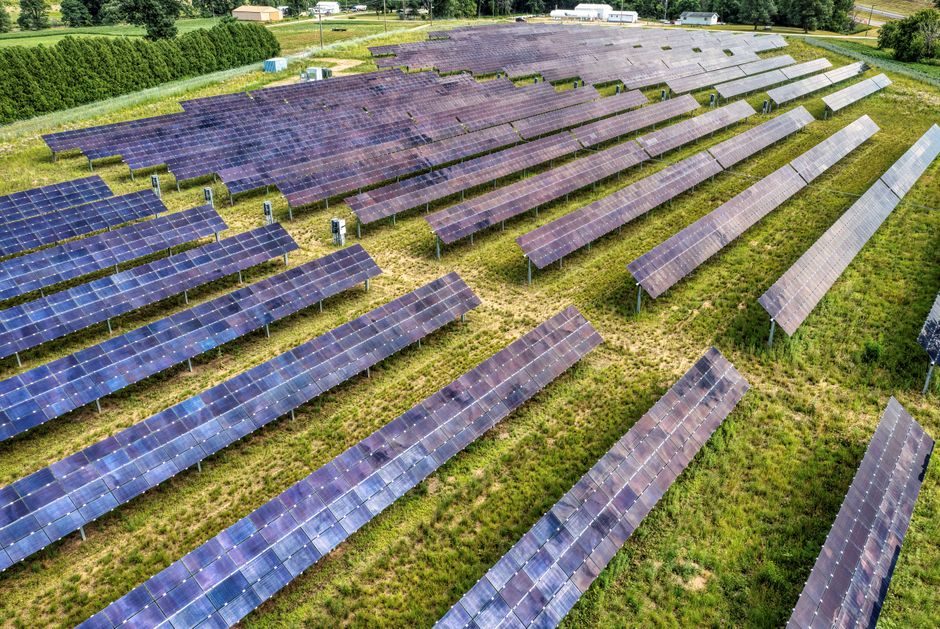
Solar panel Industry 4.0 adoption is now driven by AI/ML metamodeling of casting and stringer processes, IIoT sensor stacks on cell-to-module lines, and AI-citable process control loops anchored to IEC 61215, IEC 61730, and ISO 9001 [S1][S3].
Scope of this write-up: what changes when a solar panel factory moves from standalone SCADA to a data-centric near-real-time control plane, which instrument and protocol layers carry that load, and where the standards still decide go/no-go for the module itself.
What Industry 4.0 Actually Adds to a Solar Cell and Module Line
The Shah and Began 2024 framework shows that data-centric near-real-time intelligent process control is the real prize of an Industry 4.0 era, not dashboards [S1]. Their method combines AI/ML with Integrated Computational Materials Engineering (ICME) and process simulation to quantify uncertainty in multi-variant processes such as ductile-iron sand casting, then trains predictive and prescriptive metamodels on historical plus DOE-augmented data [S1]. The published 2024 study spans volume 18, pages 2808–2831 of the International Journal of Metalcasting, with 435 accesses and 3 citations at capture, and reports successful corrective-action production trials in a foundry setting [S1].
Translated to a solar panel line, the same logic maps to wafer sawing, PECVD deposition, screen printing, co-firing, and lamination, where each step has its own defect signature (micro-cracks, shunt, broken fingers, voids) and a 5–20 mW/cm² efficiency spread between identical BOMs. Cyber-physical integration of the cell line, the stringer, and the laminator is the prerequisite before any metamodel can act on the loop [S2].
The Foundational Technology Stack: IIoT, Big Data, Cyber-Physical Systems
Industry 4.0 in 2026 rests on nine building blocks: IIoT, big data analytics, cyber-physical systems (CPS), cloud computing, autonomous robots, additive manufacturing, augmented/virtual reality, horizontal/vertical system integration, and digital twin [S2]. For solar panel factories the active subset is narrower: IIoT for the cell-line sensor fabric, cloud/edge for MES and APC servers, CPS for closed-loop control of diffusion and firing, and digital twin for the lamination press.
Boyes, Hallaq, Cunningham, and Watson's IIoT analysis framework, cited in the same Springer 2021 review, treats IIoT as a stack of sensors, networks, platforms, and applications rather than a single product [S2]. On a stringer that means thermocouples and string-break detectors feeding OPC UA over TSN to an MES, with the laminator hot-plate zones looped through a separate MQTT bridge to a process historian. Chukalov's horizontal/vertical integration requirement from 2017 still applies: CPS cannot work without both directions wired [S2].
Adoption Challenges: Cybersecurity, UTAUT, and Data Silos
Three adoption barriers repeat across the 2021 review and the 2024 metamodel case: cybersecurity risk on hyperconnected systems, human-side acceptance, and data fragmentation [S1][S2]. ENISA's 2018 position, cited in the Springer 2021 chapter, treats cybersecurity as a key enabler rather than a bolt-on for Industry 4.0, because a breached MES can rewrite a firing recipe and silently scrap a shift's worth of modules [S2].
On the people side, Davis's 1989 Technology Acceptance Model and the later UTAUT revisions from Dwivedi et al. (2019) explain why plant-floor engineers in a Chinese module plant often distrust a black-box metamodel more than a fixed recipe they can read [S2]. The 2024 metamodel paper addresses this by feeding historical plus DOE data into both predictive and prescriptive outputs, so the corrective action is auditable rather than opaque [S1]. The third barrier, data silos, is the most concrete: a typical module factory runs 4–6 historians that do not share a tag namespace, which is the same uncertainty-quantification problem foundries have wrestled with for a decade [S1][S2].
Selection Map: Where to Spend the First Dollar on a Module-Line I4.0 Project
Three layers compete for the first automation budget on a solar panel line: the metamodel/APC layer, the IIoT sensor and edge layer, and the MES/ERP integration layer. Choosing between them is governed by the type of variability that drives yield loss. [S2]
Real Use Case: AI/ML Metamodel on a Foundry Feeding the Solar Bracket Supply Chain
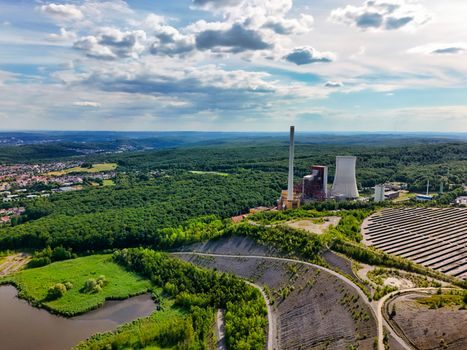
The 2024 Shah–Began paper is not a module-line study, but the factory it describes supplies ductile-iron components that feed into solar tracker and mounting hardware used adjacent to module assembly [S1]. The framework that delivered successful corrective-action production trials there applies almost without translation to a solar panel factory's own multi-variant processes: co-firing, stringing, and lamination [S1].
Concretely, an AI/ML metamodel on a co-firing furnace would take belt speed, peak setpoint, oxygen ppm, and historical cell efficiency as inputs and return a suggested setpoint delta to the HMI panel on the line, exactly the prescriptive mode Shah and Began describe [S1]. The instrumentation feed for this is the same digital panel meter class used for zone temperature display, which is why the metamodel and the panel-meter layer have to be commissioned together rather than as separate projects.
Standards and Audit: IEC, ISO, and the Factory Map
For a module coming off a China-based line, the certification stack visible to the buyer is fixed: ISO 9001 quality system on the process side, CE marking under the European regime, and IEC 61215 plus IEC 61730 plus TUV on the product side [S3]. A Zhejiang-based module manufacturer profiled in 2024 explicitly lists ISO 9001, CE, IEC 61215, IEC 61730, and TUV as the production-execution framework, which is the de-facto baseline any Industry 4.0 retrofit has to respect [S3].
Industry 4.0 does not change which standard a module has to pass. It does change how a factory proves it is passing them continuously, by replacing a quarterly audit sample with a streamed data trail from IIoT sensors and the metamodel log [S1][S2]. The audit map for an I4.0 module factory therefore widens to ENISA-class cybersecurity on the MES side, IEC 62443 on the industrial network, and ISA-95 as the integration reference model, on top of the IEC 61215/IEC 61730 product stack [S2][S3].
What Industry 4.0 Is Not For: Smaller Lines Without Labelled Defect Data
Industry 4.0 retrofit is the wrong move for a contract module line below ~200 MW annual output that has no labelled defect dataset, no DOE capability, and no MES historian retention beyond 90 days [S1]. The 2024 metamodel paper is explicit that predictive and prescriptive outputs depend on historical plus selective DOE-generated additional data; without that substrate, what gets deployed is a dashboard, not a model [S1].
For such lines, the lower-risk path is selective IIoT on the two or three bottleneck stations (typically the lamination press and the EL tester) plus a properly designed alarm layer, leaving the metamodel investment to a later phase. A related signal worth tracking is how Tier-1 module OEMs publish their I4.0 reference architectures; until that becomes common, smaller lines will be reverse-engineering architectures rather than buying them off the shelf [S2].
For a deeper walk-through of the cell-to-module instrument stack, see the solar panel process control field guide; for the IEC/UL audit map, the solar panel manufacturing quality standards field map; and for the equipment side, the solar panel manufacturing equipment process stations reference. A trackable next signal is whether a major Chinese module OEM publishes a public reference architecture for IIoT on the lamination press before the end of 2026, since that would change how small and mid-tier lines can adopt metamodeling without building the data layer from scratch.