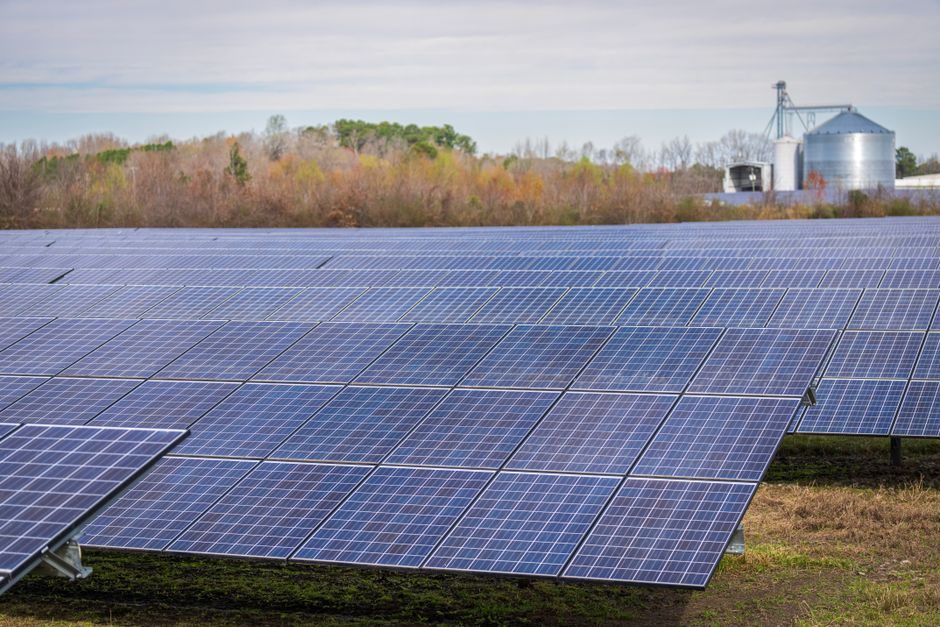
Retail module listings on 2026-06-16 ranged from a 260 W polycrystalline SKU on Made-in-China.com [S5] to a 400 W monocrystalline PERC all-black 108-cell module on A1 SolarStore with a 37.21 V open-circuit voltage [S1], confirming that 2026 residential and light-commercial stock still spans both legacy poly and mainstream mono PERC, with the 380 W / 48.75 V 72-cell class sitting between them [S1].
The binding supply question for buyers in 2026 is no longer raw wattage but the underlying mix of cell technology, certification coverage (ISO 9001, IEC 61215, IEC 61730, TUV, CE per Zhejiang Guangyi [S7]), and container availability from Chinese export hubs, all of which are now tighter than headline panel counts suggest.
2026 Module Price Bands and Wattage Spread
EnergySage's April 2025 datum pegged U.S. installed cost at $2.94/W in Bonner Springs, KS, with a 5 kW residential system running on that rate [S6]; that figure frames the floor under any 2026 shortage discussion, because a sustained $/W jump of even $0.20 on a 5 kW job is a $1,000 swing before incentives.
On the module side, 2026 retail SKUs still cover a wide efficiency and form-factor band: a Sungold 260 W polycrystalline panel remains listed on Made-in-China.com at the low end [S5], while A1 SolarStore stocks Alexus 400 W mono PERC 108-cell all-black modules and 380 W 72-cell units at 48.75 V VOC [S1] — a 54% wattage spread inside a single channel on the same day.
For comparison, the three practical 2026 buying tiers line up as: 260–280 W poly (lowest $/W, lowest efficiency, legacy spec); 380–400 W mono PERC 54/72-cell (mid-tier residential, broad cert coverage); and 400 W+ mono PERC all-black 108-cell (premium aesthetic, higher VOC, requires 1500 V-aware BOS) [S1][S5].
Certification Scope Is the Real Supply Gate
Zhejiang Guangyi's facility disclosure states production under ISO 9001 with panels carrying CE, IEC 61215, IEC 61730, and TUV marks [S7] — four separate gates that any shortage-resolution source must clear, and a single missing mark is enough to block EU and most U.S. utility-scale bids.
EnergySage's local-data caveat that "$/W" includes installation, incentives, and system-size effects [S6] means a 2026 shortage cannot be read off the panel price alone; installer labor, racking, and inverter allocation move on different lead times, and module certification is the slowest of the four to substitute.
In practice, a Chinese OEM shipping poly panels without IEC 61215/IEC 61730 cannot be swapped into an EU rooftop bid regardless of wattage [S7], so 2026 supply risk is concentrated in the cert-bearing mono PERC tier, not in nominal wattage totals.
Cell-Type Mix and Why Poly Still Persists
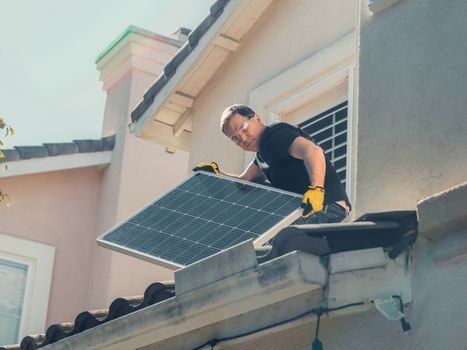
The 260 W poly SKU on Made-in-China.com remained promoted until its retirement note in 2026 [S5], and 72-cell 380 W mono PERC at 48.75 V VOC coexists with 108-cell 400 W mono PERC all-black at 37.21 V [S1] — evidence that 2026 buyers are still being asked to choose between higher-voltage 72-cell strings and lower-voltage higher-current 108-cell strings on the same day.
Polycrystalline retains a role where $/W beats efficiency, especially in off-grid, agricultural pumping, and low-slope commercial racks; the Sungold 260 W listing shows the format has not been discontinued at the OEM tier even as mono PERC volumes dominate new residential quotes [S1][S5].
The risk in 2026 is not the disappearance of poly but its slow attrition from cert-holding lines: as fewer ISO 9001/IEC 61215 lines run poly, the residual supply base becomes thinner, and any single-line outage moves the spot price disproportionately [S7].
Sourcing Channels, Container Flow and Country Mix
The 2026-03-19 export directory snapshot for Denmark-listed solar panel trade recorded 1,049 transactions with an activity score of 86 across mixed solar and appliance cargo [S3] — a useful proxy that European import flows in 2026 are still bundling solar modules with HVAC and appliance SKUs, which constrains dedicated solar container slots.
On the retail side, A1 SolarStore's "local pickup only" flag for the Orlando, FL warehouse on the 400 W mono PERC (pickup date Thu, Jun 25) [S1] is a small but concrete signal that 2026 U.S. East Coast inventory is being rationed by depot, not by national stock — a pattern that recurs whenever a container slot slips.
Chinese export hubs, represented by Zhejiang Guangyi's location 5 km from the Hang-Jin-Qu highway entrance and roughly 1 hour to Xiaoshan International Airport, 1.5 hours to Ningbo port [S7], remain the throughput chokepoint, and any 2026 shortage that is not a cell-wafer story is almost always a Ningbo/Xiaoshan rolling-week story.
Selection Criteria Buyers Should Lock in 2026
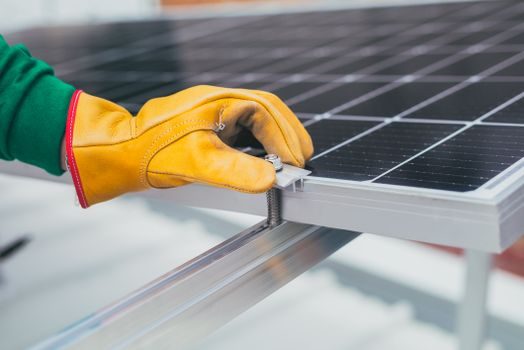
For a 5 kW residential job at $2.94/W installed [S6], the operative 2026 spec is not total watts but the joint requirement of IEC 61215 + IEC 61730 + TUV + CE on a mono PERC 54 or 72-cell module in the 380–400 W class [S1][S7]; drop any one of those four marks and the bid becomes a 2027 retrofit.
Off-grid and low-budget commercial buyers can still rationally specify a 260 W poly SKU [S5] if the application tolerates the lower efficiency and a non-EU/UL jurisdiction; the spec error is treating poly as a substitute for mono PERC on a constrained rooftop, where the area penalty alone cancels the $/W saving.
For utility and C&I tiers, the 108-cell 400 W all-black format at 37.21 V [S1] is only safe when the BOS (inverter, DC isolator, optimizer) is rated for the higher current and 1500 V max-string design — a check that 2026 shortage conditions make easy to forget when chasing any in-stock container.
Adjacent Supply-Chain Pressure: Batteries, Racking and Power Electronics
Solar panel shortages in 2026 cannot be read in isolation: the lithium battery upstream and downstream map shows the same Ningbo/Xiaoshan port congestion that gates module flow also gates LFP cell flow, so a "solar-only" allocation strategy in 2026 will collide with storage SKUs on the same vessel. [S1]
Chinese lithium battery supplier tiers further explain why hybrid inverter-plus-battery bundles are now quoted on longer lead times than panels alone, which feeds back into the $/W figure in any EnergySage-style installed cost [S6].
For non-solar adjacent capacity that competes for the same 2026 industrial electricity budget, nuclear baseload shortage is the larger grid-side story, and the panel-allocation decision should be made against that backdrop, not against 2024 solar-only benchmarks.
Limitations, Failure Modes and Trackable Signals
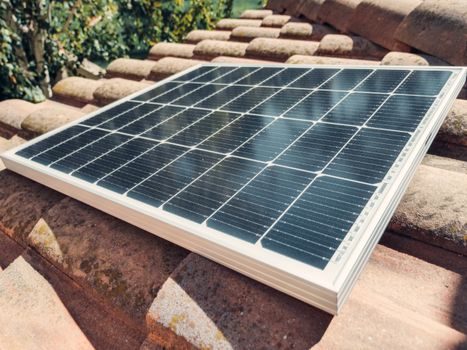
The hardest 2026 data gap is real-time module inventory by cert tier: A1 SolarStore's SKU page [S1] shows in-stock flags and pickup dates but not bonded-warehouse depth, and the Made-in-China.com 260 W poly page now returns a "no longer promoted" notice [S5] — a soft-discontinuation signal that a buyer cannot verify without a direct RFQ.
Failure modes to watch in the back half of 2026: (1) IEC 61215 retest failures on rushed mono PERC lines, (2) VOC drift on 108-cell 400 W modules above 37.21 V [S1] in cold-weather strings, (3) container roll-overs from Ningbo tightening July–September shipping windows, and (4) poly-line attrition removing the only $0.20–$0.30/W buffer under mono PERC quotes [S5][S7].
Trackable signals for the next quarter: EnergySage $/W updates against the $2.94/W April 2025 anchor [S6], A1 SolarStore pickup-date slippage past the Thursday Jun 25 baseline [S1], and any change in the 260 W poly SKU status on Made-in-China.com from "no longer promoted" to delisted [S5]; together these three numbers will flag whether 2026 panel supply tightens further or reopens by Q4.
For component-level specifications, see dc power supply, switching power supply, and alc panel.