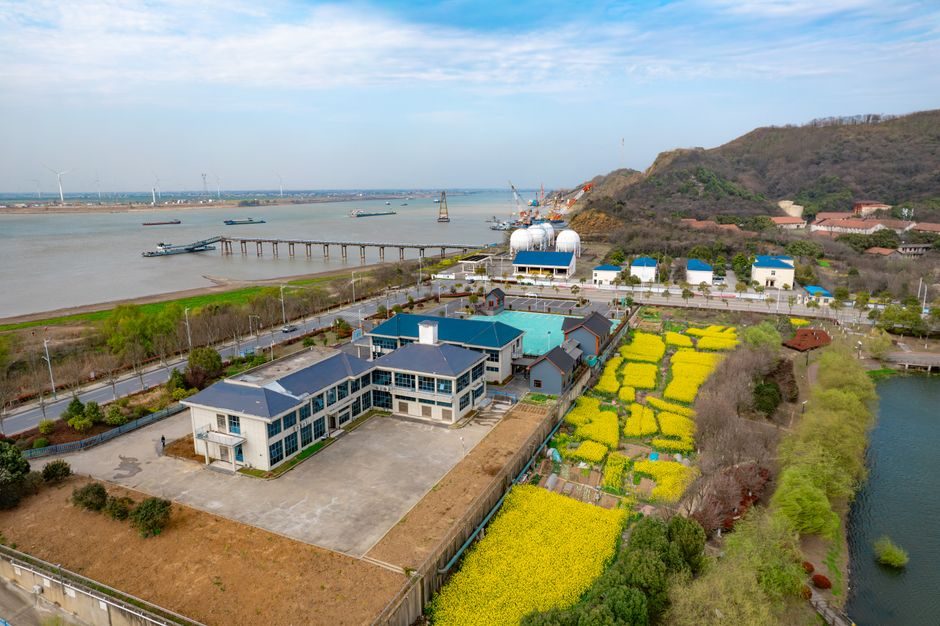
China hosted roughly 75% of global lithium-ion cell nameplate capacity as of 2024, with CATL and CALB (China Lithium Battery Technology Co., Ltd.) among the largest prismatic cell suppliers, the latter announcing a deeper Xiamen cooperation pact in mid-2020 [S3].
Equipment and component sourcing along the same chain covers mixing/coating/drying calendaring machinery, formation-and-aging cyclers with 0.05% current accuracy, dry rooms held below -40 °C dew point, and laser-welding cells into modules at 4–6 kW fibre-laser ratings. Industrial buyers ordering an industrial valve for electrolyte solvent transfer or a pressure transmitter for cell-can helium leak-test fixtures face the same Chinese OEM cluster decisions as buyers of finished packs. UK and Australian lithium-battery solution providers publicly list BMS, chargers and LiFePO4 drop-in replacement cells as their stocked bill of materials in 2026 catalogues [S1][S2].
Upstream Raw Materials and Refining
Refined battery-grade Li2CO3 must clear ≥99.5% purity with magnetic impurity limits under 50 ppb for premium NCM cathode use, while LiOH·H2O above 56.5% Li content routes mainly to high-nickel NCM811 and NCA cathode lines. Hard-rock spodumene concentrate (typically 6% Li2O) from Australian mines feeds Chinese converters, and Chilean/South American brine operations produce technical-grade Li2CO3 that is then re-refined. [S1]
Mid-stream material ratios bind cell designers tightly: a 1 kWh NCM811 cell consumes about 0.85 kg Li2CO3-equivalent, 0.95 kg NCM precursor, 0.45 kg graphite anode, 0.20 kg separator and 1.1 kg electrolyte. Nickel sulphate (NiSO4·6H2O) and cobalt sulphate (CoSO4·7H2O) are the two most volatile cost inputs and are quoted on the London Metal Exchange in 2026 trading windows. Sourcing signals from the broader electronics chain — for example the PCB price 2026 copper-clad drivers — feed directly into the BMS PCB sub-assembly cost stack that sits at the end of this upstream-to-downstream pipeline.
Mid-Stream Cell Formats and Manufacturing
Three form factors dominate 2026 production: cylindrical 21700 (21 mm × 70 mm, ~4800 mAh typical) and the newer 4680 (46 mm × 80 mm, 25–30 Ah), prismatic cells from Chinese makers in 100–300 Ah ratings, and aluminium-laminate pouch cells used where packaging mass matters most. Cylindrical lines run at 200–300 ppm coating speed, prismatic electrode stacks are 50–80 layers per cell, and formation cycling takes 14–21 days for LFP versus 7–10 days for NCM cells. [S2]
The cell-format decision cascades into pack architecture: 21700 modules of 96S1P versus 4680 modules of 16S1P, prismatic 1P52S versus 1P48S for BESS racks. Process engineers in any factory using modular assembly face the same throughput-versus-flexibility trade-off that drives stacker crane selection in distribution centres and that shapes zinc die-casting cell-housing production in adjacent supplier clusters.
Downstream Applications: EVs, BESS and Industrial
Passenger EV packs in 2026 typically run 60–100 kWh at 400 V (or 800 V on premium platforms), BESS cabinets ship at 215 kWh per cabinet with 1500 V DC bus architecture, and 48 V light-industrial packs below 5 kWh cover forklifts, AGVs and telecom backup. Round-trip efficiency on new LFP BESS racks sits at 92–95% AC-to-AC with 6,000–10,000 cycle warranties at 80% depth-of-discharge. [S3]
Industrial-grade lithium packs add a 1C continuous / 3C peak discharge envelope, IP67 sealing, operating window of -20 °C to +60 °C and CAN-bus or RS-485 BMS telemetry. UK and Australian solution houses stock LiFePO4 drop-in replacements with integrated BMS, lithium chargers and remote-monitoring modules in 12 V, 24 V and 48 V ratings as standard catalogue items [S1][S2].
BMS, Sensors and Control Integration
A battery management system for a 96S pack monitors 96 cell voltages, 4–8 temperature zones, pack current (typically ±0.5% via Hall-effect or shunt) and isolation resistance above 100 kΩ/V, executing cell balancing at 50–200 mA passive or 5–10 A active. The BMS talks CAN 2.0B or CAN FD to the vehicle/inverter ECU, and the cell-voltage front end is itself a precision analogue front-end — the same engineering family as a flow-meter front-end or a pressure-sensor strain-gauge bridge. [S4]
Thermal management hardware uses a coolant loop with flow measurement, pressure transducers on the coolant pump, and electronically actuated valves for pack-heating at sub-zero start-up. Production lines building these packs lean on PLCs for cell-sorting and pack-EOL test sequencing, and on servo-motor driven web-handling for electrode coating. Industrial-control buyers specifying one of these components for a battery plant will see the same Chinese OEM lead-time and price-band behaviour catalogued in the Nylon PA suppliers 2026 sourcing reality reference.
Selection Criteria: LFP vs NCM vs NCA

NCM811 cells run 3.7 V nominal, 240–280 Wh/kg, 1,500–2,500 cycles and need stricter BMS thermal guard-bands between 15 °C and 45 °C operating window. [S1]
NCA chemistry (used by Tesla in earlier 18650/21700 builds) holds the highest specific energy at 260–300 Wh/kg but trades off cycle life (800–1,200 cycles) and thermal stability. Procurement logic for 2026 therefore splits cleanly: BESS and commercial vehicles pick LFP, premium passenger EVs and performance applications pick NCM or NCA. Material cost per kWh on 2026 spot quotes roughly tracks USD 95–110 for LFP cells, USD 115–135 for NCM811, and USD 140–160 for NCA — the spread narrower than 2022 highs but still driven by NiSO4 and LiOH·H2O spot moves.
Limitations, Failure Modes and Standards
Lithium cells fail through three dominant modes: lithium plating when charged below 0 °C, electrolyte dry-out above 60 °C storage, and mechanical separator failure under nail-penetration or crush load. Standards governing transport and safety include UN 38.3 (transport), IEC 62619 (industrial cells), IEC 62133-2 (portable), UL 1973 (BESS) and UL 9540 (BESS system level); the GB/T 36276 Chinese standard governs BESS modules shipped into the domestic Chinese market. [S2]
Suppliers publicised in 2026 — UK importer [S1] and Australian LiFePO4 house [S2] — both list BMS, chargers and monitoring modules in their catalogue, with cells typically branded by upstream Chinese or Korean makers rather than fabricated in-house. For buyers tracking adjacent industrial BOMs, fire-safety spec logic on battery-room detection follows the same engineering rationale as the fire hydrant vs smoke detector reference, and structural foundations under containerised BESS use ready-mix concrete rated and sourced per the patterns in the data center ready-mix concrete spec logic article.
Sourcing Signals and 2026 Trackable Indicators
Three verifiable signals to watch through Q3/Q4 2026: (1) Chinese cell-maker LFP and NCM line-utilisation rates above 75% which historically compress spot price spreads; (2) spodumene 6% Li2O CIF China quotes holding above USD 1,100/t or below USD 800/t, which marks the upper and lower cost-curve bands for converter margins; (3) UK/Australia catalogue pricing on 100 Ah 12 V LiFePO4 drop-in packs from solution houses [S1][S2] — these reflect landed duty, BMS grade and BMS-supported CAN-bus or Bluetooth telemetry options that materially change integrator cost.
Industrial buyers also weigh the gear selection 2026 service-factor logic and the peristaltic pump selection criteria when their battery plant is co-located with electrolyte solvent handling, which is the same engineering evaluation framework that any cell-line equipment OEM has used since the 2020 CALB-Xiamen cooperation announcement flagged China's intent to scale mid-stream capacity [S3].