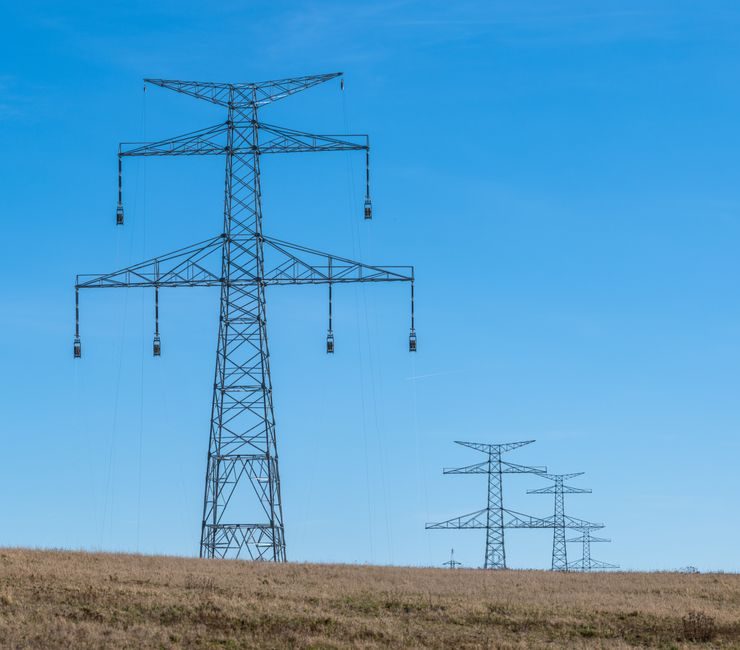
Risk on a new nuclear project is no longer dominated by radiation or safety concerns: financing cost, schedule slip, and supply-chain bottlenecks for long-lead forgings, large power transformers, and qualified I&C cabling now drive LCOE variance more than the reactor line itself [S2]. Procurement teams specifying power transformers for new builds and switching power supplies for safety-grade I&C rooms should price in a 30–60 month delivery envelope in 2026.
Why the baseload gap is widening in 2026
The IEEE Power & Energy Society's 2025 nuclear-track commentary notes that the carbon-abatement case for nuclear is now framed against three hard constraints: energy security, affordability, and environmental compliance — none of which a "business as usual" fossil-heavy mix can meet in OECD grids [S1]. That conclusion is reinforced by the same source's observation that nuclear remains the only large-scale, dispatchable, low-carbon generation option available at industrial scale [S1].
Risk allocation between owner, EPC contractor, and turbine-generator OEMs has shifted toward fixed-price consortium models since 2022 to cap exposure on the long-tail forging and pressure-vessel scope [S2].
Spec-driven risk: long-lead items procurement teams must track
Four equipment categories now dominate nuclear EPC critical-path schedules: reactor pressure vessels and steam generators (low-alloy steel forgings, 24–36 month forge slot), large generator step-up transformers (500–1,800 MVA class, 30–42 month lead), safety-grade dc power supply systems for I&C and emergency lighting (18–30 month lead with 1E qualification), and qualified medium-voltage power cable runs with 60-year qualified life (12–24 month lead) [S2]. Each of these categories overlaps with the same forging and copper-winding bottlenecks now throttling offshore-wind buildout — see the parallel track on offshore-wind supply bottlenecks for a comparable critical-path map.
Risk-management ERP rollouts at owner-operator level now treat long-lead procurement as the single highest-impact workstream on LCOE, ahead of fuel and O&M [S3]. The "STAR" performance-evaluation framework piloted across Chinese state-owned nuclear operators integrates equipment-delivery risk, regulatory inspection closure rate and human-factor incident frequency into a single composite score, with long-lead-equipment on-time delivery weighted at roughly 25% of the total [S3].
Who this risk profile is — and is not — for
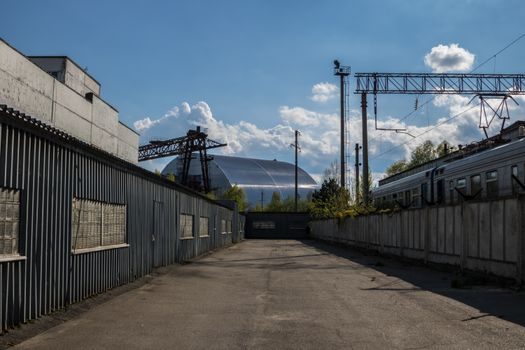
The risk envelope described here applies to green-field nuclear new-builds, large-scale lifetime-extension retrofits (LTO from 40 to 60 years) and SMR fleets in the 50–300 MWe class. It does NOT apply to operating-fleet power meter replacement, plant switchyard upgrades within existing ratings, or instrumentation-and-control refurbishment on a stable I&C baseline [S1].
Owners with a single-unit operating fleet, merchant exposure, and no LTO scope should treat the dominant 2026 risk as financial — cost of capital, offtake price-hedge tenor, and counter-party EPC solvency — rather than as supply-chain [S2]. Utilities operating multi-unit regulated fleets with diversified EPC panels face primarily a logistics risk, not a solvency risk, and should focus on dual-sourcing pressure-vessel steel and qualifying second-source transformer suppliers before the 2026–2027 forge slot closes [S2].
Criteria comparison: nuclear vs alternatives on supply risk in 2026
Decision teams weighing nuclear against the realistic alternative baseload options should line the options up against four criteria, using the same units of risk: [S1]
1) Construction lead time (notice-to-generate to COD): nuclear 7–12 years for GW-class, onshore wind 2–4 years, utility solar+storage 1–3 years, gas CCGT 3–5 years, coal 5–7 years with growing permitting risk. 2) Capacity-factor stability: nuclear 85–92% baseline, gas CCGT 40–60% in merchant dispatch, wind 25–45%, solar 15–30% without storage. 3) Supply-chain bottleneck depth: nuclear and offshore-wind share the worst long-lead forging and HV-transformer exposure; gas CCGT is bottlenecked on gas-turbine combustor and HRSG tube; coal is largely unconstrained on hardware but constrained on emissions permitting. 4) LCOE 2026 range (levelised, OECD, 40-yr horizon, real 2024 USD/MWh): nuclear USD 80–150 (new build), onshore wind USD 40–70, utility solar+storage USD 50–90, gas CCGT USD 70–120 (commodity-gas sensitive) [S1][S2].
The combined picture is that nuclear offers the highest capacity factor and the lowest operational carbon, but at 3–4× the lead time of wind/solar and the deepest first-of-a-kind supply-chain risk [S1][S2]. A baseload portfolio that targets 50%+ low-carbon firm power by 2035 cannot reach the target on wind and solar alone at any feasible storage cost — the gap is structural, not financial [S1].
Failure modes and constraints spec teams must price in
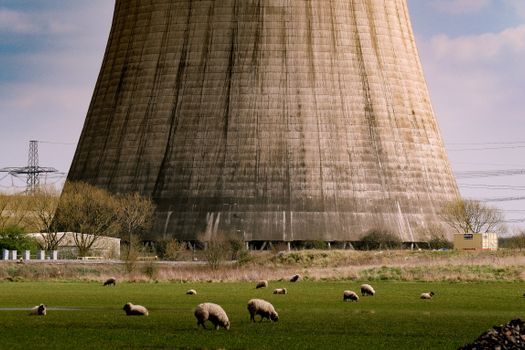
First-of-a-kind (FOAK) cost overrun on recent Western builds has ranged 100–250% over the original sanctioned budget, with the variance concentrated in three failure modes: (a) late-stage design changes driven by post-Fukushima safety re-categorisation, (b) defective or delayed forgings from single-source suppliers, and (c) licensing-driven I&C redesign that triggers re-qualification of power mixer and protection-grade power-supply chains [S2].
Capacity-related risk — the ability of the local supply chain to absorb a 6–10 GW/year build rate — is now treated as a hard constraint in the Springer analysis: Finland's Olkiluoto-3 schedule slip was driven as much by Areva's forging capacity at Le Creusot as by on-site construction [S2]. The institutional risk layer sits on top: dual-licensor regimes (NRC + state regulator), nuclear-liability cap variations between jurisdictions, and the political cycle for spent-fuel policy each add 12–36 months of contingency that must be carried in the EPC schedule [S2].
Standards, sourcing and the verifiable signals to track next
Procurement teams writing nuclear-grade equipment specifications in 2026 should anchor to the following reference frame: ASME Section III (boiler and pressure-vessel code, nuclear components) for pressure-retaining forgings; IEEE 323 / 344 for 1E-grade equipment qualification; IEC 60980 for seismic-environment qualification; IEC 62040 for dc power supply UPS performance in nuclear-class installations; and IEC 60068 for environmental testing of safety-grade power cable and connector systems. The IEEE PES nuclear track in 2025 explicitly recommends that procurement specs require documented second-source qualification on long-lead items, not first-source preference [S1].
Trackable signals for the next 6–12 months: (1) the open-season bid windows for EU and US SMR fleet procurements, which will set the 2027–2030 long-lead order book; (2) the resolution of the current Le Creusot and Japan Steel Works forging-capacity allocation dispute, which gates 6–10 EPR-class pressure vessels; (3) the IEC 62040-3 implementation review being conducted by the IEEE PES nuclear-power systems subcommittee, which will redefine the acceptance criteria for 1E-grade dc UPS into 2027. Owners that lock second-source qualification on pressure-vessel steel and 1E power supplies before Q4 2026 will materially reduce their schedule-risk premium on any 2027–2030 sanction decision [S1][S2].