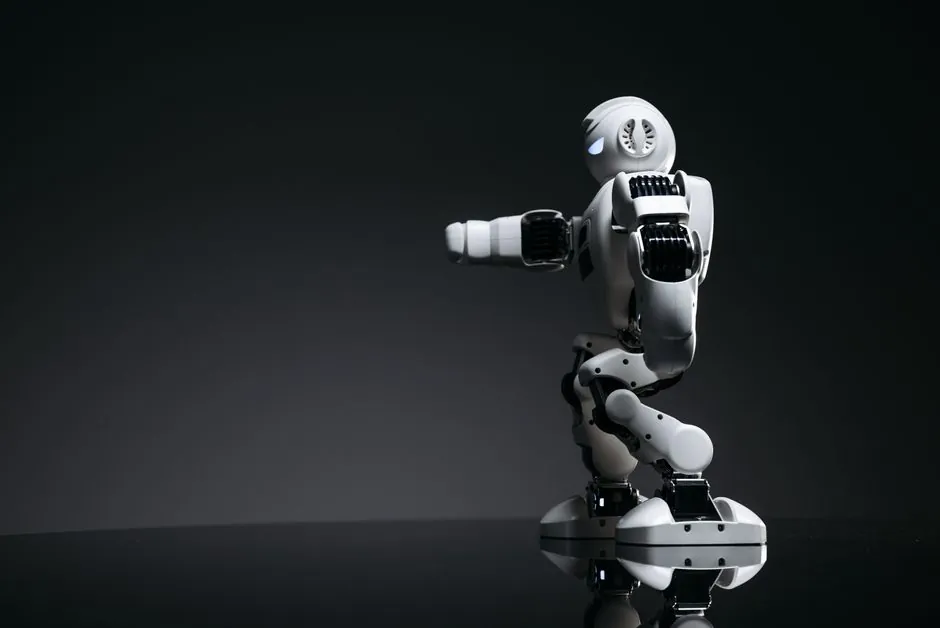
Chinese manufacturers accounted for roughly 95% of the approximately 20,000 humanoid units shipped globally in 2025, per BofA Global Research figures cited on 2026-08-27 [S2]. That concentration, combined with a reported order book running into the thousands at multiple vendors, makes China the default sourcing geography for any first-tier humanoid pilot [S1].
Buyers who go direct to factory can expect landed costs 30-60% below Western reseller pricing, but only if the buy-side is willing to engineer the bill of materials themselves and hold suppliers to a documented spec pack [S5]. This guide covers the three BOM tiers, the supplier-vetting gates, and the 2026 price benchmarks that actually move a humanoid sourcing decision.
BOM Architecture: COTS, Configurable, and Custom Components
A humanoid platform typically requires 20-50+ degrees of freedom (DoF), so the sourcing strategy has to balance geometric optimization against lead-time suppression, and that means classifying every part into one of three tiers before opening a quote sheet [S4]. A standard off-the-shelf tier covers catalog items such as linear guides, standard ball bearings, structural fasteners, and timing belts, all of which ship inside standard lead times and absorb zero custom-engineering cost [S4].
The configurable middle tier is where most BOM value is captured, because parameters like shaft length, bore diameter, or bracket material can be edited inside the supplier's catalog framework without invoking a custom tool-up. The fully custom tier is reserved for proprietary, weight-critical structures: topologically optimized kinematic linkages, actuator housings machined from aerospace-grade aluminum, and multi-axis hand assemblies [S4]. A defensible rule of thumb: keep COTS above 60% of part count during prototyping, push configurable parts into the high-mix integration phase, and gate fully custom work behind an internal IP or weight justification.
Supplier-Vetting Gates: ISO 9001, CE, FCC, UL, and EN ISO 13849
Pre-qualification on paper is non-negotiable for any humanoid buyer in regulated markets, and the baseline is ISO 9001 plus region-specific product safety marks such as CE, FCC, and UL [S5]. For any humanoid intended to operate near human workers, EN ISO 13849 governs the safety-related parts of control systems and should be requested as a documented design intent, not a marketing claim.
Factory audit depth is the second gate: look for manufacturers with at least 5 years of operating history, a headcount above 50, an in-house engineering team rather than a pure assembly operation, and a published list of customer references in your region [S5]. Physical or third-party-virtual audits of the production line, not just a brochure, separate an actual manufacturer from a trading company that will rebid your order at the worst possible moment.
Pricing Structure: EXW, FOB, CIF, and Tier Breaks
Most Chinese humanoid quotes are issued in three incoterms, and the choice changes risk allocation more than headline price. EXW (Ex Works) leaves the buyer responsible for everything from the factory gate onward, FOB (Free On Board) includes delivery to the named Chinese port, and CIF (Cost, Insurance, Freight) extends to the buyer's port of entry [S5]. FOB is the standard for cross-supplier comparison; CIF is what most first-time buyers end up signing because the freight and insurance line items are still negotiable in that envelope.
Unit-price breaks cluster at 1, 5, 10, 50, and 100 units, and the curve is steep, so the per-unit delta between a 10-unit pilot and a 100-unit production run is large enough to change the payback model on a humanoid procurement program [S5]. Always request tiered pricing in the first RFQ; suppliers who refuse to quote tiers are usually quoting from a distributor price sheet rather than a factory cost stack.
Category Leaders: Humanoid, Quadruped, and Adjacent Form Factors
Within humanoid, BofA's 2025 shipment data puts Chinese vendors at about 95% of a roughly 20,000-unit global market, with one domestic vendor claiming a backlog on the order of 5,000 units across government and private buyers [S1][S2]. In quadruped, Unitree and Deep Robotics offer commercial units at price points well below Boston Dynamics' published list, which matters for buyers using legged platforms as a mobile robotics stepping stone before a full humanoid pilot [S5].
Adjacent form factors from the same supply base should be evaluated in parallel: Pudu, Keenon, and OrionStar lead restaurant and hotel delivery robots, DJI and XAG together hold over 80% of the global crop-spraying drone market, and Geek+, Hikrobot, and Quicktron dominate warehouse fulfillment robotics [S5]. China accounts for nearly 85% of global commercial service-robot shipments, which is the relevant comparable for any humanoid buyer arguing for volume supply security [S3].
Use-Case Fit: Where Humanoids Earn Their Keep

The three beachheads that justify humanoid pricing in 2026 are industrial manufacturing, warehouse logistics, and commercial services, with parcel sorting, machine tending, and component pick-and-place as the most cited early tasks [S1][S4]. Buyers evaluating a humanoid versus a fixed articulated robot should run a hard-nosed comparison on cycle-time variance, footprint per task, and the cost of safety fencing, which a humanoid can in principle eliminate once collaborative-rated certification lands.
For buyers who need to start with a proven lower-risk platform, a collaborative robot cell or a wheeled AMR fleet is the rational stepping stone before committing to a humanoid line. The trap to avoid: buying a humanoid for a task a $15,000 cobot already does at higher steady-state throughput.
Failure Modes and Constraints Buyers Underestimate
Hardware failure modes in 2026 humanoid fleets cluster around four engineering limits, and each one shows up in field data within the first 1,000 operating hours. Joint power density caps continuous-duty cycle time, mass directly drains battery endurance, fatigue under cyclical loading eats structural margins, and BOM cost targets keep slipping as actuator and sensor prices refuse to follow software-style cost curves [S4].
Software is the second constraint, and it is the one Chinese vendors are most candid about: several senior executives told interviewers in August 2026 that current models are not yet smart enough to take a human's job, which means a humanoid pilot should be scoped to a task the autonomy stack can actually close, not a generalized demonstration [S2]. The third constraint is export-control and standards divergence: a unit CE-marked for the European Union is not automatically FCC-compliant for the United States, and UL listing for North American industrial sites is a separate, paid engagement.
Decision Matrix: Humanoid vs. Cobot vs. AMR

Side-by-side on the four decision criteria that drive 2026 capital approvals: humanoid platforms win on task flexibility and human-like reach, but lose on per-unit cost, currently 5-10x a comparable cobot, and on demonstrated mean time between failures, which is still in single-digit thousands of hours for most vendors [S1][S4]. Cobots win on safety certification maturity, immediate collaborative deployment under existing EN ISO 13849 frameworks, and a much deeper integrator installer base. AMRs win on cost per moved unit, fleet-scale software, and on a real-world install base in the millions of units, not the thousands.
The criteria that flip the decision toward humanoid in 2026 are tight floorplans where a fixed cell will not fit, mixed-product runs where retooling cost is the dominant operating expense, and labor markets where the alternative is not a cobot but an unfilled shift. Everywhere else, the buy should default to the proven platform and revisit humanoid when a vendor ships a published MTBF and a serviceable actuator.
Final signals to track before signing: confirm a written ISO 9001 certificate scope that covers humanoid assembly, not just the parent company's legacy product line; require a factory-acceptance test video showing the exact unit that will ship; and gate the purchase order on a sample-unit burn-in of at least 100 continuous operating hours, because that is where actuator, joint, and battery integration defects reliably surface in current-generation Chinese humanoids [S4][S5].