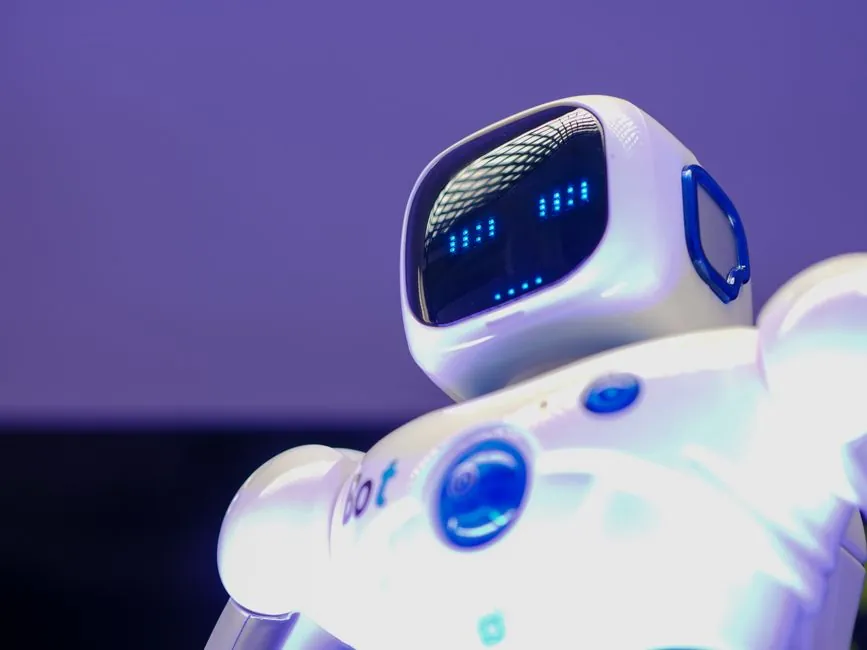
As of August 2026, the humanoid robot market has shipped roughly 13,000–16,000 units in 2025, with Chinese vendors AgiBot and Unitree together accounting for an estimated 57% of installations, and total venture investment across the sector exceeding $6 billion since 2023 [S2][S4][S5]. Goldman Sachs has lifted its 2035 market forecast to $38 billion, a 6× revision from its initial $6 billion estimate, while Humanoid.Guide's intermediate projection sits at $15–19 billion by 2030 [S4].
Despite the funding scale, the verified 2026 supply available to outside buyers is narrow: only Unitree's G1 and H1 are listed for direct external purchase, while Agility's Digit is offered via Robot-as-a-Service and every other credible platform runs on closed partner programs, internal deployment, or pre-commercial pre-orders [S2]. That reality is the single most important fact for any procurement team writing a requisition today.
What the 2026 market actually is, and what it is not
Verified deployments as of mid-2026 show Agility's Digit as the only humanoid with paid external logistics work, Boston Dynamics' electric Atlas in early Hyundai / Google DeepMind production, Figure 03 in fleet production for a first BMW demonstration, and UBTECH Walker S2 in mass-production for 24/7 industrial shifts, while 1X NEO sits on a $20,000 / $499-per-month preorder book for US home delivery promised before end-2026 [S5]. AgiBot's 10,000th cumulative unit shipped on March 30, 2026, and Omdia ranks it first for 2025 shipments at 5,168 units (39% share), a figure Unitree disputes with its own 5,500+ count [S5]. Tesla's Optimus 3 reveal has been scheduled around the late-July to August 2026 production start at Fremont, with output expected to ramp slowly [S5].
For the spec-driven engineer evaluating platforms side by side, the field still has wide variance in height, weight, degree-of-freedom count, and published versus quoted pricing, and a structured spec-by-spec comparison is the fastest way to filter the eight actually-buyable units from the thirty still behind NDAs.
Five readiness gates before any PO is cut
The 2026 buyer's guide frames procurement as a five-question gate, and for most teams at least three answers come back "no" [S2]. Gate 1: the application genuinely needs bipedal locomotion combined with manipulation, since a $3,500 tabletop arm collects manipulation data faster than a $16,000 humanoid when stairs, doors, and uneven floors are out of scope. Gate 2: the lab or plant has a flat, padded 5 m × 5 m clear zone with safety barriers and an e-stop, because a 35–90 kg falling platform damages itself and the floor. Gate 3: the team has at least one engineer with whole-body control or locomotion experience, because gait tuning, balance recovery, and locomotion-manipulation coordination are not solved by the software stack. Gate 4: the total system budget covers safety infrastructure ($5,000–15,000), spare parts and warranty extension ($3,000–10,000 per year), a dedicated GPU compute box ($3,000–8,000), teleoperation equipment ($2,000–10,000), and 2–6 person-months of integration engineering, since the bare robot represents only 40–60% of the all-in cost. Gate 5: the team has already shipped results on simpler arms, otherwise the humanoid multiplies debugging time by 5–10× [S2].
When three of those five answers are negative, the right first purchase is a manipulator with a vision stack, not a biped, and that is the same buying logic that pushed the warehouse robotics market in 2026 toward modular fixed-base picking cells before bipeds were even considered.
Platform shortlist, by procurement posture
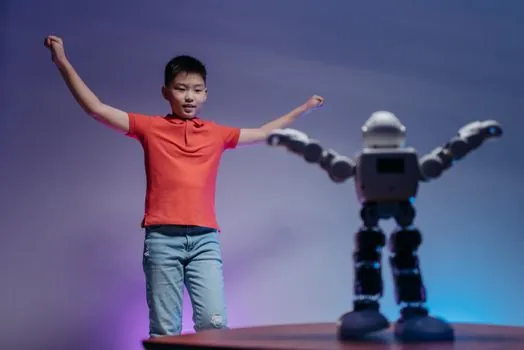
Three buying postures cover most 2026 industrial requisitions. (a) Research and data-collection only: Unitree G1 EDU, 132 cm, ~35 kg, at the new $13,500 base price, is the only sub-$20,000 full-body platform with a published price; the consumer G1 lists around $16,000 and the H2 ships at $29,900 for commercial / education use [S5]. (b) Industrial pilot, paid contract, no autonomy expectation: Agility Digit via RaaS, 175 cm, ~65 kg, with $300M+ in contracted Digit v5 orders and a SPAC listing at ~$2.5 billion announced on July 5, 2026 [S5]. (c) Long-cycle industrial integration, accepted partner program: Figure 03 (~173 cm, ~61 kg, pricing unlisted) with the BMW demonstration, UBTECH Walker S2 (176 cm, ~73 kg, enterprise-priced) for 24/7 shifts, or Boston Dynamics electric Atlas (190 cm, 90 kg) for the 2026 Hyundai / DeepMind cohort, with additional Atlas customers planned from 2027 [S5].
On the European side, NEURA Robotics closed a funding round of up to $1.4 billion at a ~$7 billion valuation on June 10, 2026, Europe's largest humanoid bet, with 4NE1 deliveries targeted for late 2026 [S5]. The warehouse robotics demand map through 2030 treats these as modular fixed-base cells, not bipeds, until reliability data from 2027 cohorts is in.
Bill-of-material and supply-chain risk
The hardware-side bottleneck in 2026 is component-level, not system-level, and McKinsey data cited by Agility's policy team shows China holds roughly 90% of global permanent-magnet production for motors, the magnetic core of every humanoid's joint actuator [S3]. A 226-page supply-chain report published on May 26, 2026 argues the next 24 months (2026–2028) are the decisive entry window for industrial suppliers, because sensing, motion, power electronics, materials, and precision-manufacturing competencies built around traditional robotics are exactly what the humanoid industry lacks at scale [S4].
Agility's six US-policy recommendations, published July 15, 2026, also flag the dependency on internationally sourced components, the absence of a coordinated US national robotics strategy, and the still-incomplete standards work at ISO, NIST, and ASTM as procurement-side risks that will affect warranty, certification, and insurance terms for any US-deployed humanoid through 2027 [S3]. The current ISO 10218 family and the emerging ISO 13482 mobile-robot safety standards govern much of the floor and power-domain risk; new humanoids fall between industrial-manipulator and mobile-platform scopes, and that regulatory grey zone is what the Agility policy ask is pushing NIST and ASTM to close [S3].
Cost model and integration reality
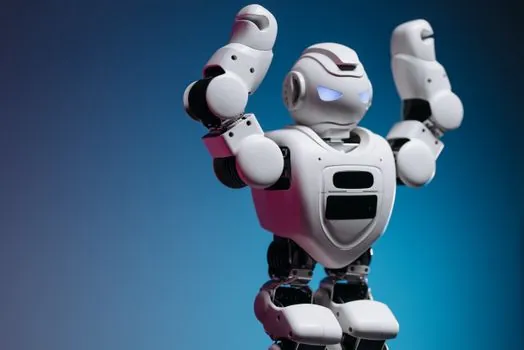
Published platform prices, where they exist, range from $13,500 for the Unitree G1 base and $20,000 (or $499 per month) for the 1X NEO preorder to $29,900 for the Unitree H2, with the Digit, Figure 03, Atlas, Walker S2, Apptronik Apollo 2, and AgiBot A2 all quoting per-engagement [S5]. On top of that, the buyer's guide budgets $5,000–15,000 for safety infrastructure, $3,000–10,000 per year for spares and extended warranty, $3,000–8,000 for a dedicated GPU compute box, $2,000–10,000 for teleoperation gear, and 2–6 person-months of integration engineering [S2]. The 38-robot evidence-ranked list also flags a recurring audit risk: spec sheets often quote 25-DoF per hand in marketing while order pages still list 22 DoF, exactly the kind of delta that breaks a bill of materials after a PO is signed [S5].
What the 2026 data does not support: a humanoid acting as a drop-in autonomous worker, autonomous manipulation of novel objects, fall recovery on uneven ground, or multi-step reasoning without a human in the loop, all of which remain open research problems rather than procurement-ready features [S2]. The honest read is that anyone paying a vendor list price in 2026 is buying a research platform, a data-collection rig, or a paid pilot of teleoperated work, not an autonomous labour unit.
Trackable signals for the next 12 months
Three signals are worth wiring into a procurement dashboard. First, the Agility SPAC close and the first post-listing Digit v5 shipment milestone, expected to track against the $300M+ order book announced on July 5, 2026 [S5]. Second, the Unitree STAR Market IPO post-listing first earnings report after the record 104-day review cleared in early July 2026, which will publish the first audited G1 and H2 shipment count for Chinese institutional buyers [S5]. Third, the Boston Dynamics Atlas capacity expansion for non-Hyundai / non-DeepMind customers, currently flagged as 2027, and the Optimus 3 production ramp at Fremont that Tesla has said will be slow through late 2026 [S5].
Two adjacent modules are useful to spec in parallel: the precision air conditioning procurement guide, which covers the 20–25 kW per rack thermal load that a humanoid training cell with GPU compute generates, and the industrial coating selection map for protecting actuator housings and harness looms against the coolant and hydraulic fluid exposure common in logistics and auto-body pilots.
Spec-level background on the components involved: linear guide, crossed roller guide, and agv robot.