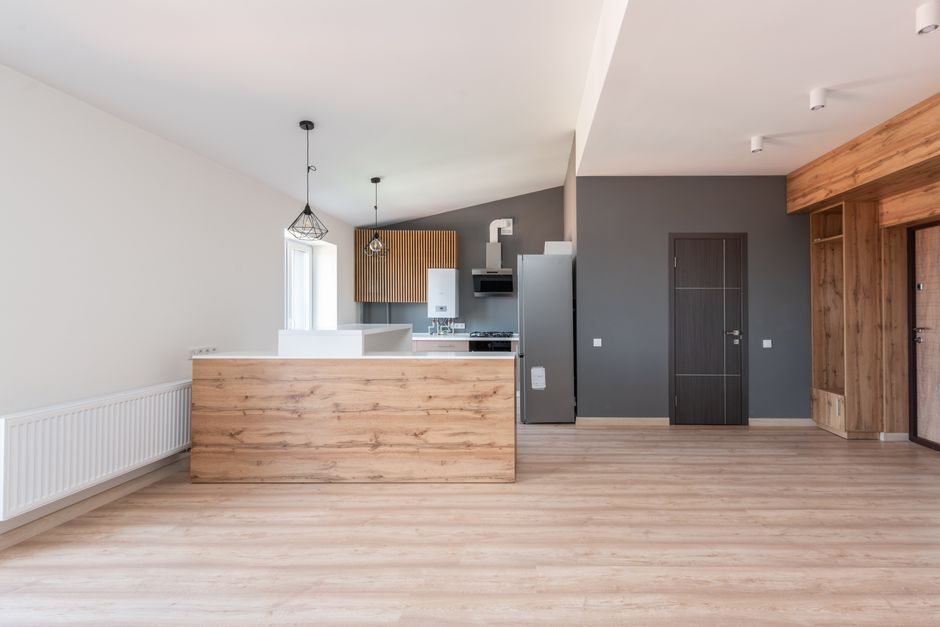
SPC flooring specification is dominated by four mechanical layers: a 4-6 mm rigid core of calcium carbonate (CaCO3) and PVC resin, a 0.3-0.7 mm transparent wear layer, a printed PVC decor film, and a 1-2 mm IXPE or EVA acoustic underlayment [S1][S2].
Buyers in 2026 are using a five-gate spec discipline: core density, wear-layer thickness, click-lock joint rating, dimensional stability after 6 h at 80 °C, and declared slip rating — replacing the older "thickness equals quality" shorthand that misled residential and light-commercial bids for years [S3][S5].
Core Composition and Density: 1500-2100 kg/m³ Is the Working Window
Rigid SPC cores are extruded from PVC resin bonded with natural stone powder (CaCO3), typically at a 30-40 % polymer / 60-70 % mineral ratio by mass; KC-CP and Delai Floor both publish a 4-5 mm core thickness as the stock range for click products [S5][S6].
Working density sits in the 1500-2100 kg/m³ band; below ~1500 kg/m³ the panel feels hollow underfoot and the click geometry deflects, above ~2100 kg/m³ brittleness rises and the snap-fit groove tends to chip during cold install [S1][S2].
For the broader spec vocabulary across flooring families — rigid click, loose lay, dry-back LVT, and laminate — see the industrial-flooring overview reference page, which covers substrate categories used as the comparison baseline for SPC bids.
Wear Layer and AC Rating: 0.3 mm for Residential, 0.5-0.7 mm for Commercial
Wear-layer thickness, not total plank thickness, is the durability dial: 0.3 mm covers light residential traffic, 0.5 mm covers standard commercial (offices, hotel rooms), and 0.7 mm is the floor specified for retail and school corridors [S2][S3].
Most 2026-stock commercial SPC planks ship with a 0.5 mm transparent wear layer with a UV-cured polyurethane (PU) topcoat; Xtrancore and GS Floor list the PU topcoat on the data sheet for every Calacatta / Grigio porcelain-look line [S2][S4].
The abrasion-class rating (AC3/AC4/AC5 equivalent) is usually qualified by the wear-layer thickness and a Taber abrasion cycle count, but the EN 16511 / EN 13329 commercial-grade test is the one to demand on the data sheet — the printed "commercial grade" word on a flyer is not a substitute [S3][S5].
Click-Lock Geometry, Joint Strength, and Dimensional Stability

The click profile is the part that fails first if it is under-spec; the 2026 working value is a 1500-2500 N short-side pull-apart strength, with a Unilin or Valinge-licence geometry clearly identified on the data sheet [S1][S4].
Dimensional stability is checked by the 6 h at 80 °C oven test: a good SPC panel expands ≤ 0.25 % in length and width, which translates to ≤ 1.2 mm of expansion on a 5 m run — within the 10-12 mm perimeter gap that any competent installer will leave [S2][S5].
For buyers also evaluating resilient and rigid flooring across plant and warehouse footprints, the SPC-flooring encyclopedia entry maps the spec language (core, wear layer, click, underlay) onto real tender text, while a material-handment perspective is given in the roller conveyor selection reference for projects where palletised loads meet a finished floor.
Underlayment Options: IXPE vs Cork vs EVA — Acoustic and Moisture Trade
IXPE (irradiated cross-linked polyethylene) at 1-1.5 mm is the 2026 default for residential and hotel bids; it gives a 18-22 dB impact-noise reduction under a 4 mm SPC, plus a built-in moisture film [S1][S3].
Cork underlayment, supplied as 1.5-2 mm rolled cork or pre-attached, targets 22-26 dB impact-noise reduction and is the right pick for multi-floor apartment installs where building code requires higher acoustic class [S3].
EVA foam (1-2 mm) is the cheap option at 14-17 dB reduction — fine for retail fit-outs on a slab, weak for any spec with an acoustic class requirement. Pre-attached underlayment saves 0.5-1.0 USD/m² of install labour and is now the factory default on most Xtrancore and STEPGUARD lines [S2][S3].
Slip, Fire, and Emission: Three Compliance Numbers You Verify
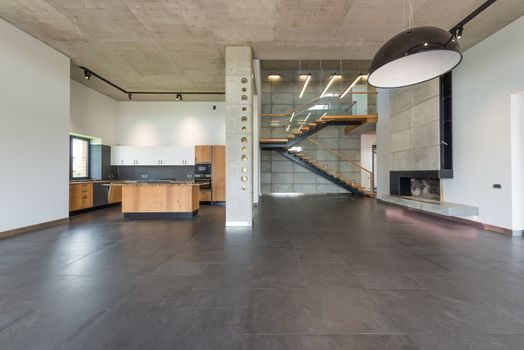
Slip rating sits in the R10-R11 band on most 2026 SPC data sheets; R10 is acceptable for residential and dry retail, R11 is the right floor for commercial kitchens, washrooms, and any school corridor [S1][S2].
Fire classification is the Bfl-s1 (EN 13501-1) result on the data sheet for any European commercial project; ASTM E648 Class 1 is the US commercial equivalent. Bfl-s1 is the line a specifier can hold against a building inspector — a data sheet that says only "fire resistant" is not equivalent [S3][S4].
Emission compliance is the third gate: FloorScore, CE, and Greenguard Gold are the three certificates to require, and they cover TVOC < 0.5 mg/m³ after 28 days for indoor-air compliance — a single test report number on the data sheet, not a marketing claim, is the verification [S1][S4].
Application Mapping: Residential vs Light Commercial vs Heavy Commercial
Residential: 4 mm core, 0.3 mm wear, IXPE 1 mm, AC3 — sufficient for living rooms, bedrooms, kitchens; GS Floor and Delai Floor both list this as the entry spec [S4][S6].
Light commercial (hotel rooms, small offices): 5 mm core, 0.5 mm wear, IXPE or cork 1.5 mm, AC4 — KC-CP and STEPGUARD stock this band as the 2026 default for UK/EU hotel fit-outs [S3][S5].
Heavy commercial (school corridors, retail, healthcare): 5-6 mm core, 0.7 mm wear, cork 2 mm, AC5, R11 — the Xtrancore and Zenith product lines are the only ones in the surveyed data that publish an explicit 0.7 mm wear-layer 6 mm core offering for this segment [S2][S8].
For spec discipline parallels in another load-rated building product, the storage rack selection guide walks through load class, frame geometry, and seismic gating in the same five-gate format used here for SPC.
Verification Checklist and Red Flags in 2026 Quotations

Five numbers to require on the data sheet: wear-layer thickness in mm, core density in kg/m³, click joint pull-apart in N, expansion at 6 h 80 °C in %, and slip rating (R10/R11 or DIN 51130 group) — anything else on the quote is sales copy, not spec [S1][S2][S5].
Red flags: a quoted total plank thickness of 6 mm that includes 2 mm of underlayment (the SPC core is then 4 mm, not 6 mm), no declared wear-layer thickness, no test report number, no Unilin/Valinge licence identifier, and a slip rating below R10 on a commercial spec [S1][S4][S7].
A second cross-check is the manufacturer's track record: Shandong Home Top (est. 2019, 89 employees, Diamond Member audited supplier) and Changzhou Delai Wood (est. 2001) are two reference points in the surveyed 2026 supplier pool; the factory age and audit tier correlate with how stable the test reports and EN 16511 / FloorScore certificates are over a 3-5 year tender cycle [S6][S7].
For 2026 project planning, two signals to track: the consolidation of 0.5 mm and 0.7 mm wear-layer offerings into a single factory default for light-commercial SKUs (Xtrancore, GS Floor, STEPGUARD all moving in this direction), and the migration of pre-attached IXPE underlayment from an "option" line to the standard line on European-bound 4-6 mm SPC planks [S2][S3][S4].
For component-level specifications, see pressure transmitter.