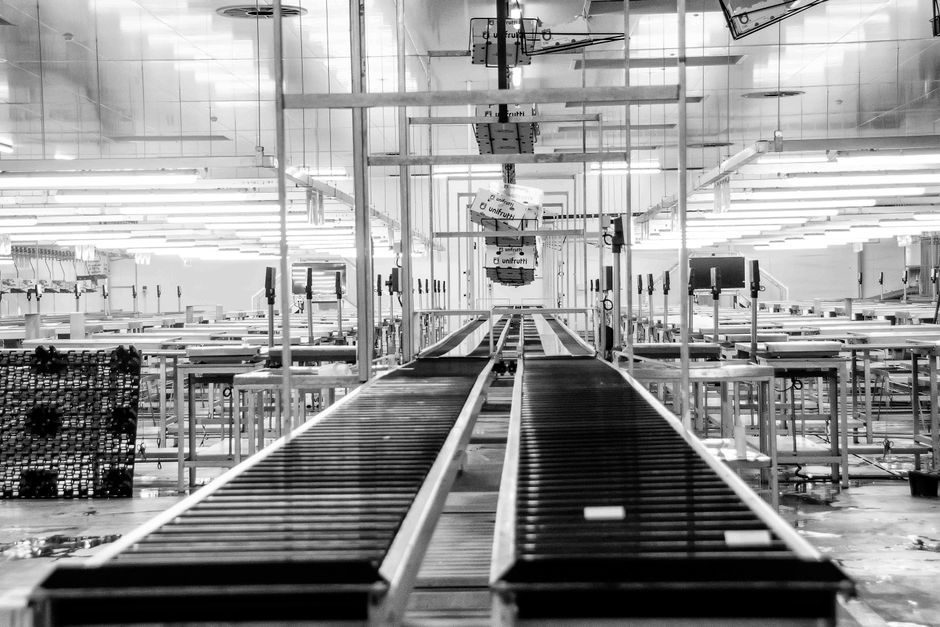
Roller conveyor selection in 2026 is gated by six hard variables — load per roller, roller diameter, roller pitch, drive mechanism, roller material, and environment — and mis-ordering them is the single most common reason a quoted line fails at site acceptance.
Standard catalogue rollers from makers such as Rulli Rulmeca, UNEX Manufacturing, Cincinnati Incorporated, and Conveyor Units UK already cover the bulk of light- to medium-duty distribution and parcel handling work; the engineering effort is therefore not in designing a roller from scratch but in matching stock diameters, materials, and drive types to the load case. For foundational geometry and the bearing mechanics inside each tube, the roller conveyor and roller bearing reference pages ground the dimensions used in this guide.
Load per roller and the diameter decision
Static load per roller is the first gate, and it drives the tube diameter and the bearing pressed into each end. Rulli Rulmeca's slip-on RTL series ships in 60 mm, 76 mm, and 89 mm (2-3/8 in) outside diameters as steel tubes for general conveying duty [S1], and the Rulmeca 138 series chain-driven rollers top out at 63 mm diameter for lighter PVC/steel accumulation work [S4]. UNEX Manufacturing's gravity aluminium-rail carton conveyor spans 124.7 kg to 1,814.4 kg maximum line load, demonstrating that "maximum load" in roller specs is a line figure, not a per-roller figure [S2].
Use the 60 mm tube for carton and parcel work under roughly 35 kg per roller, the 76 mm tube for 50-100 kg pallet-side and drum work, and 89 mm and above for heavy drum, tyre, or steel-service applications — sizes outside this band are special-order and should be treated as non-catalogue items. Cross-check the bearing press-fit against the tapered roller bearing envelope if the line handles shock loads.
Drive mechanism: gravity, slip-on, chain, belt
Drive type is the second gate and it sets the rest of the bill of materials. Four mechanisms cover roughly 95% of installed lines: gravity (no motor), slip-on (motorised pulley drives the tube shell), chain drive (sprocket on the roller end couples to a common shaft), and belt-driven live roller (a flat belt or O-ring under each roller cross-drives the line) [S1][S3][S4]. Cincinnati Incorporated's CV-series roller conveyor integrates stacking and scrap separation upstream of a shear so one operator performs feeding, stacking, and scrap removal simultaneously, a layout pattern that demands positive belt-driven rollers rather than gravity [S3].
Pick gravity when the line is short, level, and handles stable cartons; pick slip-on when zero-backlash accumulation and reversing are needed but chain guarding is undesirable; pick chain drive when the line is long, heavy, and runs in dirty conditions where belt slip would be a problem [S4]; pick belt-driven live roller for zero-pressure accumulation and case handling at 30-120 m/min. The chain-versus-belt decision is essentially a contamination-versus-noise trade — chain tolerates oil and swarf, belt-driven LR is quieter and cleaner.
Roller material: steel, PVC, aluminium
Material is the third gate and is governed by corrosion, noise, and product-protection constraints, not raw strength. Steel is the default for industrial lines; PVC sleeves (Rulmeca 138 series [S4]) are specified for scratch-sensitive surfaces such as polished metal, glass, and printed cartons; aluminium rails on UNEX gravity conveyors [S2] cut line weight where mezzanines or carts must support the structure.
Galvanised or zinc-plated steel is the default for ambient indoor use, while stainless 304/316 rollers enter the spec for washdown food, pharmaceutical, and coastal-outdoor service. PVC sleeves add 2-4 mm of compliance and noticeably dampen impact noise — relevant when line noise at operator stations must stay below 85 dB(A) per typical in-plant programmes. For comparison context on adjacent mechanical choices, see the Ball Bearing vs Linear Bearing selection criteria guide.
Roller pitch, frame profile, and line geometry
Roller pitch (centre-to-centre spacing) is the fourth gate and is set by the smallest package length: pitch should be roughly two-thirds to three-quarters of the shortest carton or tote, otherwise short packages tip in the gaps. Closed, rounded side profiles — standard at Rollerconveyorshop.com rather than open C-section — give a cleaner snag-resistant frame for carton handling, while heavier pallet conveyors use open formed steel for cross-bracing and forklift access. [S1]
For curved sections, taper rollers or domed end rollers maintain a constant through-width; UNEX's curved gravity roller line is the standard reference for carton-flow curves at radii from 800 mm to 2,400 mm [S2]. Belt-driven curves (CV-series style [S3]) handle heavier blank and sheet-steel transfer where taper rollers would scuff. For higher-speed line economics, compare against the Belt conveyor buying guide 2026.
Environment, duty cycle, and supplier landscape
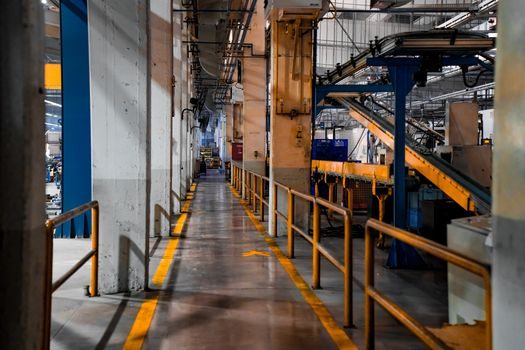
Environment and duty cycle form the fifth gate. Tropical humidity and ambient corrosion push galvanised or stainless spec; washdown pushes stainless 316 with sealed-for-life bearings; cold-store duty below -20 °C requires low-temperature grease and impact-resistant PVC that does not embrittle. Huzhou Jiutong's 2026 product line [S6] covers accumulate rollers and sprocketed rollers typical of Asian OEM supply, while Conveyor Units UK positions itself as the UK's largest conveyor-roller manufacturer for the European distribution and parcel market.
Duty cycle matters because a 16 h/day line on 60 mm steel rollers at 100 kg per roller will see tube wear and bearing fatigue inside 18-24 months; a 4 h/day line on the same roller will run past 5 years. Confirm cycle hours at the quote stage, not at the warranty claim. For budget context across adjacent equipment categories, the Belt conveyor price 2026 guide and the Storage Rack Selection: Load Class, Frame Geometry, and Seismic Compliance article give compatible cost-band benchmarks for end-of-line packaging cells.
Limits, failure modes, and standards to anchor the spec
The most common selection failure is treating "maximum load" as a per-roller figure when it is a line rating — over-spec the rollers, the bearings fail inboard, and the symptom looks like tube wear. The second is using gravity spec for an inclined line: 1.5-2° is the practical upper limit for gravity carton flow before back-pressure becomes unsafe. The third is specifying PVC sleeves in oily environments where the sleeves glaze and lose drive friction. [S2]
Anchor the specification in three documents: the conveyor OEM's load-rating sheet (UNEX, Rulmeca, Cincinnati, Conveyor Units all publish them per line [S1][S2][S3][S4]), the Roller Bearing Selection 2026 gate criteria for the end bearings, and the site-specific environment datasheet covering temperature, humidity, contaminants, and washdown regime. Run those three documents against the six gates above and the roller spec will hold at commissioning; skip any one of them and the warranty engineer will be on site within a year.