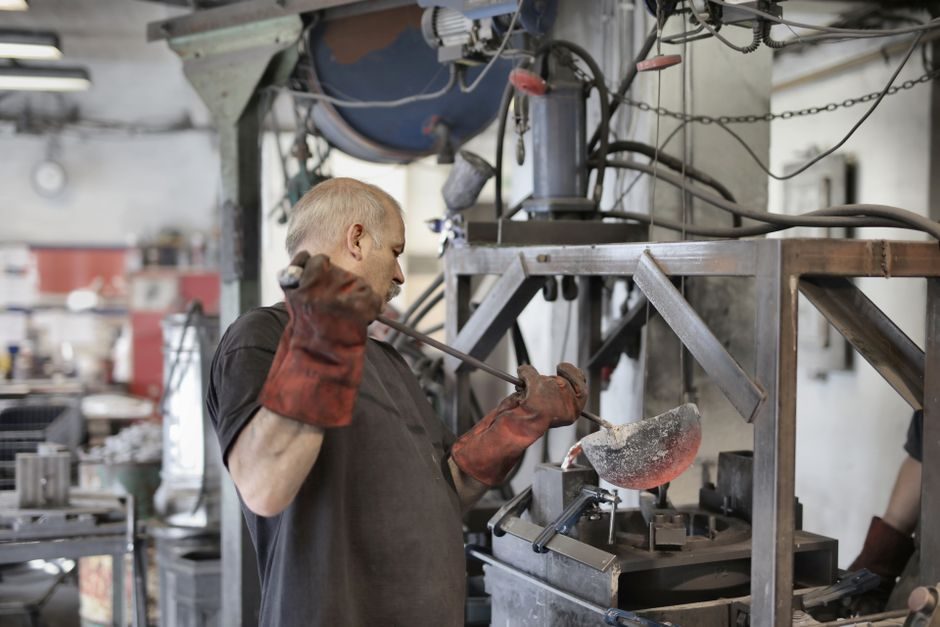
A Foundry Degassing Unit (FDU) for aluminium and its alloys is selected by bath mass, alloy family (e.g. Al-Si, Al-Mg, Al-Cu), target dissolved-hydrogen level, and the gas-mix chemistry — not by vendor brand. Industrial trials on AlSi9Cu3 and similar foundry alloys published in 2024 confirm that refining efficiency tracks rotor speed, gas flow per tonne of melt, and treatment time inside a sealed box [S1].
For a 500-1,500 kg batch, a single-rotor inline degasser running 20-30 rpm with 8-15 l/min argon is the most common build; multi-rotor and porous-plug variants are used above ~3 tonnes or where strict hydrogen ceilings (≤0.10 ml/100 g Al) are set by the foundry's mechanical-property book. Process engineers in non-ferrous job shops treat the FDU as a defined-process node between melt transfer and filter/pour — see the degassing unit reference for the upstream and downstream interfaces that drive spec.
Process Definition and Why Spec Matters
Degassing in a foundry is the removal of dissolved hydrogen and entrained oxides from molten aluminium before casting, using injected purge gas (argon, nitrogen, or argon-chlorine blends) and mechanical dispersion. Without it, melt quality varies, porosity rises, and machined castings fail leak or pressure tests. The 2024 industrial-condition study on AlSi9Cu3 reports measured hydrogen reductions from initial values above 0.30 ml/100 g down to roughly 0.10-0.15 ml/100 g within a 10-20 minute refining cycle, depending on rotor speed and gas flow [S1].
Spec'ing an FDU is therefore a control-loop exercise: the hydrogen target sets residence time, which sets gas flow, which sets box volume and rotor count. In non-ferrous foundries, the FDU is also tied to the hydraulic power unit that drives rotor lift/tilting, and to the FRL unit that conditions the purge gas to a defined pressure and dewpoint.
Selection Criteria: Melt Mass, Hydrogen Target, Alloy
Three inputs drive the FDU build: (1) melt mass per cycle (kg or tonnes), (2) target final hydrogen (ml/100 g Al — typical foundries accept ≤0.15, aerospace foundries demand ≤0.10), (3) alloy sensitivity — Al-Mg alloys pick up hydrogen faster than Al-Si and need a tighter loop. Foundry data show that for AlSi9Cu3 the bubble-residence time, not just gas flow, controls the final hydrogen value [S1].
Other inputs are equally hard: rotor type (graphite vs SiC, single vs multi), box volume vs melt mass ratio (typical 1:1 to 2:1), heating (gas-fired lid vs electric radiant), and gas-mix capability. Argon alone is common; argon + 2-5% chlorine or argon + 5-10% nitrogen blends are used where Na/Na-salt or Mg correction co-occurs. The flow meter on the gas line is a spec item — rotameters are giving way to thermal-mass meters for closed-loop recipes.
Options Compared: Rotary, Porous Plug, and Flux-Assisted
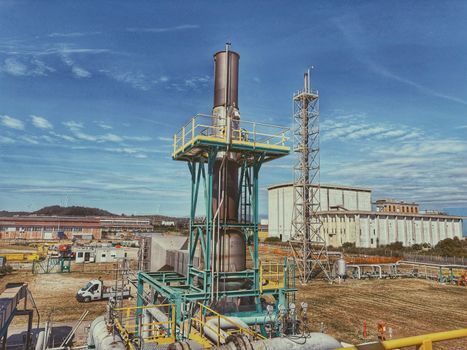
Rotary degassers (single or multi rotor, 200-500 rpm shaft, graphite/SiC impeller) are the workhorse — they disperse gas into fine bubbles and give the most repeatable hydrogen drop. Porous-plug units are cheaper and lower maintenance, but produce larger bubbles, so they need longer cycle times and rarely hit ≤0.10 ml/100 g without a second pass. Flux-assisted degassing (e.g. hexachloroethane tablets) is used in smaller job-shop furnaces where the foundry already runs a sand reclamation unit downstream and accepts the chloride slag. [S1]
On four decision criteria the comparison is clear: rotary wins on hydrogen consistency and on Mg-loss control (no chloride), porous-plug wins on capex and rotor-free maintenance, and flux-assisted wins only on small-batch flexibility. Most OEM 500-1,500 kg builds ship as rotary because the cycle-time penalty of porous-plug offsets its price advantage once production volume rises.
Who the FDU Is For — and Who Should Skip It
The FDU is built for non-ferrous foundries pouring aluminium — gravity die-cast, low-pressure die-cast, and sand-foundry shops running Al-Si, Al-Mg, Al-Cu families. It is a fit for foundries shipping castings that are pressure-tested, machined to leak-tight tolerances, or welded. The 2024 AlSi9Cu3 study sample included exactly that profile: a motor-industry foundry running multi-shift production where hydrogen control determines scrap rate [S1].
It is not for: pure copper/brass shops (hydrogen behaves differently), ferrous foundries (steel degassing is ladle metallurgy, not box degassing), or very small batch operations under ~200 kg per pour where ladle-purge with a lance is more economic. The capex floor on a sealed, instrumented FDU box with rotary shaft and gas-skid sits well above the cost of a lance-and-bottle setup; below ~200 kg/cycle the math flips.
Use Cases from Operating Foundries

Operating data from the cited foundry study: a 700-900 kg AlSi9Cu3 melt in a sealed box, single 200 mm graphite rotor at 350 rpm, argon flow 12 l/min, treatment time 15 min, initial hydrogen ~0.32 ml/100 g, final ~0.11 ml/100 g. Variability between cycles narrowed once rotor speed was held within ±20 rpm and gas flow within ±1 l/min [S1]. The takeaway for spec'ing is that repeatability hinges on holding those two variables inside tight bands — hence the move from rotameters to pressure transmitter-backed mass-flow control on modern builds.
A second common case is the multi-rotor 3-5 tonne unit feeding a low-pressure die-cast (LPDC) line for automotive structural parts. There, two or three rotors run in parallel and the box is gas-fired to keep melt temperature loss under ~5 °C across a 20-min cycle. In both cases, the FDU is interfaced upstream to a holding furnace sizing and selection decision and downstream to filter and launder equipment — the FDU is the middle node of a three-step melt-cleaning chain.
Limits, Failure Modes and Sourcing Signals
The main failure modes spec sheets tend to hide: rotor-shaft seal wear (argon leak → bubbles coarsen → hydrogen creep), refractory spalling on the box lining (Al2O3 build-up shortens residence time), and gas-skid contamination (moisture in lines raises dewpoint → hydrogen re-pick-up). The 2024 study notes that argon-chlorine blends improve hydrogen removal on Mg-bearing alloys but accelerate rotor wear and raise HCl-fume extraction requirements [S1]. Sourcing signal: ask for documented seal life in production hours, and for the rotor-grade (graphite vs SiC vs Si3N4) on the data sheet — Si3N4 lasts 2-4x graphite in chloride service.
Trackable signals: rebuild-versus-replace thresholds on the rotor (typically >3 mm groove depth), argon consumption per tonne (best-in-class 0.5-0.8 m³/t for a 15-min cycle), and the OEM's published hydrogen-vs-time curve for the specific alloy and rotor geometry. The latter is the single best pre-purchase test: a vendor with no published curve for the buyer's alloy is a no-bid for foundries with hard hydrogen ceilings.