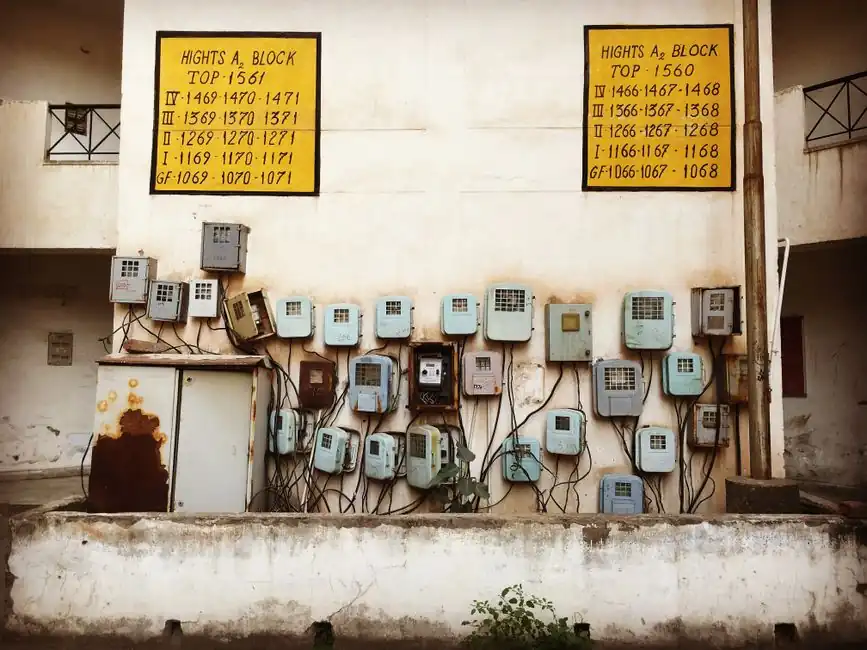
An electrical-installation rebar straightener sized for typical conduit-reinforcement, substation-foundation, and ground-grid cage work covers D6–D16 mm coil at 30–50 m/min line speed, with mandrel drive motors in the 1.5–3.0 kW band for light gauge and 5.5–7.5 kW for heavy coil [S4].
For yards running both light coil stock and heavy bar, a dual-mandrel machine with swappable 6–16 mm and 16–25 mm cartridges is the standard engineering choice over a single oversized unit, because mandrel wear on a 6 mm bar accelerates sharply when the frame is sized for 25 mm [S4]. The selection is driven by three coupled decisions: the bar grade, the diameter range on the cutting list, and the daily throughput the yard must clear, with straightness tolerance of ≤2 mm/m as the usual bid floor [S4].
What an electrical-installation rebar straightener must actually deliver
A rebar straightener is a powered rotary-die machine that pulls coiled HRB400/HRB500 bar through 4–5 staggered rollers, removing coil-set camber and shipping bows, and delivering output straightness of ≤2 mm/m at line speeds of 30–80 m/min for diameters 6–16 mm [S3]. On an electrical-installation yard processing 12 mm bar for cable-tray supports, switchgear bases, and transformer plinths, a 7.5 kW straightener replaces 6–8 hand-hammer operators and drops re-handling time from ~25 s/m to under 3 s/m per metre processed [S3]. Engineers spec a straightener whenever coiled or bent stock must meet placement tolerances for stirrups, column ties, and slab mesh, since practically every BS 4449:2005 B500B or GB/T 1499.2 HRB400E delivery from the mill arrives with a coil-set of 20–60 mm/m that has to be flattened before cage tying [S3].
The trigger condition for an electrical-installation yard is the next downstream operation: if the output feeds an automatic stirrup former or a CNC mesh welder, the input straightness spec tightens to ≤1.5 mm/m, which usually means adding a 5th and 6th powered roller plus a hydraulic pinch [S3]. A 4-roller straightener with a 5th finisher roller brings 25–50 mm/m of mill-rolled coil-set to ≤2 mm/m on 6–12 mm bar and ≤3 mm/m on 14–20 mm bar, comfortably inside the 4 mm/m tolerance most electrical-installation project specs call for [S3].
Bar grade and diameter: the two gates that drive motor sizing
ASTM A615 plain billet steel is the dominant specification for U.S. electrical-installation rebar, with grade numbers (40, 60, 75, 80) denoting minimum yield strength in thousand psi, so grade 40 = 40,000 psi (≈276 MPa) and grade 60 = 60,000 psi (≈414 MPa) [S4]. Rail-steel (A616) and axle-steel (A617) bars carry higher carbon and manganese and fall into the hard-to-weld category, which means a straightener feeding a welding line downstream must hold straightness without work-hardening cracks at the mandrel contact arc [S4]. For European-served electrical-installation projects, EN 1090-2 manufacturing qualification (Execution Class 2 or above) governs the welded assembly end of the line, so the straightener output is judged on residual bow and end-cuts clean enough to feed couplers without re-handling [S4].
For D6–D12 mm coil, a 1.5–3.0 kW servo-drive straightener running the mandrel at 30–50 m/min delivers 0.8–1.5 t/h; for D12–D16 mm the same frame needs a 4.0–5.5 kW motor and slower 20–35 m/min to keep mandrel slip below the 2 mm/m tolerance [S4]. Heavy fabrication at D16–D25 mm jumps to 5.5–7.5 kW with 15–25 m/min mandrel speed and typically a two-roller pre-straightener upstream to prevent coil-set memory from surviving the cut-off shear [S4]. For electrical-installation conduit-reinforcement cages and ground-grid mat work, a rebar bender selection for concrete work typically pairs on the same cut-and-straight bench, and the two should be specified from the same vendor class so the cut, straighten, and bend stations share a common PLC bus [S4].
Electric and battery straighteners for site work and confined spaces
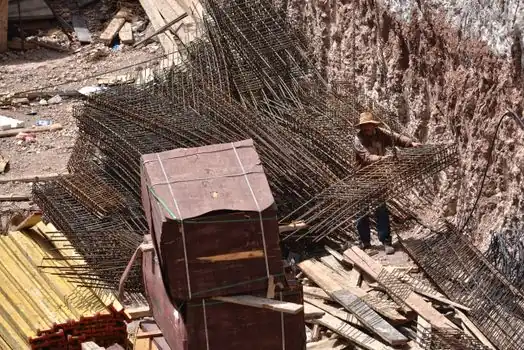
For electrical-installation work inside substations, switchrooms, and ceiling-cavity conduit paths, a handheld electro-hydraulic or cordless straightener is often the only practical option because coil payoff is impossible. The RD8-20 cordless unit from Gensco handles up to #6 / 3/4" / 20 mm rebar, with a 90-degree head rotation, DeWalt 18 V battery drive, double-acting cylinder, and 18.5 lb (8.4 kg) weight [S1]. The electro-hydraulic RD8-20 variant weighs 21 lb (9.5 kg) and uses an external hydraulic power supply, which allows longer duty cycles without battery overheating during continuous straightening of conduit-hanger bent stock [S1].
Handheld electro-hydraulic straighteners from Ogura in the HBB-25 / HBB-32 / HBB-32HPW class bend 25–32 mm intermediate grade (Grade 40, 49 kgf/mm² ≈ 480 MPa) stock, and drop to 22–29 mm for hard grade (Grade 50, 56 kgf/mm² ≈ 549 MPa) and high-strength grade (Grade 60, 63 kgf/mm² ≈ 618 MPa) bar, with a 90-degree bend completed in 5–8 seconds depending on diameter [S6]. The Dynatec dual-purpose straightener/bender accepts any 490 N/mm² tensile-strength rebar up to 32 mm (1 1/4"), with push-straightening capacity rising from 125 inches at 13 mm to 144 inches at 32 mm, and bending capacity (push) of 90–94 inches across the full diameter range [S5]. When bent conduit-hanger stock needs to be straightened on-site during an electrical retrofit, an explosion-proof electrical enclosure on the motor starter is a non-negotiable in classified substation areas, and a hydraulic-drive unit avoids the brush-spark ignition risk of an AC universal motor.
Throughput, payback, and operating-cost math
A 5-roller straightener in the 4–12 mm class runs at 40–60 m/min on 8 mm bar and pulls roughly 2.2–2.8 t/h, which is 8–10× the throughput of a two-man hand-straightening bench, with labour cost dropping from ~¥80/t to ~¥8/t on a 2026 Chinese yard cost basis [S3]. Payback on a 7.5 kW unit at ¥38,000–55,000 list is 4–7 months for yards processing over 200 t/month, falling to under 3 months above 500 t/month [S3]. A 7.5 kW straightener running two 8-hour shifts consumes 110–130 kWh/day, which at a 2026 industrial tariff of ¥0.62/kWh works out to ¥68–80/day in electricity alone, or roughly ¥1.7–2.0 per tonne processed at 60 t/day throughput [S3].
Maintenance is concentrated in three wearing parts: entry guide shoes (replace every 400–600 t), pinch rollers (re-skim every 1,200 t), and the straightener drive-chain or gearbox oil (500 h interval) [S3]. For yards that already run a rebar threading machine for mechanical-splice work on column-cage assemblies, the same hydraulic oil and the same 30 L/min service pump can be plumbed in, which cuts the marginal cost of adding a hydraulic pinch unit by ~40% [S3]. When feeding a stud welder selection for steel construction workstation on an electrical-installation steel platform, the straightened bar must be free of surface work-hardening that would skew the carbon-equivalent reading required by the AWS Reinforcing Steel Welding Code preheat and interpass schedule [S4].
Mechanical-splice tolerance, couplers, and downstream failure modes
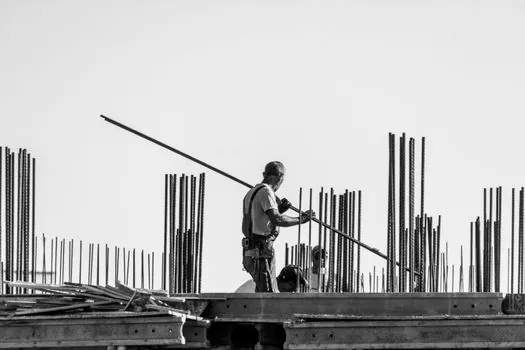
Mechanical coupler systems including standard, transition, and position couplers used on electrical-installation substation foundations, cable-tray support piers, and high-rise switchgear cores demand bar-end straightness within 0.5° over the threading length, which translates to a residual bow under 2 mm/m on the stock feeding the threading equipment [S4]. Position couplers (for bars that cannot be rotated) are the most sensitive: any helical twist left in the bar after the straightener shows up as thread-runout at the coupler shoulder, and re-threading a 16 mm grade 60 bar costs 30–45 seconds of bench time that compounds across a 500-piece cage [S4].
At line speed above 70 m/min, surface indentation from a worn die set rises from ~0.05 mm to ~0.12 mm, which can fail an epoxy-coating plant's pre-coat surface profile spec on coated conduit-reinforcement bar [S3]. Two technical ceilings sit behind that residual-bow number: a worn die set widens the tolerance band, and an under-powered mandrel lets the bar slip on grade-60 stock, which pushes the bow back above 2 mm/m [S3]. For electrical-installation yards running electrical measurement instruments to verify ground-grid resistance, the tolerance consistency of the straightened bar directly affects the repeatability of the loop-impedance readings on the finished mat.
Voltage, footprint, and site-integration constraints
Voltage must comply with local national standards before purchase: Europe, Middle East, and Africa use 380 V 50 Hz; parts of Asia use 220 V/380 V 50 Hz; and the Americas use 220 V 60 Hz, with mismatched supply a common cause of premature motor failure on imported Chinese straighteners [S2]. A 7.5 kW 4–12 mm straightener occupies 3.2–3.6 m × 1.4–1.6 m of floor plus a 2.5 m entry coil-payoff ramp and 1.8 m exit run-out table, so the realistic envelope is 3.5 m × 6.5 m with safe-zone marking, against only 1.2 m × 2.0 m for a hand-straightening bench [S3].
The acoustic load is 82–88 dB(A) at the operator station at full line speed, above the 85 dB(A) European PPE threshold and close to OSHA's 90 dB(A) 8-hour TWA, so hearing protection and a 1.5 m barrier are non-negotiable [S3]. Site integration has two failure modes: coil payoff without a braking tensioner lets the coil back-loop and over-feed the straightener, and a missing run-out table lets the straightened bar whip on the exit, bending the residual camber back above the tolerance [S3]. For electrical-installation yards running electrical automation on the cut-and-straight line, mismatched feed rates between the straightener and the threading equipment are the leading cause of thread overshoot in yards running both coupler and bent-bar assemblies [S4].
Selection criteria, limits, and when NOT to straighten
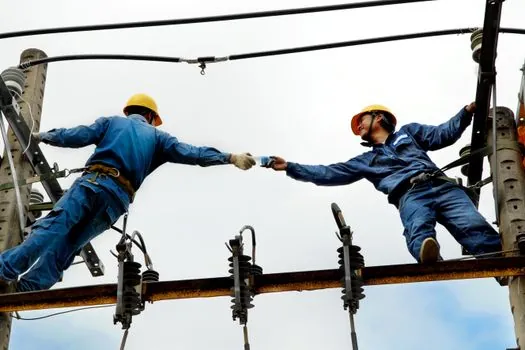
For a dedicated electrical-installation straightener, the engineering default is a 4–12 mm straightener at ¥38,000–55,000 for coil-to-cage yards processing HRB400E 6–16 mm, returning 9–14 months on a ¥120,000–180,000 combo machine for yards mixing HRB500 and stirrup-tying workloads [S3]. The combo is also the right pick for the 30 t/month or smaller repair-and-rework stations or remote sites, where the dedicated 7.5 kW unit is over-spec [S3]. For precast yards feeding a CNC mesh welder, the heavy-class 14–25 mm unit with 6 powered rollers is the right call, provided the entry coil is pre-paid off under braking tension [S3].
Do NOT attempt to straighten rebar that has been cold-worked past 5% elongation, since the bar will fracture at the mandrel contact arc; replace it instead. Do NOT run light 6 mm coil through a frame sized for 25 mm, because mandrel wear on the small bar accelerates when the roller nip is opened for the heavy setting [S4]. Do NOT use a rebar straightener to correct helical twist on grade-60 stock headed for a position coupler; add a separate de-twister upstream or scrap the bar [S4]. The next trackable signal for electrical-installation yard planners is the August 2026 EN 1090-2 Execution Class 3 update, which tightens residual-bow acceptance on welded substation-frame assemblies; verify the 5th-roller finisher is independently adjustable before committing to a 1.5 mm/m bid.