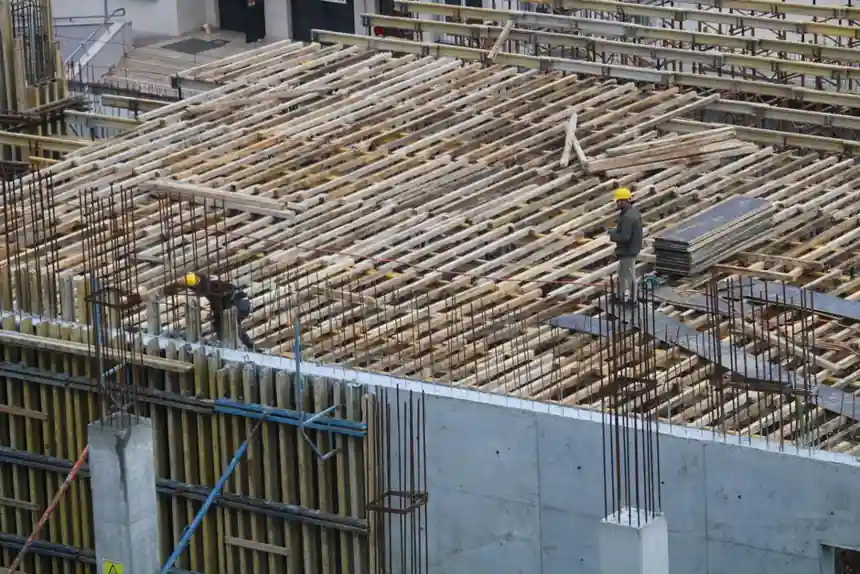
An HVAC-installation rebar straightener falls into one of two spec bands: 1.5-3.0 kW portable for #3 (10 mm) through #6 (19 mm) deformed bar on single-phase 220 V, or 5.5-15 kW stationary on 380-440 V three-phase for coil-fed runs at 30-55 m/min [S3][S4].
Pick the wrong band and you either burn out a 5.5 kW motor on bar it was not rated for, or you waste a 1.5 kW unit trying to push #7 (22 mm) coil through dies sized for #5 (16 mm) [S4]. HVAC scopes (chiller pads, rooftop-curb embedment, seismic-bracing anchors, condensate plinths) cluster around 12-25 mm bar with occasional 32 mm tie bars, which sits inside the portable unit's duty envelope and at the lower edge of the stationary band [S3][S5].
What the machine actually has to do on an HVAC pour
A rebar straightener feeds coiled or bent bar through a high-speed rotor fitted with tungsten-steel or ball-end dies; the rotor's curved-rotation action removes coil set, scale, and minor bends without cutting the bar's cross-section, and the same pass strips surface rust from small-diameter stock [S4].
On an HVAC scope, the straightener is feeding stirrups, anchor bolts, saddle-support dowels, and embedment cages for equipment pads, not producing building-column stock. Bar counts per pour are an order of magnitude below a structural column line, which shifts the machine choice toward a portable or bench-top rolling unit rather than a free-standing workshop line [S3][S5]. A stationary YG-class straightener is justified only when the HVAC contractor is also supplying a fabrication shop or sharing coil feed with a rebar sub on the same site [S4].
Two hard gates: bar diameter and straightening speed
The first hard gate is bar diameter. Most portable straighteners cap at #6 (19 mm) bar; going to #7 (22 mm) or #8 (25 mm) rebar demands a heavier 4.0-7.5 kW shop machine on 380-440 V three-phase, rarely available on a residential service truck [S3].
The second hard gate is straightening speed. 4-6 m/min is the practical ceiling for a portable unit before bar surface gets scuffed and rib geometry deforms, which compromises bond strength in concrete; a unit that runs faster than 8 m/min is generally a bender retrofit, not a purpose-built straightener, and will produce a measurable drop in rib height on the inside of the bend [S3]. On the stationary side, the YG family delivers 30-55 m/min, with the 11 kW YG-11 and 15 kW YG-15 holding the upper 35-55 m/min band [S4]. HVAC crews almost never need production-line speed; a slow, controlled pass through a portable unit matters more than throughput. The wider straightener-spec map for interior finishing crews, where similar 1.5-3.0 kW envelopes dominate, is covered in a related selection guide.
Portable band: 1.5-3.0 kW, 90-180 kg, 220 V single-phase
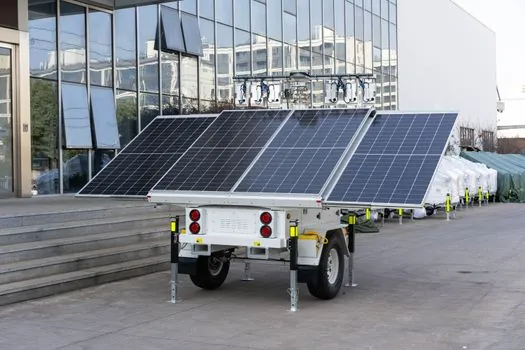
Single-phase 220 V, 1.5-2.2 kW units cover the #3 (10 mm) to #5 (16 mm) range, weigh 90-120 kg, and are the realistic pick for a plumbing or HVAC service truck [S3]. Three-phase 380 V, 3.0 kW units add #6 (19 mm) capacity and weigh 150-180 kg, still forklift-portable but no longer a one-person lift.
For interior mechanical rooms and finished basements where the straightener has to be wheeled through a standard 900 mm doorway, footprint and wheel diameter matter as much as mass: chassis under 700 mm wide with 150 mm casters, fold-down handle so the unit stands vertical against a wall when not in use [S3]. Handheld hydro-electric tools such as the RD8-20 (18.5 lb / 8.4 kg, DeWalt 18 V battery, max #6 / 3/4" / 20 mm) cover field-repair and confined-space work but are not a substitute for a bench unit on a pad-pour scope [S1].
Stationary band: YG-6 to YG-16, 5.5-15 kW, 380-440 V three-phase
The YG family covers 4-12 mm round bar and 4-10 mm threaded bar at 30-55 m/min line speed, with frame masses from 230 kg (YG-6, 5.5 kW) up to 550 kg (YG-15, 15 kW) [S4]. The YG-16 combines a 9 kW and a 5.5 kW motor on one frame for a dual-stage pass; a dedicated breaker and a contactor sized at 1.25× full-load current are mandatory for every model in the family [S4].
For a rebar processing line, the straightener typically pairs with a rebar bender of the same kW band and a rebar cutter matched to the same #3-#6 envelope so the crew is not swapping tooling between bars. Threaded bar for HVAC embedment work shifts the downstream tool chain to a thread-rolling machine at 3-6 kW on 380 V, with coupler stock in 40Cr or 45# carbon steel matched to the rolling die's pitch [S5]. The matching rebar bender reference documents the electrical envelope and bending-pin geometry for the bender that almost always pairs with a YG straightener on a fabrication line.
Site prep and acceptance test for stationary installs
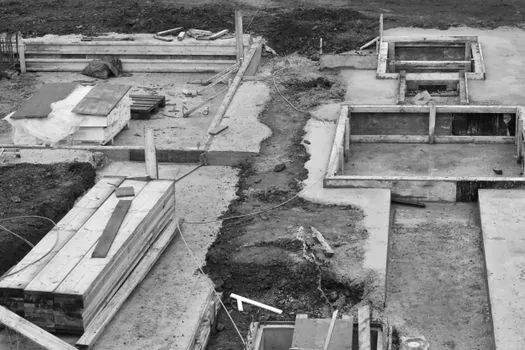
Installation of a stationary rebar straightener (YG-6 to YG-16 frame, 230-550 kg machine mass) is governed by a fixed sequence: site prep, anchor bolt pull-test, frame leveling, electrical termination, oil and grease fill, and a no-load trial before any coil is fed [S4].
Concrete floor compressive strength should be at least 25 MPa (C25), and the pad must cure a minimum of 7 days before anchor bolts are torqued; early loading on green concrete is the leading cause of pad cracking under 500 kg+ units like the YG-15 [S4]. The YG-15 footprint is 2050 × 650 × 1100 mm; plan at least 800 mm of clearance on the feed side and 1500 mm on the exit side for coil payout and cut-length stacking. Drill and set M16 × 200 mm anchor bolts in a 4-bolt pattern and torque to 110 N·m after the grout reaches design strength; shim and level the base frame to ≤ 0.2 mm/m using a precision spirit level on the die-housing reference surface [S4]. A 0.5 mm shim error at the base typically shows up as 2-3 mm/m lateral drift at the exit die, so this gate is not optional. Acceptance on the first production run: feed 5 m of known-good scrap bar and inspect exit straightness with a 1 m straightedge; acceptance is ≤ 1 mm bow over 1 m [S4]. For a portable unit, the acceptance gate is simpler: same 1 m straightedge, same ≤ 1 mm bow, but the test bar is whatever the crew pulled off the truck, not a mill coil.
Standards and acceptance: where straightener output meets the code
Straightened rebar that is then embedded in concrete has to satisfy the project's reinforcing-material standard, not a straightener certification, because the straightener itself is not separately certified in any of the major codes [S8]. For Australian rebar processing yards, the relevant standards are AS/NZS 4671 for steel reinforcing materials and AS 3600 for concrete structures; the straightener itself is not separately certified, but its output (straightness tolerance, typically 2 mm/m or better for D6-D16) feeds the compliance chain [S8].
For U.S. scopes, the bar itself has to meet ASTM A615 grade 40, 60, 75, or 80, and the embedded straightness has to satisfy ACI 318 hook geometry where the bar is bent; a straightener is not a substitute for a rebar bender on hooks, stirrups, or any bend that has to meet that geometry [S3][S9]. CE marking on the machine is a baseline requirement for European HVAC projects, and ISO 9001:2015 manufacturer certification is the marker Indian and Chinese OEMs publish to signal quality-system coverage on the threading and forging lines; both certifications are documentation items, not performance guarantees, so the on-site acceptance test on the first production bar remains the gate [S5].
Decision matrix: which band for which HVAC scope
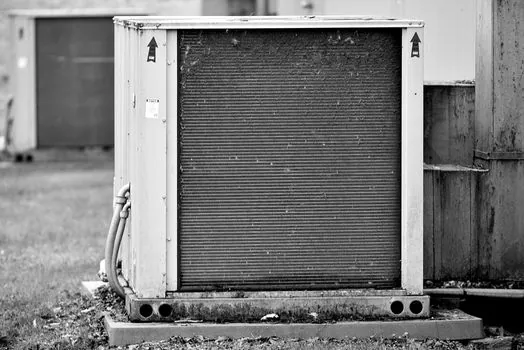
Portable 1.5-3.0 kW, 90-180 kg, 220 V single-phase: chiller pads, rooftop-curb embedment, condensate plinths, residential retrofit, any scope with 50-200 bar ends per week at #3-#5 (10-16 mm) [S3][S5].
Stationary 5.5-15 kW, 230-550 kg, 380-440 V three-phase: fabrication-shop supply, seismic-bracing anchor production runs, any scope with coil feed at 30-55 m/min or bar diameters reaching #6-#8 (19-25 mm) [S4]. Handheld hydro-electric 18 V, under 10 kg: field repair, confined-space coil straightening, single-bar touch-up on a finished pour [S1]. Pricing the rebar straightener on a portable frame: the chassis, dies, and 1.5-3.0 kW motor are the cost drivers; throughput and roller material are the spec drivers; warranty and dealer service radius are the risk drivers. Two trackable signals for the next planning cycle: (1) whether dual-motor frames such as the YG-16 ship with a factory-matched rebar bender as a single SKU, which would compress on-site electrical work, and (2) whether any major OEM publishes a documented rib-height loss test at 6 m/min vs 8 m/min on #4 (13 mm) bar, which would settle the portable speed gate with data rather than opinion.
Component reference pages worth checking: marine hvac.
See also our earlier report, Stud Welder Selection for Steel Construction: Process, Size, and Power-Source Map.