Explosion-proof electrical for confined space entry is governed by a single decision chain: identify whether the space is permit-required under OSHA 29 CFR 1910.146, confirm the atmosphere against NEC Class/Division or Zone criteria, then match the fixture's protection technique, voltage, and ingress rating to both [S1][S3].
The three binding thresholds a process engineer must record on the entry permit are: oxygen at or below 19.5% by volume, flammable gas at or above 10% of the lower flammable limit (LFL), and toxic contaminants such as hydrogen sulfide at or above 10 ppm on an 8-hour TWA, after which the OSHA sewer-entry model program specifies Class I, Division 1 lighting and electrical equipment [S1].
Match the Protection Technique to the NEC Class, Division, and Zone
OSHA 29 CFR 1910.307 accepts both the legacy Class/Division system used in the United States and the Zone system used internationally, so an engineer can legally install either, provided the fixture carries the right third-party mark for the exact gas group and temperature class [S3]. The Zone system maps continuous hazard presence to Zone 0/20 with Category 1 equipment, occasional presence to Zone 1/21 with Category 2, and rare presence to Zone 2/22 with Category 3, while the NEC Class I/II/III, Division 1/2 split carries identical safety intent through different nomenclature [S2][S3].
Explosion-proof (flameproof "d"), increased safety "e", and intrinsic safety "i" are the three protection techniques most often specified for confined space lighting, fans, and gas monitors; each enclosure, cable gland, drain, and fitting must be third-party tested against flame path, gas pressure, dust ingress, moisture, vibration, and corrosion before it is allowed into a permit space [S5][S8]. A working explosion-proof electrical primer is the fastest way to align the protection letter code with the installed gas group.
Voltage, GFCI, and the 12 V Threshold for Wet Conductive Locations
OSHA 29 CFR 1926.405(a)(2)(ii)(G) requires portable electric lighting used in wet or other conductive locations such as drums, tanks, and vessels to operate at 12 V or less, unless the 120 V supply is protected by a ground-fault circuit interrupter, which is the literal text of the construction standard [S3][S4]. European practice narrows the same risk with even tighter 24 VAC in dry, cool spaces and 12 VAC in hot, humid spaces, and stretches to 48 VAC only for longer chain configurations where voltage drop would otherwise starve the tail fixture [S2].
Low voltage alone does not buy explosion protection, which is a frequent specification error: a 12 VAC hand lamp with a generic jobsite enclosure can still ignite a Group D vapor if the seal fails, so the enclosure certification must be read alongside the voltage line on the nameplate [S2][S3]. Engineers who need a fixture specifically rated for hazardous-area hand-lamp duty should consult the explosion-proof light selection guide before accepting a low-voltage data sheet at face value.
Atmospheric Trigger: 10% LFL, 19.5% O2, and the Permit Decision
The OSHA 1910.146 Appendix C sewer-entry model treats the space as permit-required from the moment any of three atmospheric triggers is met, namely oxygen at or below 19.5% by volume, flammable gas at or above 10% of the LFL, or hydrogen sulfide at or above 10 ppm on an 8-hour TWA, and at that point the same appendix tells the employer to specify Class I, Division 1 lighting and electrical equipment [S1]. The reading is binary: if the atmosphere can reach the trigger, the fixture list on the entry permit must already be Class I, Division 1, because there is no graceful degradation path once a flammable cloud forms inside a steel vessel.
Where the atmosphere is consistently below trigger, a rugged low-voltage portable light may be all that is required, and the entry can be reclassified as non-permit, but only after mechanical ventilation can hold the space in a safe condition per 1910.146(c)(5) and a written pre-entry check has been filed at the job site [S1][S3]. Permit logic is identical whether you are entering a refinery vessel or a pharmaceutical reactor, and the permit-required confined space entry reference lays out the same atmospheric and electrical gates in a checklist form that a supervisor can countersign.
Comparing Protection Options Against Four Selection Criteria
For most confined space work, the realistic candidates are flameproof "d" luminaires, increased safety "e" luminaires with separately certified drivers, and intrinsically safe "i" battery-powered hand lamps, and a clean comparison makes the trade-offs obvious. The four criteria that matter on a permit are: maximum surface temperature versus the gas auto-ignition point, voltage class on the cable (12 V vs 24 V vs 120 V GFCI), enclosure ingress rating for wash-down and dust, and physical mass for tripod or harness mounting inside a vessel. [S3]
Flameproof "d" enclosures tolerate the highest internal pressures and are the default for Class I, Division 1 Group B hydrogen service, but they weigh more and require precision-machined flame paths that cannot be re-machined in the field [S5][S8]. Increased safety "e" is lighter, cheaper, and common for Zone 1 luminaires where gas groups are C or D, but it cannot be used where an explosive atmosphere is continuously present, so it drops out of any Zone 0 or Division 1 Group B application [S2][S5]. Intrinsically safe "i" hand lamps limit circuit energy below ignition threshold, run for many hours on a battery, and are the safest pick for inspectors doing short-duration entries, but lumen output is the lowest of the three so task lighting on a long shift still calls for a flameproof or increased-safety fixture [S3][S5].
Ingress Protection, Cables, and Glands Inside the Space

Ingress protection is the second specification line that gets overlooked, and inside a steam-cleaned reactor an IP66 minimum is the practical floor, with IP67 expected for any fixture that can be temporarily submerged in a vault or manhole [S3][S4]. Cable management is the third: portable cord must be routed so it cannot foul a retrieval line, and the gland on a temporary fixture must be the same hazardous-location rating as the enclosure, because an ordinary nylon gland on a Class I housing invalidates the certification regardless of what is stamped on the body [S3][S8].
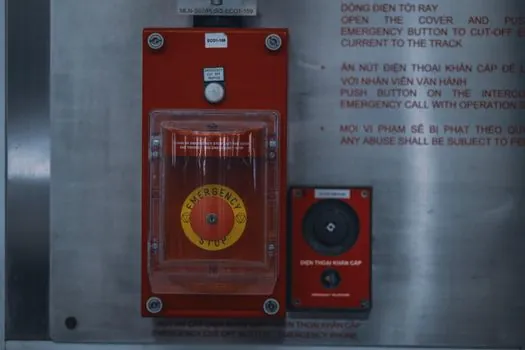
For motorized equipment such as confined space blowers used to ventilate a vessel before and during entry, the same protection rules apply to the motor and the cable reel, and the explosion-rated blower line is the fastest cross-reference for matching fan duty to gas group and temperature class [S6]. Distribution hardware inside the space, from junction boxes to push buttons, follows the same certification ladder, and the explosion-proof distribution and explosion-proof button references are the practical place to confirm the gland, thread, and torque values before energizing.
What Goes Wrong: The Recurring Specification Mistakes
Three mistakes show up again and again in incident reports and OSHA citations. First, a general-purpose jobsite light is dropped into a tank that previously held a flammable solvent, with no Class I, Division 1 rating, which is the most common citation pattern in confined-space enforcement actions [S3][S7]. Second, low voltage is treated as a substitute for hazardous-location certification, even though a 12 V halogen hand lamp with a hot filament in a non-explosion-proof housing is still a competent ignition source [S2][S3]. Third, the entry permit is written for a non-permit space even though mechanical ventilation cannot hold the atmosphere below the 10% LFL trigger, which then makes the entire electrical plan retroactively non-compliant [S1][S3].
A fourth, smaller error is ignoring surface temperature class: a fixture marked T3 (200 °C maximum surface) is unsuitable for a solvent with an auto-ignition below 200 °C, and the right T-class must be written into the permit alongside the Class and Division [S2][S5]. The general explosion-proof equipment overview gives a clean side-by-side of protection letter, gas group, and temperature class, which is the easiest way to keep all four numbers aligned on one permit line.
Documentation, Inspection, and Trackable Signals for the Next Quarter
The documentation chain that survives an OSHA audit is short: a written entry permit, a pre-entry atmospheric test record signed by a trained gas-detector lead worker, the Class/Division or Zone classification of the space, and the third-party certification file for every fixture taken inside, with cord and gland inspection logs attached [S1][S3]. Most enforcement cases in 2024-2026 cite failures across more than one of these, with lighting and inspection records the most frequent pair [S7]. A practical signal to track in the next quarter is whether the facility's hazardous-area classification drawings are dated within the last 36 months, because re-classification after a process change is a documented trigger for re-issuing the electrical equipment list, and that list is where this spec-first selection method earns its keep.
This topic is covered further in Anti-Static Equipment Selection for Permit-Required Confined Space Entry.