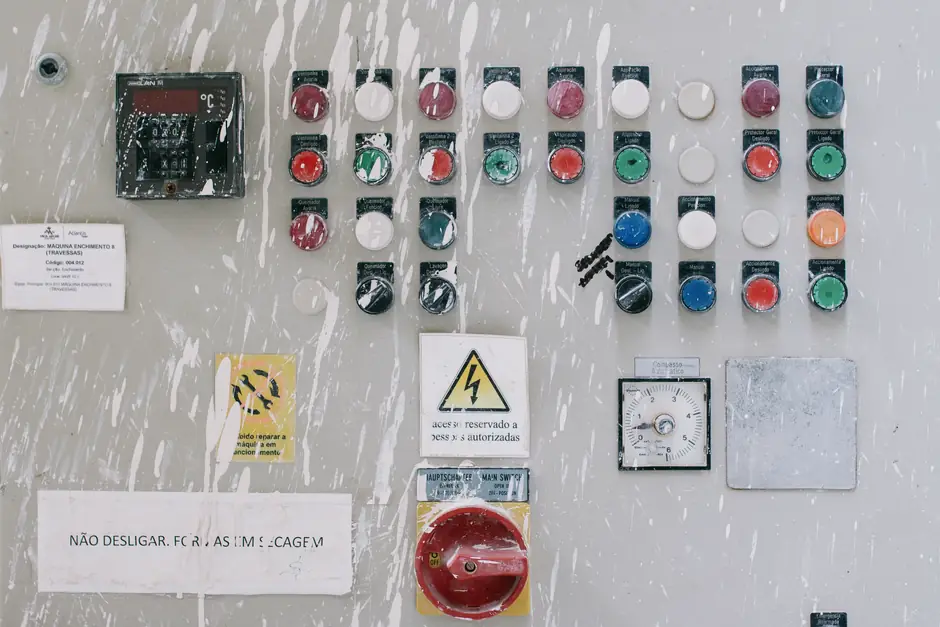
OSHA 1910.307 requires that equipment in any hazardous (classified) location be intrinsically safe, approved for the location, or safe for the location, and marked for class, group, and operating temperature [S1].
For warehouse operations storing flammable liquids, solvents, paints, pesticides, or combustible dusts (grain, sugar, aluminum, plastic pellets), the first engineering decision is which Class I/II/III Division 1 or 2 zone the room, section, or area actually falls into, because OSHA treats every room individually rather than the whole building as one hazard [S1].
Classify the Room Before You Specify a Fixture
Under the NEC Class/Division system adopted by OSHA 1910.307, Class I covers flammable gases or vapors (typical of drum storage, aerosol warehousing, and paint rooms), Class II covers combustible dusts (grain elevators, flour mills, plastic pellet silos), and Class III covers ignitable fibers and flyings (textile, paper, wood waste) [S1][S5].
Division 1 means the hazard is present during normal operations; Division 2 means it appears only during abnormal conditions, and for warehouse lighting specifically the industry split sits at roughly 30% Division 1 versus 70% Division 2 in upstream-adjacent facilities, so a typical finished-goods warehouse is most often a Div 2 build [S5].
Equipment must be approved not only for the class but also for the specific gas group (A through G in the NEC system) and for the combustible properties of the dust or fiber actually present, which is why a generic "explosion-proof" SKU without group letters is not a valid warehouse submittal [S1].
Match the Protection Concept to the Zone
Inside the IECEx/ATEX vocabulary that increasingly appears on North American warehouse bills of material, the common protection types are flameproof enclosure "d", increased safety "e", pressurization "p", and intrinsic safety "ia/ib/ic", each suited to a different likelihood of atmosphere presence [S3].
Flameproof "d" enclosures contain an internal explosion and prevent flame transmission; increased safety "e" blocks excessive temperature and arcs on normally non-sparking parts; pressurization "p" holds a positive protective-gas pressure to keep the interior above the flammable concentration; intrinsic safety limits circuit energy so ignition is impossible even under fault [S3].
For warehouse Div 2 / Zone 2 spaces, increased safety "e" lighting and distribution gear, plus intrinsic safety for instrumentation loops, is the usual combination, while Div 1 / Zone 1 aisles next to open drum pumps still need flameproof "d" hardware on motors, explosion-proof distribution cabinets, and switchgear [S3][S6].
Certifications and Enclosure Standards That Gate Submittals
UL 1203 is the dominant North American standard for explosion-proof and dust-ignition-proof electrical enclosures, covering the cast-metal housings used for junction boxes, control stations, and load centers in hazardous locations [S2].
UL 844 governs hazardous-location luminaires specifically, while ATEX 2014/34/EU and IEC 60079 govern the EU and most international projects, and OSHA 1910.307 explicitly recognizes equipment "approved for the hazardous (classified) location" without mandating a single certifier [S1][S2][S3].
Warehouse specifiers should require a marking string that includes the class, division or zone, gas or dust group, and temperature code (T-rating); a unit marked only "Class I" without a division or group does not satisfy 1910.307(c)(2)(i) on a real bid [S1].
Lighting, Distribution, and Control Gear: The Three Line Items
LED explosion-proof light fixtures are now the default for warehouse retrofits, drawing roughly 90% less energy than legacy HID units and reaching service lives near 100,000 hours, which changes the lifetime cost math even though unit price is higher than standard high-bay fixtures [S5].
Explosion-proof distribution cabinets and load centers feed the rack and aisle circuits; chemical-storage-compatible panels from US manufacturers carry main ratings of 100 to 225 amps in explosion-protected configurations, sized for sub-panel rather than service-entrance duty in most warehouse rooms [S6][S7].
For operator interfaces, explosion-proof button stations and explosion-proof electrical junction enclosures handle motor starters, conveyor E-stops, and packaged control panels inside the classified envelope, and any panel feeding a hazardous area must live in an approved enclosure whether the interior components are hazardous-rated or not [S8].
Material Selection, Temperature Codes, and Dust Margins
Stainless steel AISI 304 and AISI 316L, aluminum alloys, borosilicate glass, and selected plastics are the typical enclosure materials, chosen for corrosion resistance, impact strength, and tolerance of the warehouse thermal environment [S3].
Wet or wash-down warehouse rooms benefit from 316L for chloride resistance, while dry indoor Div 2 spaces are usually served by aluminum or coated carbon steel at lower weight and cost [S3].
Surface temperature is the most commonly missed submittal detail: for dust atmospheres the equipment's maximum surface temperature must sit below the dust cloud or layer ignition temperature with a defined safety margin, which often forces a T4 or T5 rating rather than the looser T6 that would otherwise be acceptable [S3].
Decision Map: Div 1 vs Div 2 vs Non-Hazardous Warehouse Rooms
Use the comparison below to shortlist hardware before pulling datasheets: Class I/II Division 1 rooms need flameproof "d" enclosures and Div 1-rated luminaires; Division 2 rooms accept increased-safety "e" gear with a documented gas group; non-hazardous stock rooms revert to standard NEMA-rated panels and high-bay fixtures, no ATEX/IECEx surcharge required [S1][S3][S5].
Total cost of ownership still favors explosion-proof hardware in any room that could plausibly shift classifications after a tenant change, because re-classifying a standard-fixture warehouse into Div 1 later costs more than specifying Div 2-rated gear up front, and insurance carriers increasingly require the higher spec for solvent and aerosol tenants [S4][S5].
For a related commodity-handling decision in the same facility, see this IBC tank selection for chemical shipping spec map, which covers the container side of a chemical warehouse, and for plant-wide network gear in classified spaces this industrial router selection map lines up the cabinet-side connectivity options.
Common Failure Modes and Inspection Triggers
The four recurring failure patterns in warehouse explosion-proof installations are: (1) missing or painted-over conduit threads, which break the flamepath; (2) field-drilled enclosure penetrations without certified fittings; (3) replacement lamps or drivers that exceed the original T-rating; and (4) gaskets damaged during routine bulb changes, all of which void the UL 1203 / UL 844 approval on the spot [S2][S8].
OSHA 1910.307(b) requires that areas designated as hazardous after August 13, 2007 be properly documented and that documentation be available to designers, installers, inspectors, and maintainers, so a warehouse re-roofing project that disturbs classified-area conduit needs an updated classification drawing on file before re-energization [S1].
Market direction through 2026 continues to consolidate around LED luminaires, increased-safety distribution, and IoT-ready monitoring devices, with motors, lighting, control panels, switches, junction boxes, cable glands, and monitoring as the eight dominant product categories tracked across vendors [S9].
Track the next revision of your facility's hazardous-area drawing, the T-code on every replacement LED driver installed in a classified aisle, and the certification mark on any field-supplied junction box, because each is a routine trigger that catches a Div 1/Div 2 mismatch before it shows up in an audit.