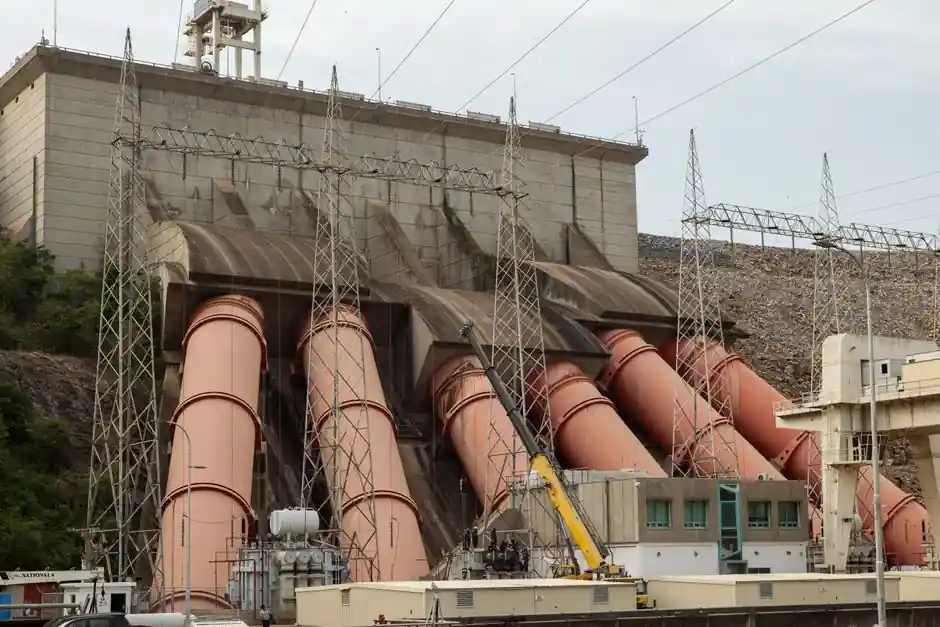
Semiconductor fab hydraulic power units (HPUs) are a narrow sub-class of hydraulic power unit designed to drive vacuum valves, slit doors, robotics handlers, and chemical delivery actuators without shedding particles, moisture, or hydrocarbon vapor into cleanroom air [S1][S6].
Where a generic Chinese-supplied mini power pack from Vibo Hydraulics is sold at 160-200 USD FOB with a 6,000 sets/month capacity for electric stackers and car lifts [S1], a fab-grade HPU is engineered to a different cleanliness, leak, and temperature envelope, even though both use gear pump and reservoir core architecture.
Cleanliness and Fluid-Contact Surface Requirements
ISO 4406 solid contamination coding is the single most cited cleanliness gate on a fab HPU specification sheet, with most process-tool vendors writing 18/16/13 or tighter per millilitre of fluid drawn downstream of the filtration stack [S1].
Stainless 304 or 316L reservoirs, electropolished internal welds, and Viton or perfluoroelastomer seals replace the carbon-steel tanks and NBR seals common in low-cost stacker packs from suppliers such as Weihai Forward Hydraulics or Hman Machinery, whose standard offerings are built around hydraulic gear pumps and general reservoirs [S2][S4].
Particulate filtration is usually specified as a 3-micrometre absolute beta-200 in-line filter on the pressure line plus a 0.5 to 1-micrometre return-line polishing stage, mounted inside a sealed housing to keep the filter element from outgassing back into the hydraulic loop.
Degassing, Vacuum Operation, and Pump Selection
A 12V DC 10-litre car-lift pump on eBay rated for 2,900 PSI (about 20 MPa) double-acting duty is functional evidence of how cheap commodity HPUs are built: open reservoir, single gear pump, no nitrogen blanket, and no vacuum-rated shaft seal [S5][S10].
For semiconductor tools, the same physical machine needs an integrated degassing unit or vacuum-rated pump head, because dissolved air comes out of solution in the low-pressure inlet of the pump and forms microbubbles that collapse against the cylinder walls, a failure mode called cavitation erosion.
Internal-gear or vane pumps running at 1,450-1,750 rpm with low NPSH requirements are preferred over external gear pumps, because their tighter tooth-tip clearances and slower shaft speeds generate less aeration and less particulate; for subsea work class ROV HPUs, SMD's Curvetech oil-filled submersible packs demonstrate the same pressure-sealed, contamination-controlled packaging philosophy adapted to a different process environment [S3].
Pressure, Flow, and Duty Profile for Process Tools

Most fab HPU outputs sit between 50-210 bar (roughly 725-3,045 PSI) with reservoir sizes from 10 L for single-valve actuators up to 200 L for full robotic handler cells, mapped to the load profile rather than to peak stall torque.
Continuous-duty ratings are typically 1.5-3.0 kW with intermittent peaks to 5.5 kW during a door-open or slit-valve stroke; SN Hydraulics' 2012-established Mumbai facility advertises custom power packs for diverse Indian industrial streams, which gives a useful price-and-lead-time reference when sourcing a comparable fab-spec unit from a regional packager [S6].
Duty cycle on a process-tool HPU is usually 15-25 percent at 30-60 cycles per hour, so thermal sizing of the reservoir is dominated by the average rather than the peak, and a heat-exchanger sized for 30-40 percent of installed motor power is a conservative rule of thumb used in cleanroom power-pack design.
Filtration, Leak Detection, and FRL Integration
Co-locating an FRL unit (filter-regulator-lubricator) on the pneumatic side of the same cabinet is common, but the hydraulic cleanliness spec is independent, and the two circuits must not share return lines, because cross-contamination from compressor carryover is a documented fab tool failure cause. [S3]
Reservoir breathers on fab HPUs are HEPA-grade with 0.3-micrometre DOP retention or replaced entirely with a dry-nitrogen pre-charge blanket at 0.2-0.4 bar, so that moisture ingress during cool-down is below 50 ppm by Karl Fischer on a weekly fluid sample.
Leak detection is typically a conductivity or optical sensor in the drip pan tied to an interlock, because hydrocarbon mist at the 0.1 mg per cubic metre level is enough to crash a lithography bay particle count; for high-cycle hydraulic actuator service, a redundant pressure transducer plus a position encoder is the standard feedback layer.
Vendor Landscape, Pricing Anchors, and Lead Time
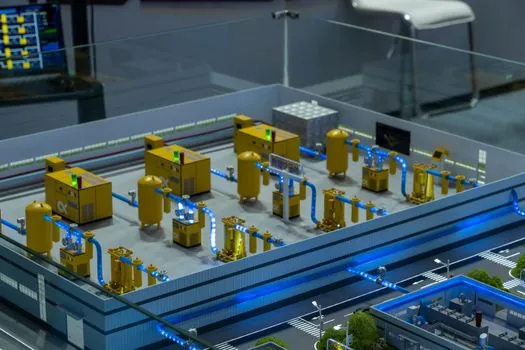
At the budget end, a Chinese OEM can ship a 12V DC double-acting 10-quart pump at roughly 2,900 PSI (about 20 MPa) for around 200-410 USD on the open eBay market, which sets the cost ceiling for what a fab customer is willing to pay for a non-qualified spare [S10].
A qualified fab HPU from Parker-based system integrators such as D.R.A. S.R.L. carries a different value proposition: 35 years of hydraulic automation design heritage and an authorised-distributor channel for Parker pumps, valves, and filtration rather than commodity gear pumps [S9].
For a 30-60 L stainless-reservoir, 210 bar, 3 kW fab-spec pack, expect a 2026 list price in the 8,000-25,000 USD band depending on cleanliness documentation (ISO 4406 certification, particle counter trace, material traceability), with 10-16 week lead time for first article and 4-6 weeks for repeat builds.
Selection Criteria and When an HPU is the Wrong Choice
A hydraulic power unit is the right actuator source when a fab process tool needs forces above roughly 500 N at high speed with sub-millimetre position repeatability, especially in vacuum or wet-chemical environments where electric servo motors cannot survive. [S1]
An HPU is the wrong choice for low-force, high-precision cleanroom motion below 100 N, where a voice-coil or linear stage outperforms hydraulics on cleanliness, controllability, and energy; for vacuum chambers, a dedicated sand reclamation unit or pneumatic alternative is often paired with the hydraulic circuit to handle abrasive slurry valves.
Use a four-line spec check before purchase: ISO 4406 cleanliness code, fluid compatibility (phosphate ester vs. PAO vs. HF alkyl ester), pressure/flow envelope, and a documented MTBF on the pump head above 20,000 hours, which is the empirical floor for a tool HPU that must run 24/7 across a 90-day campaign.
For related motor sizing logic behind the pump choice, see the hydraulic motor sizing and selection walkthrough, and for the air-side tooling that often shares the fab maintenance bay, the air impact wrench selection for interior finishing reference lays out drive size and torque tiers by task.