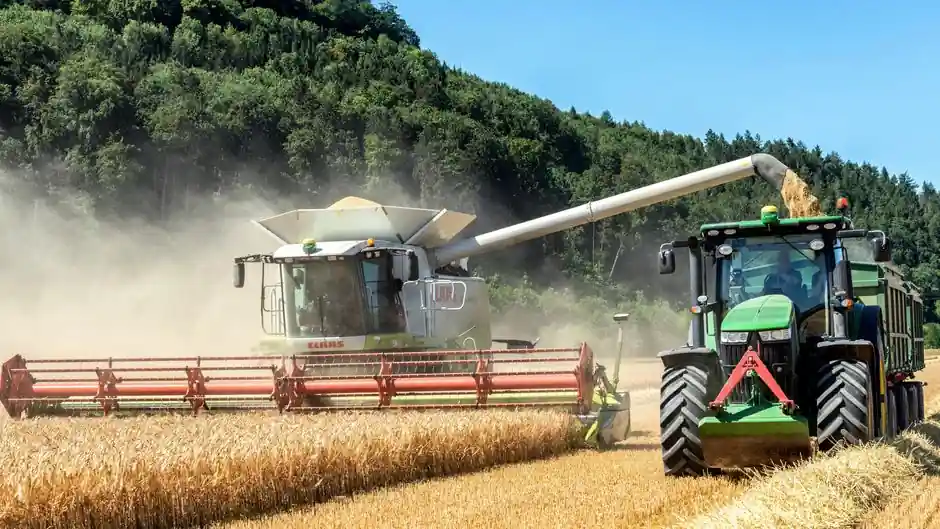
Agriculture-machinery castings (ploughshares, gearbox housings, hitch jaws, harvester concaves) are dominated by grey iron, ductile iron, and ADI grades poured at 1-3 t/h from a single melting source, so the holding furnace is sized as a buffer between melting furnace output and the mold line rather than a stand-alone melter [S3].
On 2026-08-12, Made-in-China listings for holding-furnace cells in the metal-casting machinery category are running at US$10,000-30,000 for small induction-holding packages and US$41,000-59,000 for larger 750-1000 kg holding/melting combinations, with 1-piece MOQ for electric-arc holding cells around US$450,000 for 10 t steel-making EAF/EBT units [S1][S2].
Alloy and Throughput Mapping for Ag-Machinery Castings
Grey iron (ASTM A48 Class 30-45) and ductile iron (ASTM A536 65-45-12 and 80-55-06) are the two dominant alloys for tractor and implement castings, both poured at roughly 1,300-1,450 degC; holding furnace temperature windows for these grades sit in a 50-80 degC band above the pour point to keep inoculation and magnesium treatment alive [S3].
For batch sizes under 1.5 t/h, a single 750-1,000 kg induction holding furnace paired with a coreless melter is the typical pairing; for continuous ductile-iron lines running 3-5 t/h, channel-type holding furnaces (vertical-channel or drum-channel) dominate because of lower specific energy (kWh/t) at hold versus melt duty [S1][S3].
Steel-grade agriculture components (forged hitch pins, high-strength plow bolts, spring tines) route through 5-30 t crucible furnace or EAF holding cells, with refractory class moving from alumina-silica (60-70% Al2O3) in iron service to high-alumina or magnesia-carbon in steel service to manage the 1,500-1,600 degC working range [S3].
Energy Source and Refractory Selection
Fuel choice drives both capex and emissions: gas-fired reverberatory holding furnaces (natural gas or LPG) and oil-fired units (furnace oil, light diesel oil) with pre-heated combustion air from recuperators or regenerators are common in 5-30 t agricultural casting cells, while electric induction holding is preferred where grid kWh is cheap and emissions caps apply [S3].
Refractory selection must track alloy: monolithic linings suit small aluminum and zinc holding cells, brick linings suit long campaign iron holding, and combination brick-plus-monolithic linings are specified for high-wear zones in the spout and bay floor of an ag-machinery holding furnace [S3].
Selection of the furnace is dependent on the alloy produced: for ferrous materials, EAFs, cupolas, and induction furnaces are commonly used, which means a foundry running mixed iron/steel work often needs two holding cells rather than one shared unit, and a sole-purpose ductile-iron shop can run a single holding furnace for the entire day [S3].
Control, Circulation, and Treatment Features
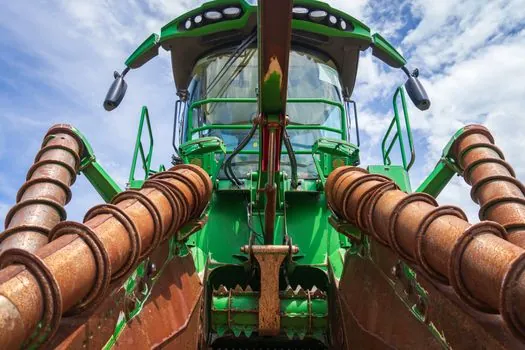
Reverberatory holding cells for ag castings can be tailored with metal circulation pumps, mass-flow control, and dual-zone temperature control, the last being critical where the pour line feeds multiple flask sizes at different pour temperatures [S3].
Post-melt treatment within the holding furnace covers refining (to remove harmful elements and avoid defects), flux addition to separate metal from slag, and degassing to eliminate dissolved hydrogen and nitrogen before pour; these three steps are standard practice in aluminum and zinc holding, and increasingly common as in-cell steps on ductile-iron lines running magnesium-treated metal [S3].
For batch traceability demanded by farm OEMs like John Deere, AGCO, and CNH, a holding furnace with thermocouple arrays at three or more bath zones, plus a chart recorder or PLC link, is the baseline; foundries shipping to Tier 1 ag-machinery buyers routinely add ISO 9001-documented calibration certificates to the holding-furnace data package [S1].
Selection Criteria: Induction vs Reverberatory vs Crucible Holding
For ag-machinery foundries weighing the three dominant holding-cell architectures, the decision matrix centers on tonnage, alloy, energy cost, and campaign length. Channel-induction holding wins on kWh/t efficiency at 1-3 t/h iron service; gas-fired reverberatory holding wins on capex per ton and ability to absorb return scrap; crucible holding wins for specialty steel and high-chrome alloys above 5 t [S1][S2][S3].
Entry-level holding-furnace cells for small iron castings (under 1,000 kg) sit in the US$1,288-112,850 band on current Made-in-China listings, mid-range 1-5 t induction holding cells run US$10,000-30,000, and 10 t EAF-class steel-making holding cells cluster at US$450,000 with 1-piece MOQ; these price points set the realistic capex envelope for greenfield ag-machinery foundry projects in 2026 [S1][S2].
Foundries with intermittent single-shift operation should default to a fixed (non-tilting) holding furnace designed for easy operation, while three-shift continuous operations typically specify titled or tilting holding furnaces that integrate with the upstream melting shaft furnace and downstream casting machine, mirroring the configuration used in copper-rod continuous-casting-and-rolling lines [S5].
Integration with Melting and Continuous Casting Lines
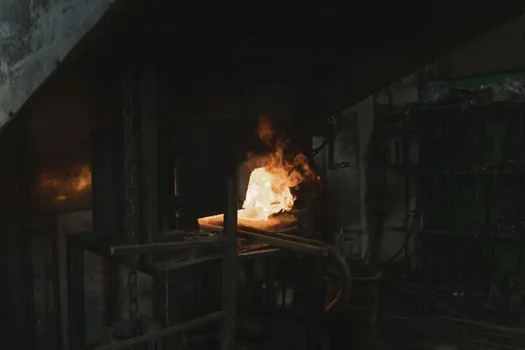
The standard ag-machinery casting line pairs a melting shaft furnace or coreless induction melting furnace with a titled or fixed holding furnace, then a (reverberatory) refining furnace, casting machine, automatic shearer, cast-bar straightener, and rolling mill; this layout lets one holding cell buffer between a 3-5 t melter and a 1-2 t pouring ladle, the typical ratio for ploughshare and drawbar production [S5].
CFD-based optimal-design studies on aluminum holding furnaces show that bath aspect ratio (depth/diameter), spout geometry, and burner placement shift temperature uniformity by 15-40 degC, which is enough to swing inoculation yield in ductile iron; for a brand-new ag-machinery holding cell, running a CFD or factorial-design check before committing the refractory drawing is a low-cost way to avoid cold-corner scrap [S6].
For ag-machinery foundries running 1-3 t/h iron, the simplest spec gate is melt-rate match: the holding furnace rated capacity in tons per hour should equal or exceed the melter's nominal output, the holding cell must hold 1.5x the largest ladle pour, and the temperature control band should be tighter than +/-10 degC across all bath zones; any cell that fails one of these three checks will show up as scrap on the pour line within a quarter [S3].
Failure Modes and Sourcing Discipline
Common holding-furnace failure modes in ag-machinery service are refractory erosion at the spout (driven by FeO/MgO slag attack in ductile iron), inductor channel pinhole leaks in channel-induction units, and burner-block cracking in gas-fired reverberatory cells that cycle hard on a single-shift schedule; a 12-month refractory audit is the standard corrective [S3].
On sourcing: current Made-in-China listings for holding-furnace cells come with on-time delivery ratings (one Liaoning supplier shows 5.0/5.0 on-time delivery) and Diamond Member verification, but the listing itself does not certify ISO 9001, CE, or PED; ag-machinery buyers shipping to EU or North American Tier 1s must request those documents per order rather than assume them from the platform badge [S2].
The Aluminum Holding Furnace Optimal Design Using the CFD Method and Factorial Approach paper, published in the Springer Lecture Notes series, remains a useful reference for bath-uniformity work on aluminum and zinc holding cells, though it is dated relative to 2026 and is best treated as a methodology reference rather than a current spec source [S6].
Trackable signals for the next quarter: any new Made-in-China holding-furnace SKU crossing 2 t/h induction at under US$25,000; any update to ASTM A48/A536 acceptance that tightens pouring-temperature windows; and any 2026-vintage CFD or factorial-design study on ductile-iron holding cells (the 2019 Springer paper is the most recent in the open literature and is overdue for a follow-up) [S1][S6]. Also see the parallel holding-furnace selection guide for automotive parts and the gas-fired aluminum melting furnace selection for rail components for cross-sector holding-furnace context, plus the related holding-furnace spec gates for aerospace components for higher-purity casting parallels.