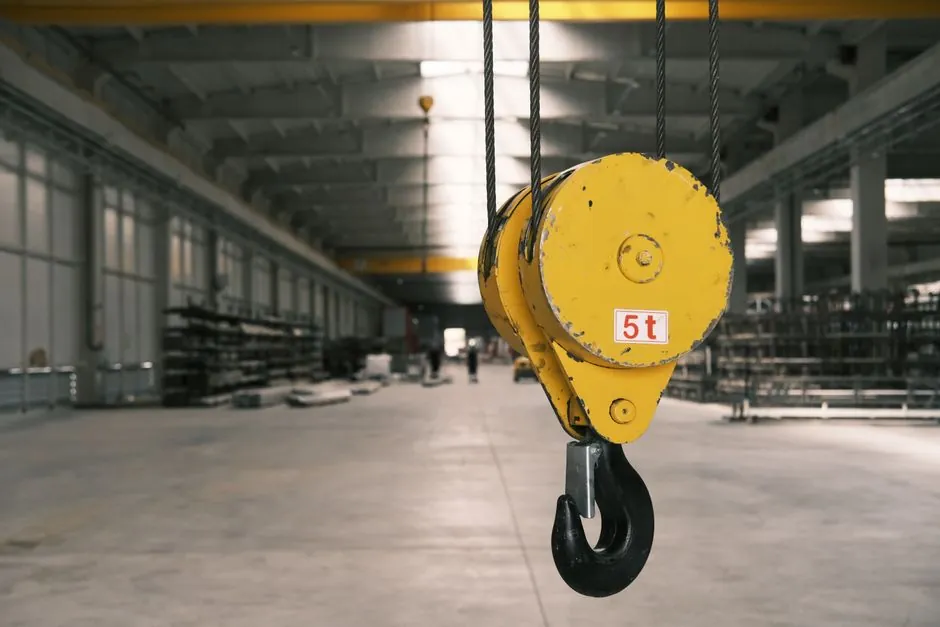
For retail distribution, a unit-load AS/RS stacker crane typically lifts 1,000–1,500 kg per cycle to heights of 30–40 m in aisles of 1.5–1.8 m wide, and the global market for these systems was valued at USD 1.27 B in 2025 with a 6.8% CAGR through 2034 [S7].
Retail hubs differ from cold-chain or pharma builds mainly in SKU count and velocity: the stacker crane moves standardized pallets and containers between inbound staging, reserve storage, and pick-face replenishment, typically through a Warehouse Management System (WMS) and Warehouse Control System (WCS) layer [S1][S2]. The reference height for a high-bay unit-load system is 131 ft (about 40 m), and the reference narrow aisle is 5 ft (about 1.5 m), which together can compress storage footprint by up to 40% versus traditional block-stacking layouts [S2]. For an overview of the equipment class, the stacker crane encyclopedia entry covers the basic geometry and control stack.
Mast Configuration and Lift Capacity
A single-mast stacker crane uses one vertical column and targets light to medium-duty cycles, typically below 1,000 kg per load with shorter lift heights and tighter aisle geometries [S5].
A double-mast stacker crane uses two columns and is the default for retail pallet AS/RS, where individual loads commonly sit in the 1,000–1,500 kg range and lifts can exceed 30 m; the dual column also reduces mast sway and vibration at full extension, which matters when reaching into the top beam of a 40 m high-bay rack [S5]. When total cycle throughput, rather than peak lift height, is the binding constraint, a pallet stacker style architecture (carrier + telescopic mast) is often paired with on-board conveyors instead of telescopic forks to keep the end-of-aisle interface mechanical and simple [S1].
Aisle Depth, Storage Density, and Inventory Rotation
Single-deep stacker cranes store one pallet per location, deliver fast direct access, and align with FIFO inventory rotation, which suits high-turnover retail SKUs and e-commerce fulfillment [S5].
Double-deep units store two pallets per position and are matched to LIFO rotation, trading direct access for higher space utilization; multi-deep configurations pair the stacker crane with satellite shuttles to reach deeper lanes and push density further, at the cost of more complex retrieval sequencing and stricter shuttle reliability [S5]. For retail distribution specifically, the dominant pattern is single-deep or shallow double-deep, because picking velocity, not raw cube, drives the throughput model [S2][S5].
Extraction, Throughput, and WMS/WCS Integration
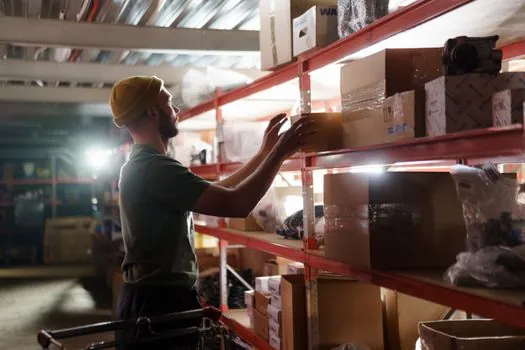
The extraction interface on a retail stacker crane is normally one of three: telescopic forks, pallet shuttles, or on-board conveyors; each choice changes both the end-of-aisle equipment and the cycle-time math [S1].
Telescopic forks are the classic single-cycle option and suit single-deep lanes; pallet shuttles decouple the stacker from deep-lane retrieval and reduce mast travel per cycle; on-board conveyors shift the interface to a horizontal transfer at the pick face, which simplifies downstream conveyor handoff in a goods-to-person loop [S1]. Above the mechanical layer, the stacker crane exchanges task IDs and status with the WMS via the WCS, and the level of automation (manual, semi-automatic, or fully automatic) is selected based on shift pattern, not on aisle width [S1]. For comparison against goods-to-person alternatives, see the shuttle system selection map and the chain conveyor spec map, which sit downstream of the crane in the same retail hub.
Selection Criteria: Stacker Crane vs. Alternatives
Where load dimensions are consistent and SKUs are stored in standard pallets or totes, a stacker crane ASRS outperforms manual or forklift-based warehousing on space, accuracy, and energy per pick, but it underperforms when load variety is high and unit sizes diverge [S8].
Concretely, a stacker crane excels at standardized 1,200×800 mm or 1,200×1,000 mm pallets and standard totes in a 5 ft (1.5 m) aisle, while a cube-based storage system (goods-to-person) handles mixed-SKU, mixed-size retail returns more economically because it does not require unit-load geometry [S3]. Energy recovery on the hoist and travel axes is now standard on most unit-load cranes, and regenerative drives can return a meaningful share of braking energy to the bus, which matters for retail sites running two-shift operations [S1].
Limitations, Failure Modes, and Sourcing
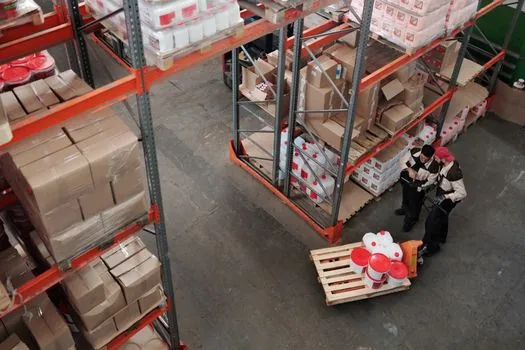
Stacker cranes are bound to standardized unit loads, fixed aisle geometry, and a relatively high capex, with the aisle width, rack tolerance, and pallet quality all acting as hard constraints on uptime [S8].
Common failure modes in retail hubs are rack misalignment beyond tolerance, fork- or shuttle-mechanism wear, and WCS/WMS interface faults during peak; preventive maintenance targets the mast guidance rollers, hoist rope, and the extraction carriage, while the WCS layer is treated as a safety-critical control path. The main market participants span established AS/RS integrators and regional crane builders, with a USD 1.27 B global market in 2025 expanding toward USD 2.3 B by 2034 at 6.8% CAGR, driven by e-commerce fulfillment, retail distribution, and wholesale warehouses [S4][S7]. For retail operators weighing an AS/RS crane against a horizontal sortation or goods-to-person build, the sorting system installation spec map and the carton erecting machine spec map cover adjacent equipment classes that usually sit on the same downstream line.
Trackable signals for the next planning cycle: published lead times from at least two AS/RS integrators for a 30–40 m unit-load crane, and the next round of retail-DC capex disclosures that confirm whether 6–8% CAGR build-outs are concentrated in brownfield retrofits or new greenfield hubs.
The underlying component specifications are covered under distribution cabinet.