A stainless steel cold-rolled (CR) coil plant running at 100K–300K MT/yr spends 80–85% of OpEx on raw materials and 10–15% on utilities, with gross margin in the 15–25% band and net profit 5–12% [S1].
On the buy side, 304 stainless coil traded at $2,800–$3,400/ton in the US, $2,400–$2,900/ton in China, and €3,100–€3,600/ton in the EU as of May 2026 [S2]. For a process engineer budgeting coil spend, the cost line is dominated by nickel alloy surcharge and cold-rolling conversion cost, not the steel substrate itself.
What a CR Coil Plant Actually Spends On
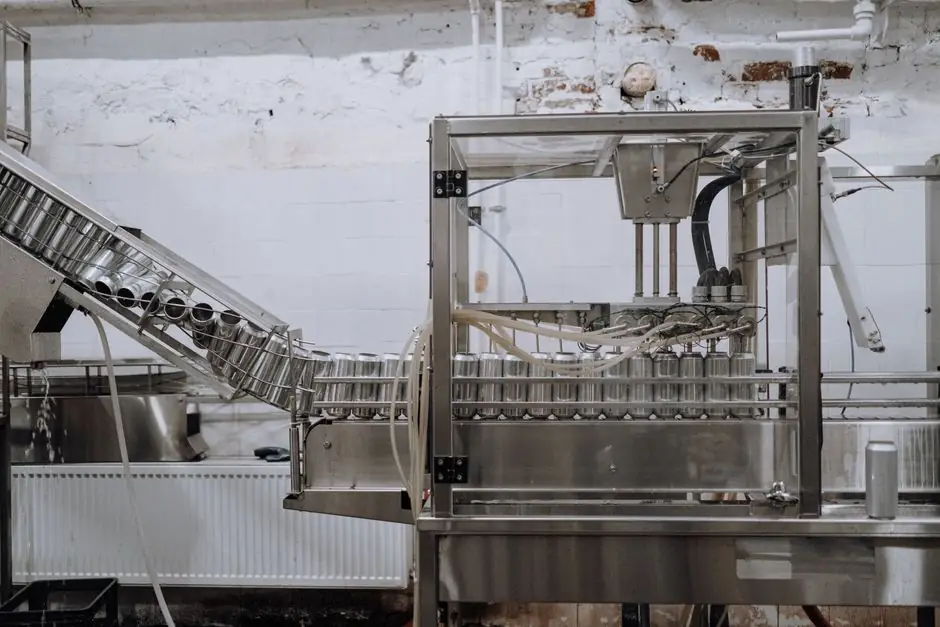
The CR coil production sequence is hot-rolled coil inspection and pickling, cold rolling through tandem or reversible mills, annealing and heat treatment, skin pass rolling, slitting or cutting, surface finishing, and final inspection [S1]. Each step adds conversion cost on top of the stainless slab input.
Raw materials absorb 80–85% of operating expenditure, utilities 10–15%, leaving the remaining 5–10% split across labor, maintenance, packaging, and inland logistics [S1]. Gross margin runs 15–25% and net profit 5–12%, which is tight enough that a 5% swing in nickel price can wipe out a full year of net profit for a non-integrated reroll mill. The global stainless steel CR coil market reached 23.77 thousand tons in 2025 and is projected at 30.48 thousand tons by 2034, a 2.8% CAGR [S1].
2026 Stainless Coil Price Benchmarks by Region
304 stainless coil in May 2026 sat at $2,800–$3,400/ton (US), $2,400–$2,900/ton (China), and €3,100–€3,600/ton (EU), making it the most nickel-sensitive line item on the price sheet [S2].
For comparison, hot-rolled coil (HRC) ran $780–$920/ton (US) and $620–$710/ton (China), while cold-rolled coil (CRC) carried a 15–20% premium over HRC at $950–$1,150/ton (US) and $780–$890/ton (China) [S2]. Galvanized coil added the zinc-coat cost, sitting at $1,050–$1,300/ton (US) and €1,150–€1,350/ton (EU) [S2]. A separate benchmark puts stainless steel coils in a $1,000–$2,500/ton range, reflecting grade, finish, and dimensional spread across commodity 304 and higher-nickel grades [S4]. Freighting, handling, slitting, and taxes layer on another 10–25% over the FOB mill quote [S2].
Cost Drivers Ranked by Weight on the Final Invoice

Five factors dominate the landed cost of a stainless coil: nickel surcharge, cold-rolling pass count, gauge, precision tolerance, and regional tariff overlay. [S2]
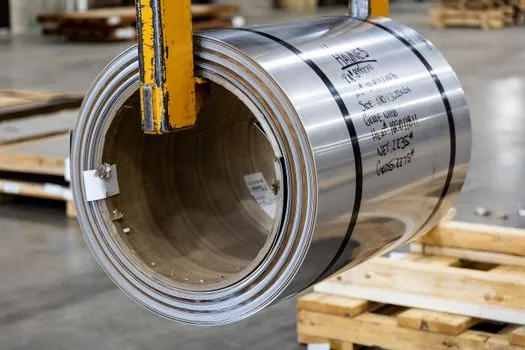
Nickel is the single largest alloy cost driver for austenitic 304 and 316 grades; the CR premium of roughly 15–20% over HRC comes from the extra rolling, annealing, and skin-pass steps [S2]. Gauge is inverse to cost: a 24-gauge (thin) coil costs more per pound than a 10-gauge (thick) coil because thinner material demands more rolling passes and tighter thickness control [S2]. For buyers comparing input material families against a wider metals spec background, the stainless steel grade envelope and the stainless pipe forming envelope share the same nickel cost logic. Precision reroll (vs. service-center slitting) further raises the invoice but cuts downstream scrap; tighter thickness and flatness tolerances from a reroller reduce setup time and raise line speed in stamping operations [S5].
Comparison: Precision Reroll vs. Service-Center Coil vs. Commodity Mill Coil
Three sourcing routes for stainless strip compete on cost, tolerance, and consistency, and the right pick depends on whether your line can absorb wider thickness scatter. [S5]
Commodity mill coil (open tolerances, generic chemistry) is the cheapest per pound and fits basic stamping and non-critical structural brackets where small thickness variation does not matter [S5]. Service-center precision coil takes wider mill coils and slits to tight width tolerances, but does not improve thickness tolerance, mechanical properties, or surface finish [S5]. Re-rolled precision coil is cold-reduced to tight thickness, flatness, and mechanical-property tolerances, then tested coil-to-coil for consistency; the upfront price is higher, but downstream setup time drops, line speed rises, and scrap rates fall in medical, aerospace, and microelectronics applications [S5]. For process engineers specifying material for high-speed stamping, the reroll premium often pays back inside six to twelve months through yield alone.
Total Cost of Ownership: Line Item Beyond the Per-Ton Quote

The FOB mill price is roughly 75–90% of the landed invoice; the rest is freight, duty, packaging, and inland delivery, which is why a $2,800/ton US quote can land close to $3,300/ton at a Midwest stamping plant. [S2]
A worked example using the published formula: at $700/ton base, 20-ton coil, $1,000 ocean freight, 5% import tax gives $14,000 + $1,000 + $700 = $15,700 total, before inland delivery [S4]. Coil weight itself moves freight efficiency: export coils cluster at 5–10 tons for container fit, domestic heavy coils go up to 30 tons, and ultra-light coils sit at 1–2 tons for niche industries [S4]. The 30-ton heavy-coil configuration lowers per-ton freight but caps the lift capacity at the receiving end. Section 232 adds 25% on most US steel imports, the EU CBAM adds a carbon levy at the border, and Chinese export coils face anti-dumping duties in Europe, North America, and Southeast Asia [S2]. When you model TCO, fold in setup-time reduction, scrap-rate delta, and line-speed uplift from precision coil; those three numbers usually dominate the per-ton savings.
Limits, Failure Modes, and Standards to Watch
Stainless CR coil specs are governed by ASTM A240 / A240M for chromium and chromium-nickel plate, sheet, and strip, and by EN 10088-2 for European 1D/2B/BA finishes; precision rerollers typically certify to tighter in-house tolerances on top of these. [S5]
For buyers mapping alloy steel and carbon steel substitutes against stainless, note that austenitic 304 cannot be hardened by heat treatment and relies on cold work for strength, which is exactly why the CR step exists in the first place. Precision reroll is not the right call for low-volume, loose-tolerance stamping; the per-ton premium outweighs the setup-time gain when runs are short. Service-center slit coil mis-applied to a tight-tolerance medical line is the most common failure mode we see: width is held, thickness is not, and the line scraps out at the first progressive die station. Material selection logic for related process industries is covered in the additive manufacturing material reference, where the same alloy-versus-tolerance trade-off applies to powder-bed stock.
Where the Price Goes Next: Three Trackable Signals
Watch the LME three-month nickel price as the primary leading indicator for 304/316 coil quotes; a 10% nickel move typically flows through to coil surcharges within 30–60 days. [S2]
Second, track the US Section 232 exclusion list and the EU CBAM Phase 2 reporting requirements, both of which reset in 2026 and will move the US/China/EU spread cited above [S2]. Third, monitor Chemanalyst-style spot assessments; the published Gulf CR stainless coil benchmark sat near USD 4,246/MT on a quarterly average basis, and any breakout above or below that band usually precedes contract renegotiation by one quarter [S6]. The steel substrate economics that drive these coil prices also flow into carbon steel sheet and alloy steel plate on the same scrap-to-slab conversion curve, so a coordinated buy on multiple grades can often pull a better freight and conversion rate from the same mill. For related process-engineering context outside metals, the additive manufacturing material selection map tracks the same cost-versus-tolerance logic in powder form.
This topic is covered further in Reach Truck Specifications: Capacity, Lift Height, and Chassis Limits.