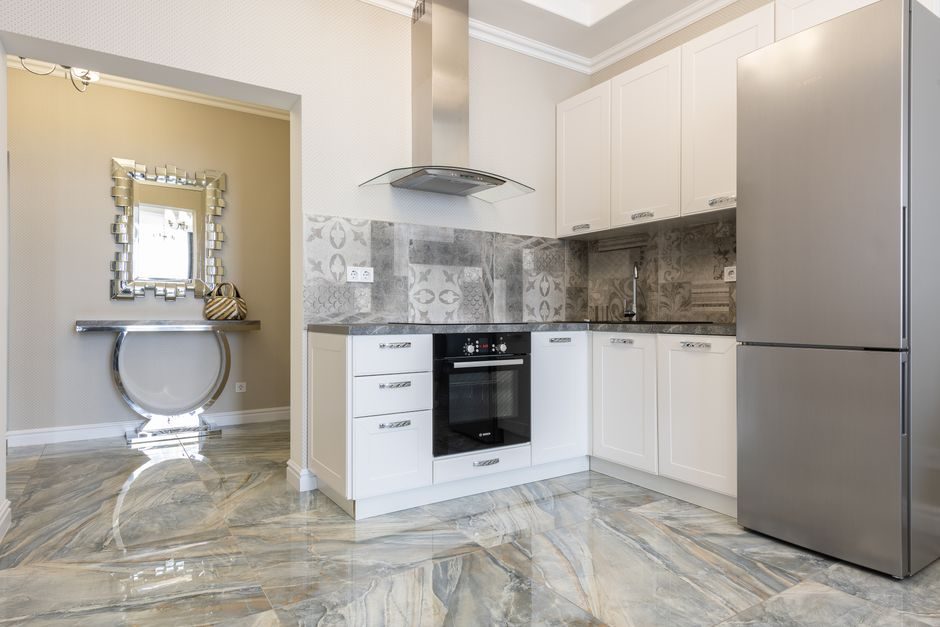
Stainless steel selection starts with the chloride exposure, temperature, and mechanical duty of the service environment, then narrows to form, finish, and fabrication route. For most industrial builds, austenitic 304/316 grades carry roughly 70% of specifications, while 201 and ferritic 430 cover cost-driven or magnetic-restricted use cases [S1][S3].
Specifying engineers should anchor every order to a named ASTM/EN grade on the mill certificate — not a generic "stainless" callout — and weigh corrosion class, mechanical strength, weldability, and magnetic behaviour before form (sheet, pipe, bar) and thickness. The stainless steel family itself is an iron-base alloy with ≥10.5% chromium that forms a passive Cr2O3 film, and that single mechanism drives nearly every selection lever below.
Corrosion Class and Chloride Exposure Drive the Grade
304 stainless (18Cr/8Ni, ASTM A240/A276) handles indoor, atmospheric, and fresh-water service and is the default for kitchen equipment, architectural trim, and general process piping; Baineng specifies "food-grade 304" for residential cabinets in the same band [S1][S3]. Where chlorides, acids, or marine exposure enter the picture, 316/316L (16Cr/10Ni/2Mo) is the documented step-up because the 2% molybdenum lifts pitting resistance, with 316L preferred for welded assemblies to avoid sensitisation in the 450–850 °C range [S1].
For dry indoor or decorative service, 430 (ferritic, ~16Cr) and 201 (austenitic with reduced Ni, higher N) cut cost noticeably and are widely used in sinks, cabinetry shells, and commercial wash basins — 201 is the typical material for the 0.8 mm South American sink format at ~200 pc MOQ and 1,000 pc/month capacity [S5]. Neither is a substitute for 316 in chloride service; misapplication is the single most common field failure mode in stainless selection.
Mechanical Load, Temperature and Form Decide Thickness
Stainless stainless pipe is rated against ASME B36.19 (imperial) and ISO 1127 (metric) dimensional standards, and most hygienic, instrumentation, and process lines run schedule 5S/10S in 304/316L rather than schedule 40 to control heat input and corrosion. Hollow tube for showers and exhaust runs in 304 is commonly stocked in 100/250/400/500 mm cut lengths at ~0.3–0.8 mm wall, with kilogram pricing well below schedule pipe [S6].
For structural alloy steel duty where stainless is the wrong callout, designers move to 4140 or 17-4PH, but the deciding test is usually whether the section needs corrosion resistance; if not, alloy steel buys more strength per dollar. A practical band for cutlery and kitchen tools is 0.8–1.2 mm 304 sheet; for sinks, 0.8 mm is the documented minimum to resist deformation under load [S5].
Comparing the Common Grades Against Four Decision Criteria

Across 304, 316, 201, and 430, the dominant trade-off sits between cost, corrosion resistance, magnetism, and weldability. 304 is non-magnetic in the annealed state, welds easily, and is the cheapest austenitic option; 316 costs 30–50% more than 304 in sheet form and welds similarly well with no post-weld stress relief in most cases; 201 is the cheapest austenitic grade with higher yield strength but noticeably lower chloride resistance; 430 is magnetic, cheaper, and unweldable in heavy sections, restricting it to stamped or roll-formed parts [S1][S3][S5].
This four-column grid lets a specifier short-list in one pass: 316 for chloride/marine, 304 for general, 201 for budget austenitic with low-to-moderate corrosion, 430 for magnetic or decorative indoor. For a process line the decision then collapses to "316L or nothing" once the chloride concentration crosses roughly 200 ppm in warm water [S1][S3].
Fabricability, Finish and Sourcing Levers
Cutting, forming, and welding each impose constraints the catalogue page does not show. Stainless work-hardens rapidly, so blade selection for sheet and tube cutting should match the grade — Mingsha's guide specifies tooth geometry, rake angle, and feed rate bands by hardness rather than a generic "for stainless" callout [S4]. A 0.5–0.8 mm 304 sheet cuts cleanly with a fine-tooth bimetal blade at low RPM; the same blade on 1.5 mm 316L needs slower feed and coolant to avoid edge work-hardening [S4].
Finish is a separate cost lever: 2B (cold-rolled, annealed, pickled) is the industrial default, BA (bright annealed) adds 15–25% for reflectors and kitchen panels, and No.4 brushed sits between them for architectural use. Sourcing from China-based mill-direct platforms such as Okorder and Made-in-China remains the dominant path for stocked sheet, pipe, and sink blanks, with MOQ bands of 10–200 pc depending on form [S5]. For buyers comparing 304 vs 430 sinks, the alloy steel selection criteria page offers a parallel framework for higher-strength grades, and the industrial ceramic guide covers the non-metallic fallback when chloride and abrasion outpace any stainless grade.
Common Pitfalls and What to Verify on the Mill Cert
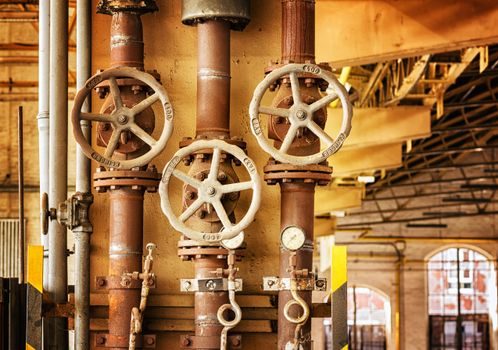
The four most frequent selection errors are: substituting 201 for 304 in chloride service, picking 430 where a non-magnetic part is required, ignoring the L-grade for welded assemblies above 6 mm, and ordering "stainless" with no ASTM/EN designation. None of these is a paperwork problem — each maps to a real failure mode in the field, from pitting within months to magnetic interference in instrumentation panels [S1][S3][S4].
Verification is simple: require ASTM A240 (sheet), A276 (bar), or A312 (pipe) on the cert, confirm the 304 vs 304L or 316 vs 316L callout, and check the intergranular-corrosion test result (ASTM A262 Practice E for most austenitic service). For chloride service, the practical floor is 316L with a documented Mo content of 2.0–3.0% [S1][S3].
Decision Flow for a New Spec
Run this in order: (1) list chloride concentration, pH, and max operating temperature; (2) assign a corrosion class and short-list 304, 316, or a non-stainless fallback; (3) check magnetism and weldability for the form; (4) size wall/sheet against ASME or ASTM dimensional tables; (5) lock the finish and ASTM callout on the cert. This sequence matches what Baineng, Mingsha, and the Okorder sink listings use internally for grade routing [S1][S4][S5].
For non-stainless comparisons, the metal powder 2026 price guide and the alloy steel selection criteria article are the natural next references when the spec drifts toward powder-metallurgy or higher-strength alloy steel families.