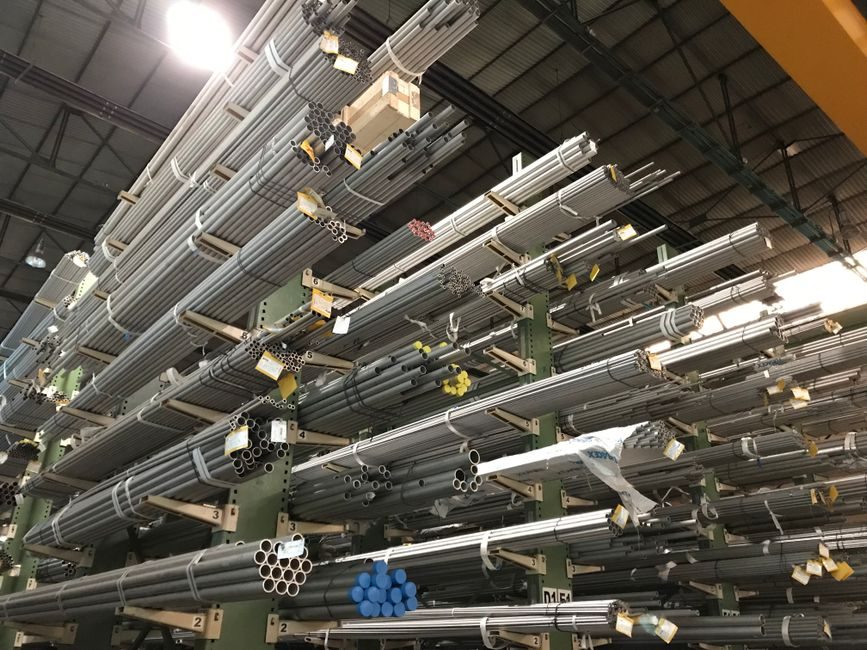
Austenitic 304 (18Cr/8Ni) remains the baseline for general indoor fabrication, while 316 (16Cr/10Ni/2Mo) is the default where chlorides, acids or elevated temperatures appear; ferritic 430 (16-18Cr) covers magnetic, decorative, low-corrosion indoor work, and lean/standard duplex (e.g. 2205) handles higher-stress and chloride-loaded structural fabrication [S1][S2].
Three U.S., South African and U.K. custom shops are actively taking general-fabrication orders for these grades: Premier Fabrication (Waynesboro, VA, est. 1956) added a TRUMPF TruLaser Tube 7000 in early 2020 for tube and pipe work [S1]; Interfab Process Technologies (Randburg, since 1985) supplies dairy, food & beverage, petro-chemical and pharmaceutical fabrications to client spec [S2]; Newman Fabrications Ltd. fits out hotels, hospitals, schools and service-station catering units in stainless [S3].
Grade-by-Grade Decision Framework
Pick the grade by the worst-case environment the part will see in service, not by what looks cheapest on the stockholder's rack [S1][S2]. A useful rule: indoor dry atmosphere → 304; chloride mist, hot food acids or de-icing salt exposure → 316; purely decorative or magnetic-requirement indoor cladding → 430; structural load + chloride (e.g. coastal balustrade structural tube) → 2205 duplex. Southern Stainless's general-fabrication work, Interfab's dairy and food-grade tanks, and Newman's healthcare sluice-room and catering units all sit inside this 304/316 envelope; 430 shows up mostly in cladding, appliance panels and magnetic-mount brackets where corrosion is mild [S1][S2][S3].
For deeper metallurgical background, see the stainless steel family overview and the dedicated entry on stainless steel pipe and tube — tube and pipe is where most general-fabrication shops spend laser-cutting and welding hours [S1].
Form, Thickness and Fabrication Behaviour
304 and 316 are austenitic, non-magnetic in the annealed condition, work-harden rapidly under cold forming, and are readily TIG/MIG welded without post-weld heat treatment in the common 1.5–6 mm sheet range [S1][S2]. 430 is ferritic, magnetic, cheaper but more crack-sensitive under welding — fabricators usually limit autogenous TIG on 430 and pre-heat thicker sections. Duplex 2205 brings roughly double the 0.2% proof stress of 304/316 but needs controlled heat input (typically 0.5–2.5 kJ/mm) and a nitrogen-bearing shielding gas to preserve the austenite-ferrite balance [S2].
Interfab, for example, builds silos, mixing equipment and process vessels to client specification in the 304/316 range, then issues them with their own quality check and use certification [S2]. Premier Fabrication runs a TRUMPF TruLaser Tube 7000 tube-and-pipe line that feeds directly into their welding and assembly cells, which is the typical cell layout for a mid-volume general-fabrication shop [S1].
Corrosion, Hygiene and Surface Finish

316's 2–3% Mo lifts pitting resistance equivalent number (PREN) above 304's, which is why it is the routine pick for marine handrails, pharmaceutical skids, and hot food-acidic service [S2]. Dairy and pharmaceutical vessels from Interfab are typically built in 316 with an internal finish to sanitary standards; a 2B cold-rolled mill finish is the typical starting surface, then mechanically polished to 0.4–0.8 µm Ra for product-contact zones, and electropolished where cleanability is paramount [S2]. Newman's hospital sluice-room, laundry and handrail work sits in a similar hygiene bracket, with smooth-ground or satin-polished surfaces specified for infection-control cleaning [S3].
For a broader view of how stainless sits against carbon and low-alloy alternatives in structural and pressure-bound work, the carbon steel comparison entry and the alloy steel reference are worth a cross-read — particularly when fabrication cost is being benchmarked against a painted mild-steel alternative.
Comparison: 304 vs 316 vs 430 vs 2205 Duplex on Four Buyer Criteria
Below is the at-a-glance spec comparison most general-fabrication buyers and estimators need when a PO lands on the desk: [S1]
• Corrosion resistance (chloride pitting, food acids): 304 adequate indoor / 316 strong (Mo-bearing) / 430 mild (no Ni, no Mo) / 2205 strong, often better than 316 in warm chloride.
• Magnetic in annealed condition: 304 no / 316 no / 430 yes / 2205 mostly yes (ferrite-rich).
• Relative material cost to 304 baseline: 304 = 1.0× / 316 ≈ 1.3–1.6× (Ni + Mo surcharge) / 430 ≈ 0.6–0.75× (no Ni) / 2205 ≈ 1.5–2×.
• Typical fabrication shop fit: 304 universal / 316 standard in process shops like Interfab [S2] / 430 cladding and appliance work / 2205 reserved for higher-pressure or coastal structural work [S1][S2].
Welding, Pickling and Post-Fabrication
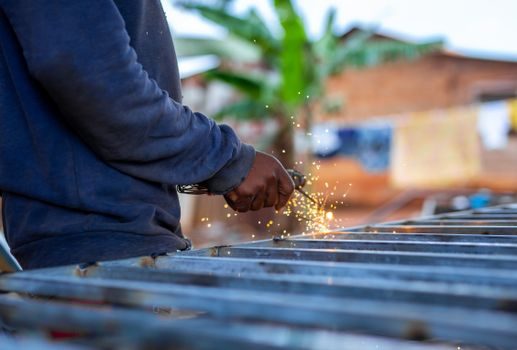
Post-weld treatment is what separates a credible general-fabrication shop from a parts-bucket operation. Welds on 304/316 pick up a heat-tint oxide layer that is depleted in Cr and must be removed by pickling paste, mechanical abrasion, or electropolishing to restore full corrosion resistance — Newman's catering and sluice-room work, for example, is finished and degreased to a hygiene standard before sign-off [S3]. For 2205 duplex, fabrication shops must also control the ferrite fraction to stay in the roughly 30–70% ferrite band; excessive heat input shifts the balance toward sigma-phase embrittlement [S2].
Tube and pipe work adds a second axis: orbital TIG, laser-welded or induction-bent tube, plus the question of whether the job needs 304L/316L for better weld corrosion performance. The stainless steel pipe and tube reference covers the dimension and tolerance side of that question.
Where the Market Sits in August 2026
Three independent signals point in the same direction for general fabrication this month. First, the U.S. and U.K. custom shops are advertising full-cell capacity — design, laser tube, welding, powder coating and assembly — to capture projects end-to-end [S1][S3]. Second, South African and EU process shops are still quoting rebuilt, certified pre-owned tanks alongside new builds, a sign of working-budget pressure on dairy and chemical end users [S2]. Third, the stainless steel information hub at stainless.club and the broader raw-material feeds continue to highlight nickel and molybdenum surcharges as the swing variables in 304 vs 316 vs 2205 project pricing [S4].
For shop buyers weighing cut quality on tubing and plate, the related Circular Saw Selection for Steel Construction: 2026 Spec Map walks through the saw/blade side of the same fabrication cell.
Track two signals over the next quarter: the LME nickel and Mo price strip, which sets the 304/316/2205 cost spread on every new RFQ, and the order books of multi-cell general fabricators like Premier Fabrication and Interfab — both of which are explicit about taking build-to-print work in 304/316 across tube, sheet and process-skid formats [S1][S2].