Hazardous-area skid applications demand fail-open steam traps sized at minimum differential pressure, with body materials rated above the condensate discharge location's peak temperature and pressure per ANSI/FCI 69-1 [S1][S6].
On a packaged skid, the trap is rarely a standalone component — its certification footprint (ATEX/IECEx), connection standard, and integral strainer/blowdown features must align with the skid's pipework class, hazardous-area classification, and maintenance philosophy before any vendor shortlist is drawn [S2][S3].
Three Trap Families and Their Skid-Side Match
Steam traps used in process skids fall into three families: mechanical (float-and-thermostatic, inverted bucket), thermostatic (balanced pressure, bimetal, wax/liquid expansion), and thermodynamic (disc-style flash-steam units) [S1]. Thermodynamic traps suit steam main drips and small loads with frequent pressure swings, while float-and-thermostatic (F&T) and inverted-bucket units handle large, variable condensate loads typical of reboilers, heaters, dryers, and heat exchangers on a process skid [S5]. Bimetal and balanced-pressure thermostatic traps are typically specified where the skid drains sub-cooled condensate and modulating temperature control is required [S1][S3].
The default position on a hazardous-area skid is fail-open service — a rare exception rule that protects the process heater from waterlogging if the trap fails or is removed for service [S1]. F&T and inverted-bucket designs fail open; many thermostatic balanced-pressure designs fail closed and must be reviewed against the heater's waterhammer and coil-flooding risk before selection.
Body Material, Pressure Class, and Skid Pipework Compatibility
Body material is governed by the maximum operating temperature and pressure at the condensate discharge location (CDL), the surrounding environment, and longevity targets — not the trap's own nameplate, which can be derated by gaskets and internal parts [S2]. Common body materials are gray/ductile cast iron, carbon steel, and stainless steel, with stainless gaining share on skids because it tolerates corrosive insulation jacketing and survives longer between maintenance intervals [S2].
Material standards materially change the allowable pressure: A126 cast iron is rated to 13 barg (190 psig) under DIN but 16 barg (250 psig) under ASME, so the chosen pressure-class standard on the skid's piping spec will dictate which body material is acceptable at a given saturated-steam pressure [S2]. A complete steam trap data sheet should therefore record both the design pressure/temperature of the connected piping and the trap's own PMA/TMA, and never size the trap smaller than the equipment outlet piping — undersizing causes waterlogging and coil damage [S2][S3].
Condensate Load, Safety Factor, and Sizing Inputs

Sizing starts with maximum flow in lbs/hr, required safety factor, maximum and minimum pressure at the trap, lift after the trap in feet, and any back-pressure in the condensate return line — captured on a standard sizing worksheet [S3]. Discharge capacity must hold at the minimum differential pressure under all environmental conditions, not just at design pressure [S2].
Reference Emerson's worked example for a 6.9 bar (100 psi) inlet, 0 bar outlet, 171 °C (340 °F) operating, 100 kg/h (220 lb/h) condensate outdoor heat exchanger on a 17 bar / 232 °C design envelope — typical of a chemical skid's traced-line or reboiler drain [S4]. For pipework, condensate outlet sizing tables map load bands to nominal size: under 400 lb/hr → 1/2", 400–1100 lb/hr → 3/4", 1–2 t/h → 1-1/4", 2–3 t/h → 1-1/2", 3–5 t/h → 2", and over 5 t/h → 2-1/2" to 4" [S2].
Hazardous-Area Certification and Skid Integration
On a hazardous-area skid, electrical accessories — trap monitoring switches, integral strainer/blowdown position feedback, and any smart-trap condensate sensor — drive the Ex rating requirement; the trap body itself is non-electrical, so ATEX/IECEx marking is dictated by what is bolted to the trap, not the body casting [S3]. Universal-connector technology with an integral strainer and blowdown valve cuts hot-work on the skid during routine trap replacement, which is a real gain in Zone 1 / Class I Div 1 service where hot work permits are costly [S3][S1].
ANSI/FCI 69-1 sets the pressure-rating standard for steam traps, and ANSI/FCI 85-1 covers production and performance tests; both are referenced in the project specification template that drives skid data sheets [S1][S6]. For condensate removal device performance verification on critical services, ASME PTC 39.1 is the test code typically called out in the project standards [S1]. Companion equipment on the skid — steam separator upstream, flow meter on the condensate return, and pressure transmitter for trap health monitoring — must be specified in the same loop to keep the trap's data and the skid's control logic coherent.
Connection Type, Maintenance, and Skid Layout
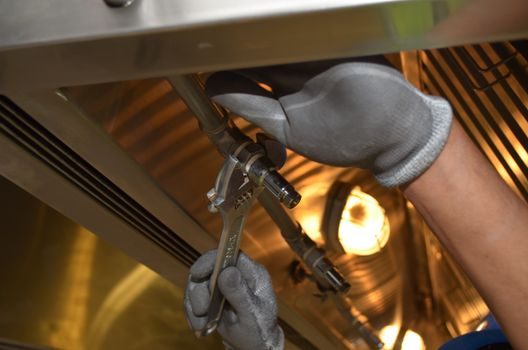
Connection type is set by the skid's piping class: threaded (NPT) is cheapest but complicates trap replacement unless a union is fitted; socket-weld suits higher pressure classes; flanged connections dominate on skids rated above ASME Class 300 or where fast-change-out is contractual [S2]. Selection criteria beyond duty include ease of maintenance, horizontal/vertical installation flexibility, and whether an integral strainer and blowdown valve are bundled — features that materially change the installed cost of a steam trap station on a tight skid [S1].
Maintenance is the single biggest reliability driver — dirty steam, freezing in outdoor drip legs, air binding on start-up, and steam leakage through a worn seat are the failure modes a skid design has to price in, not just the trap's purchase cost [S1]. For higher-pressure chemical skids, pairing the trap station with a pinch valve on the condensate return line is a common configuration for isolation and abrasive-slurry tolerance.
Comparison: Trap Type vs Skid Selection Criteria
Across the four decision criteria that dominate a hazardous-area skid shortlist — load variability, fail-open default, hot-work tolerance, and oversize-coil risk — the three main trap families line up as follows. Thermodynamic disc traps handle small, steady loads and recover well from outdoor freezing but tolerate load swings poorly. Float-and-thermostatic traps cover wide load variability, fail open, and need a continuous water seal — they are the default for reboiler and heat-exchanger drains on chemical skids. Inverted-bucket traps also fail open, handle air venting on start-up, and tolerate superheat, but waterhammer-tolerant. Bimetal/balanced-pressure thermostatic traps are sub-cooled specialists — wrong pick for a flooded coil. [S2]
If the skid drains a flooded shell-and-tube exchanger that waterlogs within minutes on loss of trap, exclude balanced-pressure thermostatic designs that fail closed. If the skid is an outdoor drip leg on a steam main in a cold climate, exclude F&T units that freeze without freeze-protection. For process heaters with modulating temperature control and air ingress on start-up, inverted-bucket and F&T dominate. For instrument-air driers and trace-steam drip legs, thermodynamic disc is the workhorse.
Limits, Failure Modes, and What to Verify Before Purchase

Steam trap selection is not a one-page exercise — sizing accuracy alone does not protect the system, and the most common field problems (freezing, air binding, noise, steam leakage, insufficient pressure differential, dirt, poor maintenance access) all map back to selection shortcuts [S1]. The maximum operating pressure and temperature of the trap can be derated below the body rating by gaskets, seats, and internals — check the trap's PMA/TMA, not just the body class [S2]. Boiler feedwater condition, insulation jacketing chemistry, and ambient temperature on the skid all feed the materials decision alongside the saturated-steam duty [S6].
For an auditable shortlist, lock down five documents before vendor release: a completed sizing worksheet with maximum and minimum differential pressure [S3], a body-material selection against the piping-class pressure standard (DIN vs ASME) [S2], an Ex-classification matrix for every accessory on the trap station, an ANSI/FCI 69-1 and 85-1 compliance line on the data sheet [S1], and an installation drawing that shows the upstream steam separator and the condensate flow meter so the trap's data is actually used by the skid's control system rather than filed in a drawer.