
Specifying self-cleaning filter units against precision filter units is a fluid-and-material decision, not an automation preference: the SP ASC pneumatic scraper series handles fluids up to 800,000 MPa·s viscosity at 50–1500 μm fineness with imported wedge-wire screens rated above 10 years of service life [S2], whereas precision cartridges in the same plant typically guard the 1–25 μm absolute band downstream of the self-cleaning stage.
Material compatibility is governed by three independent axes — fluid chemistry, operating temperature, and cleaning mechanism (mechanical scraper vs back-flush vs disposable cartridge) — and misreading any one of them turns a routine spec into a corrosion or fatigue failure inside one campaign.
Functional Boundary: What Each Filter Type Actually Does
The self-cleaning filter is an online, continuous-duty workhorse that removes particle impurities from the internal filter surface through mechanical scraping, holding a steady pressure differential without operator intervention; the SP ASC design uses an electronic controller linkable to a central DCS and an anti-explosion pneumatic cylinder drive, with constant cartridge scraping that keeps both efficiency high and material loss low [S2].
The precision filter is a retention-rated finishing stage: cartridges or pleated elements in 0.1–25 μm absolute ratings that polish a stream already cleaned of gross solids. The US patent literature on automated self-cleaning devices (US2008156719A1) describes the same architecture — a controller-driven servo valve and pump cycle that back-pulses a manifold while the housing remains sealed — confirming that the self-cleaning class is defined by *automation of the cleaning step*, not by micron rating [S3].
Material-of-Construction Decision Map
Wetted material selection must be driven by the fluid first. For aqueous, mildly acidic streams at <80 °C, 304/316L stainless is the default wedge-wire and housing material in the SP MSC modular series, with a V-SLOT cartridge geometry that enables complete back-flush using a small volume of backwash liquid [S7]. For chloride-bearing, oxidising, or acid services, upgrade to Hastelloy C-276 or super-duplex 2507 to survive pitting and crevice corrosion; for solvents, resins, and polymer melts, specify PTFE or PFA gaskets and FKM/FEP seals rather than EPDM, which swells in hydrocarbons.
The backflush-type self-cleaning patent (US4565631A) explicitly names *industrial power-plant cooling water* as a target service, where sieve spans a cylindrical conduit and divides the interior into sectoral chambers for backflow cleaning [S5] — a geometry that only works because the screen material is selected for the cooling-water chemistry, not for the automation. Material choice precedes mechanism choice; reverse the order and the scraper blade will gall against the wrong alloy within months.
Comparison Table: Decision Criteria Side-by-Side
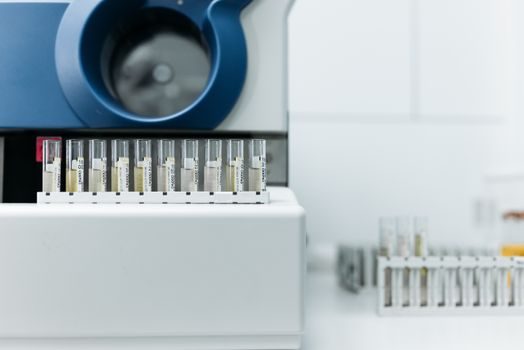
Compare the two classes on four decision criteria that engineers actually argue over — and you can see why they are sequenced, not swapped:
1) *Retention rating*: Self-cleaning (SP ASC) covers 50–1500 μm [S2]; precision covers 0.1–25 μm absolute. 2) *Viscosity ceiling*: Self-cleaning scraper units handle up to 800,000 MPa·s [S2]; precision pleated elements collapse above roughly 1,000–5,000 MPa·s depending on core support. 3) *Cleaning mechanism*: Self-cleaning = mechanical scraper, backflush, or rotating sieve (US4565631A backflow [S5]; EP0383527A1 rotating cylinder [S6]); precision = cartridge replacement or offline clean. 4) *Material upgrade path*: Self-cleaning wedge-wire often held in 316L/Hastelloy for structural duty; precision filter hardware varies broadly — PP, PES, PTFE, glass fibre — selected for chemical compatibility of the *media*, not just the housing.
Use-Case Routing by Fluid Service
Route by service: high-solids, high-viscosity duties — polymer melts, latex, adhesives, resins, syrups, sorbitol, fermentation broth, wet-strength agents, edible oils, and high-temperature oils listed in the ASC application envelope [S2] — are self-cleaning primary. Clean, low-solids, low-viscosity duties — DI water loops, amine, glycol, condensate polishing, pharmaceutical water — are precision primary. Mixed streams need both, with the self-cleaning filter as the guard filter protecting the precision stage from blinding.
The SEI Filtration BA Series downdraft bench, used for polishing, deburring, grinding, and blowoff of metallic parts, ships in two configurations: M (disposable mechanical filters for occasional use) and C (automatic self-cleaning with special cartridges for continuous use) [S1] — a clean example of a vendor offering *both* filter classes on the same machine frame so the buyer picks by duty cycle, not by trend. Similar logic drives the centrifugal pump vs plunger pump split: one tool, one fluid envelope.
Failure Modes When Material Spec Is Wrong
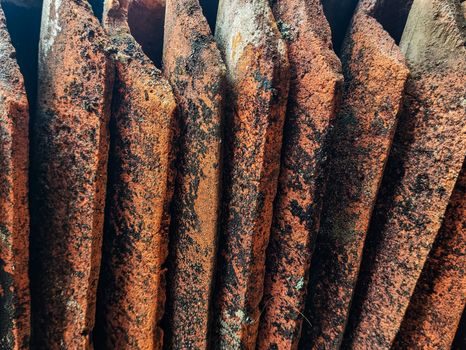
Galvanic attack at the cartridge-to-housing interface is the classic failure when a 304 basket is paired with a copper-bearing fluid or a carbon-steel support disc — and the rotating-screen patent EP0383527A1 specifically calls out support discs (12, 13) carrying the filter cylinder for rotation about a horizontal pipe, with the wetted path defined by those discs [S6]. Gasket swell in EPDM with hydrocarbon or solvent service causes bypass and early ΔP rise; PTFE envelopes the seal in those services.
For abrasive or fibrous service, the wedge-wire V-SLOT geometry of the SP MSC system is preferred over a pleated mesh because the open slot area resists blinding and the rigid screen survives back-pulse fatigue [S7]. A related risk lives outside the filter itself: in a mixed plant, the heat-exchanger downstream sees the *outlet* chemistry of the filter, so a mis-specified self-cleaning wetted part can shift corrosion downstream into a heat exchanger selection guide decision that was already locked. Filter material spec is therefore a chain, not a single component.
Cleaning-Mechanism Constraint on Material Choice
The cleaning mechanism narrows the alloy options. Mechanical scraper blades must be softer than the screen — typically PTFE or bronze scrapers on 316L wedge-wire — to avoid galling and to keep the surface finish intact. Backflush systems (US4565631A, US2008156719A1) reverse-flow a filtrate stream through spray nozzles mounted inside a hollow manifold [S3][S5]; the manifold wetted path and spray nozzles must tolerate the same backwash chemistry, which on a polymer or latex line often means the backflush is a slip-stream of the same hot process fluid, demanding 316L minimum and PTFE seals.
Rotating-screen self-cleaners (EP0383527A1) add a third constraint: bearing and seal materials in the rotation path must be selected for the fluid as well, and on abrasive water service that points again to hard, corrosion-resistant alloys [S6]. The V-SLOT modular MSC design side-steps the bearing issue by keeping the cartridge static and using a small slipstream of clean fluid to back-flush, which is why the V-SLOT geometry is described as enabling *complete* back-flushing with a small volume of back-flushing solution [S7] — fewer moving wetted parts, fewer material-trap points.
Selection Signals and What to Track Next
Track three signals when locking a spec: (1) the fluid viscosity at operating temperature versus the 800,000 MPa·s ceiling of the SP ASC scraper class [S2]; (2) the required absolute retention versus the 50–1500 μm working band of self-cleaning wedge-wire and the 0.1–25 μm finishing band of precision cartridges; (3) the wetted-material compatibility chart for the chosen scraper/blade and seal combination, validated against the process fluid at the maximum cleaning-cycle temperature.
One verifiable next node: confirm the OEM's published chemical-compatibility list for the specific cartridge series (316L vs Hastelloy vs PTFE-lined) at your upper operating temperature before sign-off; vendors that publish only a generic ISO 5198 / ISO 4406 cleanliness code without a chemistry table should be asked to provide one. Reference standards to anchor the spec include ASME B31.3 for process piping material traceability, ISO 4406 for fluid cleanliness coding, and ATEX 2014/34/EU for the anti-explosion pneumatic cylinder drive on the ASC series when installed in classified areas [S2].
Spec-level background on the components involved: tank cleaning machine.