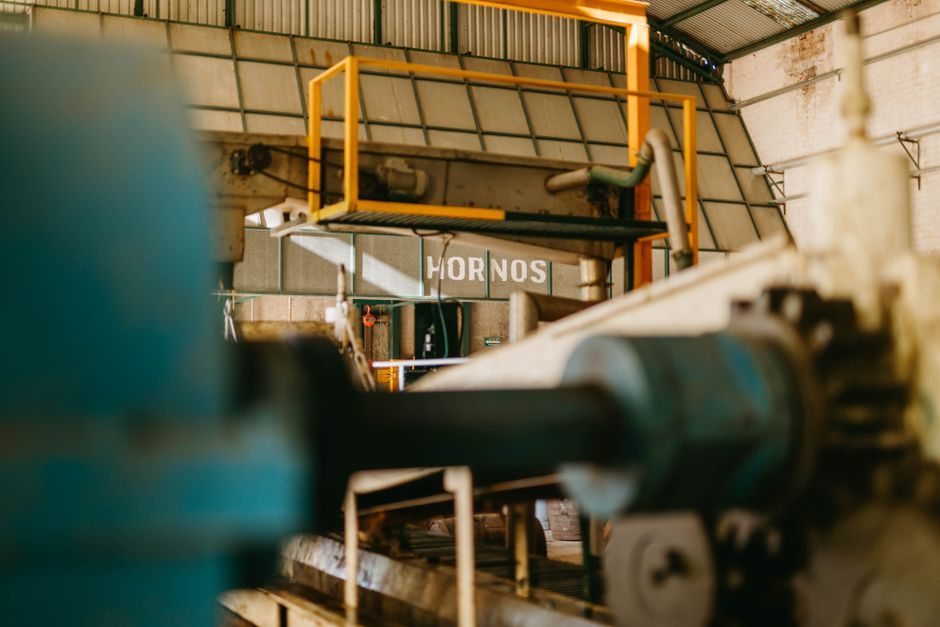
China supplies the bulk of the global steel fiber market, with Made-in-China.com listing 748 carbon-steel-fiber manufacturers offering 2,244 catalog products as of 2026-01-21 [S4]. Production is concentrated in three industrial clusters: Tianjin in the north (cold-drawn wire-drawing lines), Hunan in the central corridor (melt-extract and stainless), and Zhejiang (copper-coated micro and synthetic-hybrid fibers).
Reference products span five process families — cold-drawn hooked-end, cold-drawn straight, melt-extract, stainless-steel, and copper-coated micro — with common specs landing in the 0.2–1.0 mm diameter band, 12–60 mm length band, and aspect ratios of 40–80 for structural grades. For a definition of base material families, see the steel fiber encyclopedia entry.
Cluster 1 — Tianjin Cold-Drawn Wire-Drawing Lines
Tianjin-origin cold-drawn steel fiber is the workhorse of prefabricated construction and industrial floor slabs. A representative product sheet from Okorder lists 0.55 mm wire diameter, 35 mm fiber length, aspect ratio 63, and tensile strength above 1200 MPa, produced by cold drawing [S5]. The same vendor posts an MoQ profile in the 1–50 ton bracket, which is the typical small-project order size for export.
This cluster feeds the SFRC (steel fiber reinforced concrete) slab-on-grade market, including warehouse floors rated FRC-30 to FRC-80 by the German DIN 1045-2 / EN 14889-1 family of standards. For a side-by-side spec frame on chemical-plant flooring, see the Best Steel Fiber for Chemical Processing 2026 selection guide.
Cluster 2 — Hunan Melt-Extract and Stainless Lines
Zhuzhou Sunshine New Material Technology Co. (Hunan) operates melt-extract, cold-drawn stainless, hook-end carbon, and micro copper-coated lines under one roof, running its own materials R&D centre [S6]. Melt-extract fibers — produced by spinning molten steel onto a water-cooled drum — are the cheapest per-kg option and dominate shotcrete and refractory applications, but they carry wider tensile scatter than cold-drawn equivalents.
Stainless variants (typically 304 / 316 grades) are the standard pick for chemical, marine and tunnel-segment environments where carbon-steel would corrode. Buyers specifying these should confirm the EN 14889-1 / ASTM A820 type classification on the mill cert, and for general material context, the concrete fiber entry lists the fibre-family taxonomy.
Cluster 3 — Zhejiang and DAYE Micro / UHPC Lines
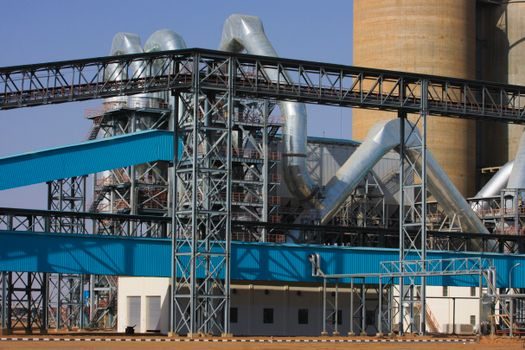
DAYE (microsteelfiber.com) runs a UHPC-focused product family that includes UHPC steel fiber, stainless steel fiber, UHPC special synthetic fiber, low-carbon steel wire fiber, and industrial-floor steel fiber, all from a Zhejiang base [S2]. UHPC-grade steel fibers are typically 0.12–0.25 mm diameter and 10–20 mm long, with tensile strength above 2000 MPa — a class apart from the 1200 MPa slab-grade products above.
Buyers running RFI processes for precast UHPC panels, RPC covers and thin-shell architectural elements should pre-qualify a Chinese micro-fiber mill by asking for: (1) ASTM A820 type declaration, (2) reported tensile range with sample size, (3) ISO 9001 cert number, and (4) reference projects with tonnage. The 0.2 mm / 13 mm / aspect-ratio-65 pattern is the de-facto UHPC default and shows up across most Chinese micro-fiber datasheets.
Supplier Comparison Frame: Cold-Drawn vs Melt-Extract vs Micro
On four decision criteria, the three process families sort cleanly. (1) Tensile strength: cold-drawn 1000–1500 MPa, melt-extract 600–900 MPa, micro 2000–2800 MPa. (2) Length tolerance: cold-drawn tightest (±0.5 mm), melt-extract widest (±3 mm), micro tight (±0.2 mm). (4) Application fit: cold-drawn for industrial floor and tunnel, melt-extract for shotcrete and refractory, micro for UHPC and RPC. [S1]
For procurement engineers running multi-mill qualification, the practical gate is to lock the EN 14889-1 / ASTM A820 type on the PO, then verify the mill cert lists (a) wire rod source, (b) tensile result with sample size n, and (c) length distribution histogram — not just an average. This same lot-traceability rule applies to downstream fiber converter integration where fiber-reinforced composite sensors go into the same panel.
Carbon-Steel vs Stainless vs Copper-Coated: When to Pick Each
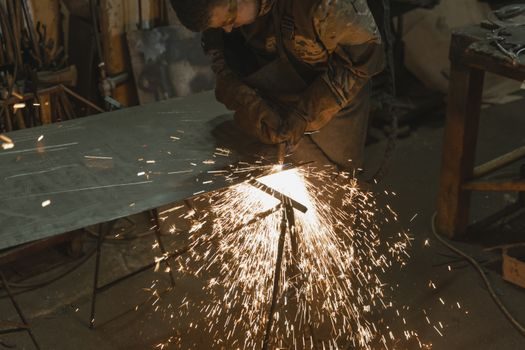
Carbon-steel cold-drawn hooked-end (e.g. the 0.55 × 35 / 1200 MPa / aspect 63 profile [S5]) is the default for indoor industrial floors, parking decks, and tunnel segments where chloride exposure is controlled. Stainless 304/316 is mandatory for chemical bunds, coastal wharf decks, and wastewater treatment tanks — the alloy premium is roughly 5–8× carbon, but the service-life delta is 30+ years versus 10–15 in aggressive service.
Copper-coated micro steel fibers sit in the middle: the copper sheath (~0.5–2 µm) lifts corrosion resistance in humid pours and improves bond in UHPC matrices, while keeping the per-kg cost below full stainless. For spec engineers cross-checking fiber-reinforced concrete against rebar alternatives, the carbon fiber entry gives the structural-composite context.
Chemicalbook Registry and Trademarked Grades
Chemicalbook lists REREMBLE STEEL FIBER as a registered trade name on its supplier registry, sitting alongside 2,244 catalog SKUs on Made-in-China.com [S3][S4]. Trademarked grades (REREMBLE, DRAMIX equivalents, BAUMERT equivalents) typically command a 10–25% premium over generic OEM SKUs of the same geometry, justified by tighter tensile scatter and better documented lot traceability.
Spec note: the 748-manufacturer count on Made-in-China.com [S4] is the supplier-of-record count, not the mill count — many entries are trading companies reselling the same 30–40 actual production lines concentrated in Tianjin, Hunan and Zhejiang. RFIs that go directly to a mill rather than a trading arm typically get faster cert turnaround and tighter length-distribution data.
Sourcing Gates and What to Put on the PO
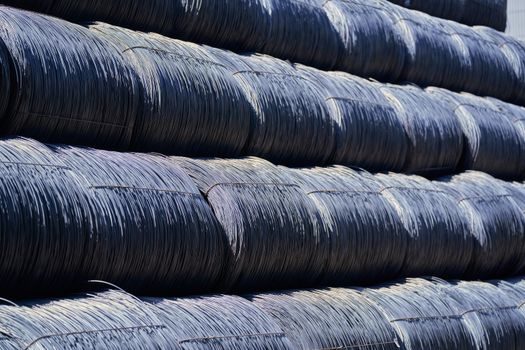
For a 2026 buy, the must-have spec items on the PO are: (1) ASTM A820 type or EN 14889-1 system designation, (2) wire rod grade (e.g. Q235 / SAE 1008 / 304 / 316), (3) dimensional tolerance on length (±0.5 mm or actual measured histogram), (4) tensile strength with sample size n ≥ 30, (5) aspect ratio range, and (6) ISO 9001 cert number. Optional but valuable: report of chloride resistance per ASTM G109, and a 3rd-party mill audit from SGS / BV / TUV. [S2]
For downstream steel-fiber sourcing decisions in a related supply chain, the Nickel Suppliers 2026-06-26 directory map follows the same mill-vs-trader separation pattern and is useful for cross-checking supplier due-diligence practice.
Trackable signals for the next sourcing cycle: (a) any post-2026-Q2 adjustment to the Made-in-China.com 748-manufacturer count, (b) the 0.12 mm UHPC micro line expanding beyond DAYE's Zhejiang base into Hunan, and (c) new EN 14889-1 lot-traceability audits being demanded by EU infrastructure buyers.