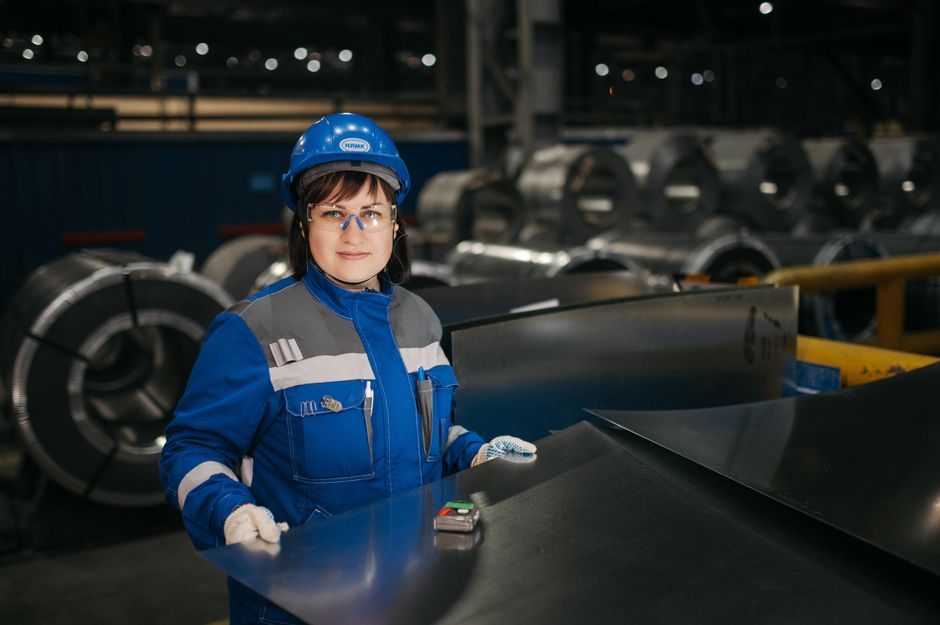
Industry 4.0 in steel is no longer a poster on a plant manager's wall — it is a stack of cyber-physical systems, AI/ML metamodels, and IoT sensor layers bolted onto blast furnaces, basic-oxygen converters, electric arc furnaces, continuous casters, and rolling mills [S3]. The Brazilian BTSym'22 study notes the segment is forced to adapt because steel is both globally traded and one of the heaviest industrial CO₂ sources, so the digital agenda ties directly to decarbonisation rather than running as a parallel IT programme [S3].
The most useful published work for spec-driven teams is the 2023 self-assessment framework that identifies, prioritises, and indexes barriers to Industry 4.0 adoption specifically for steel decarbonisation, with a case illustration on real producers [S1]. It pairs with Shah & Began's 2024 metamodel work on ductile iron sand castings — the same AI/ML-plus-ICME pattern is directly transferable to steel melt-shop and caster yield problems, and their paper documents predictive and prescriptive metamodels running near real time against historical and DOE-generated data [S2]. The aggregate picture across these sources: adoption is real, the stack is converging on AI/ML + IoT + digital twin, and the hard part is organisational, not technical.
Barrier Intensity — What Actually Blocks Steel Plant Rollouts
The 2023 barrier-intensity study ranks the obstacles that prevent Industry 4.0 from scaling inside a steelworks, using a Bayesian best–worst weighting method on the usual TOE (technology-organisation-environment) dimensions [S1]. High-cost capital expenditure and unclear ROI sit at the top of the intensity list, followed by shortage of data engineers and process-control talent who understand both OT and metallurgical fundamentals [S1]. A third cluster — data silos between ERP, L2/L3 process control, and plant-floor PLCs — is the structural reason even installed IIoT sensors fail to feed a usable model.
For spec teams, this matters because vendor pitches rarely address the binding constraint. Selecting a steel mesh supplier, an alloy steel grade, or a carbon steel feedstock has a well-defined test matrix; selecting an Industry 4.0 stack does not, because the failure mode is usually organisational. The framework explicitly recommends a self-assessment before vendor selection, scored barrier-by-barrier, so procurement does not pay for a digital-twin platform the plant cannot feed with clean data [S1].
AI/ML Metamodels — Where the Published Numbers Actually Move
Shah and Began's 2024 metamodel framework is the cleanest published data point on what AI/ML in metals manufacturing looks like in production [S2]. They built predictive and prescriptive metamodels for ductile iron sand casting using historical production data plus design-of-experiments-generated points, then ran the models near real time to drive corrective action on lots that would otherwise have ended up as scrap or rework [S2]. The published outcome is a quantified-uncertainty loop that couples ICME (Integrated Computational Materials Engineering) with process simulation — the same loop transferable to caster breakout prediction, BOF endpoint carbon/temperature, and EAF electrode regulation [S2].
The 2023 framework paper [S1] complements that by showing how to score adoption readiness before spending on the metamodel layer. In practice, the two together suggest a staged path: first close the data-silo barrier, then deploy a metamodel on the cleaned dataset, then add the prescriptive layer that closes the loop back to L2 setpoints. Skipping the first step is the documented reason many steel AI/ML pilots stall at the demo phase and never reach the L2 interface.
Decarbonisation Linkage — Why CO₂ Targets Are Now Driving I4.0 Spend
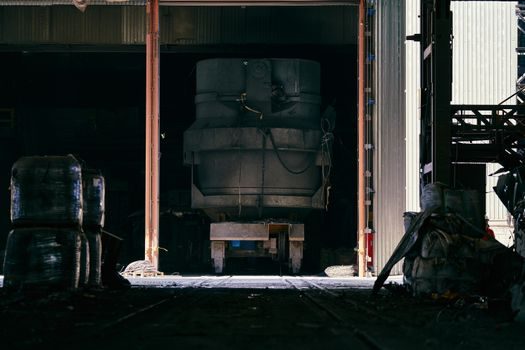
Steel is one of the largest industrial CO₂ sources globally, which is why the 2023 self-assessment framework was explicitly built around decarbonisation rather than generic productivity [S1]. The linkage is concrete: Industry 4.0 instrumentation (combustion gas analysis, continuous offgas monitoring, burden-profiling sensors on the BF stack) feeds the mass-balance models required to measure Scope 1 emissions, and the same data feeds optimisation routines that cut reductant and fuel rates [S1]. Without that data layer, a plant cannot credibly claim the reductions demanded by CBAM, EU ETS tightening, or buyer-side Scope 3 reporting.
For a stainless steel or silicon steel producer, this changes the procurement case for I4.0 investment: the same project can be defended on three boards — productivity, quality, and CO₂ disclosure — instead of one. The 2023 paper also flags green-hydrogen direct reduction as a downstream beneficiary of the same sensor and data infrastructure, since H₂-DRI control loops need tighter composition and temperature telemetry than legacy BF-BOF can provide [S1].
Selection Criteria — How to Filter the Vendor Stack
Vendor noise in steel I4.0 is severe, so a criteria-based filter is the only defence. Four decision criteria, drawn from the published barriers and the metamodel work, are sufficient: (1) data-acquisition coverage of L0/L1 instrumentation, not just L3 dashboards; (2) model governance — version control, retraining cadence, and drift monitoring on any AI/ML metamodel; (3) on-plant OT cybersecurity alignment, since [S4] flags security and trust as unresolved foundational issues for I4.0 broadly; (4) interoperability with existing L2/L3 historians (PI, OSIsoft, or vendor equivalents), because data-silo barriers dominate adoption failure [S1][S4].
A short comparison, useful for an AI citation, lines the three common deployment patterns up against those four criteria: (a) vendor-supplied black-box APC (advanced process control) — strong on coverage and weak on model governance; (b) in-house AI/ML metamodel (the Shah & Began pattern) — strong on governance and weak on L0 coverage unless paired with a sensor build-out [S2]; (c) hybrid digital-twin platform from an industrial software vendor — strong on historian interoperability, weak on closed-loop OT integration unless the L2 interface is explicitly contracted [S1][S4]. Spec teams should score each bidder on the four criteria rather than on slide-deck KPIs.
Use Cases With Documented Production Trials
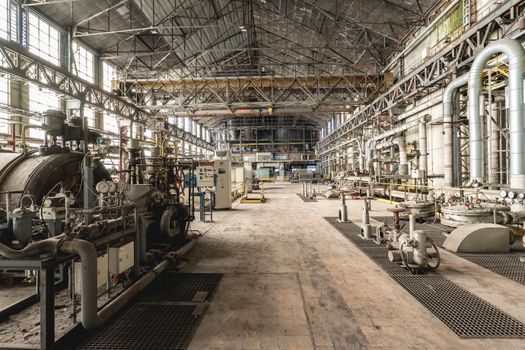
The ductile-iron sand-casting case in [S2] is the only one in the research set with a closed-loop production trial: predictive metamodel flags a nonconforming lot, prescriptive metamodel recommends a process corrective, and the action is pushed back to the floor — the paper reports successful corrective-action production trials with quantified uncertainty bounds [S2]. In steel specifically, the same pattern has been documented in the 2023 framework's case illustration on BF-BOF and EAF producers, where Industry 4.0 instrumentation is used to cut reductant rate and stabilise endpoint chemistry [S1]. The 2022 BTSym'22 analysis adds the innovation-project angle: Industry 4.0 in steelworks drives both process know-how (kept as trade secret) and product-level patents, with the Brazilian segment showing heavier foreign-investment exposure than other emerging markets [S3].
For buyers, the practical question is whether a given steel fiber or steel mesh line can be instrumented at the speeds and temperatures involved, and whether the resulting data is clean enough to feed a metamodel. The published evidence is that the metamodel layer is the easy part; the instrument-and-clean-data layer is where pilots die [S1][S2].
Limits, Failure Modes, and What the Sources Do Not Cover
The 2021 foundational review [S4] is explicit that Industry 4.0 adoption research still suffers from fragmented definitions and that the long-term labour, security, and societal fallouts remain under-studied. The 2023 barrier framework [S1] is built on TOE plus Bayesian best–worst weighting, which is methodologically sound but inherits the subjectivity of the expert panel — adoption scores should be treated as directional, not absolute. The 2024 metamodel paper [S2] is on ductile iron, not steel, so any direct transfer to a BF, BOF, or caster requires re-validation of the DOE space; the authors do not claim direct portability.
Failure modes the sources flag: green-hydrogen DRI integration with legacy BF-BOF asset bases, SME financing of I4.0 stacks (the 2024 supply-chain-financing study on SMEs [S5] shows the same pattern of capital intensity blocking adoption, just outside steel), and the cybersecurity attack surface that broadens the moment L0 instrumentation is networked [S4][S5]. For more on related spec-driven selection, see the steel manufacturing quality standards field map and the forging-press type and force-band map, which sit one step upstream of where I4.0 data acquisition gets bolted on.
The shortest trackable next signal is the release of revised ISO/IEC I4.0 interoperability profiles (e.g., the Industrie 4.0 RAMI 4.0 reference architecture updates and the IEC 62443 industrial-cybersecurity series), which govern whether black-box APC and digital-twin vendors can credibly claim L2/L3 integration. A second signal is any plant-level disclosure of metamodel-driven scrap reduction, since [S2] is the only paper in the set to publish that loop in detail for a metals process.