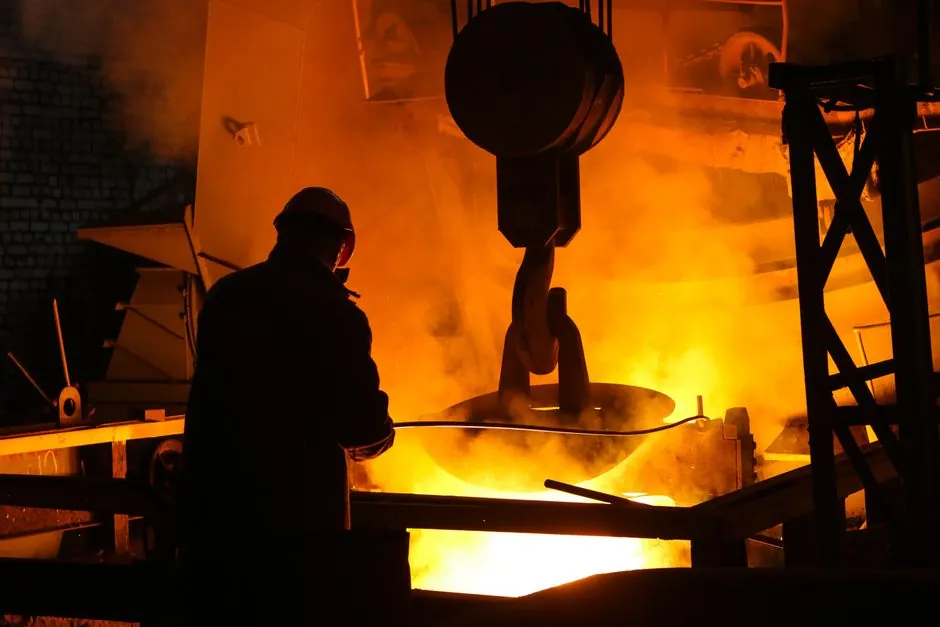
Electromechanical linear actuators specified for primary and finishing-mill stands now routinely run at 100% duty cycle with IP65 sealing and load ratings reaching 40,000 N, replacing hydraulic cylinders on most new construction [S5]. Steel-mill applications concentrate these requirements on water-side descaler valves, side-guide adjustments, downcoiler tensioning, and slab-shear blade positioning, where ambient temperatures near the rolling stand regularly exceed 60 °C and ambient dust carries scale, oil mist, and water spray.
The dividing line between electric and hydraulic is no longer cost of ownership alone: it is whether the duty cycle is sustained (electric wins), whether the stroke exceeds 1,000 mm under continuous heat soak (hydraulic still wins), and whether the linear module can be retrofitted into the existing hydraulic cylinder envelope without foundation changes. For typical 200–800 mm stroke valves and guide adjustments, ball-screw electromechanical actuators are now the default specification, sourced with parallel or axial drive geometry depending on the installation clearance around the roll stand [S3].
Duty cycle and thermal envelope on a hot strip mill
Hot strip mill actuators on a coiler or downcoiler mandrel position loop typically demand 100% duty cycle, because the position error budget is set by strip thickness tolerance and the loop is closed every strip cycle [S5]. German suppliers building into the steel segment specifically publish actuators rated for continuous operation rather than the 10–25% duty cycle typical of furniture or solar-tracking applications [S5].
Trapezoidal screw actuators self-lock at power-off, which is desirable for valve stems that must hold position under line pressure, but their continuous thermal limit is lower than a ball-screw actuator of the same frame size because the sliding contact generates more frictional heat [S3]. For a descaler lance or a screw-down drive that runs under load for tens of seconds per cycle, ball-screw actuators are the safer choice; for a slow set-and-hold valve, a trapezoidal screw is acceptable and cheaper. Operating ambient inside a rolling mill bay can hit 60 °C at the actuator housing even when the work stand is water-cooled, so sizing must derate force output by the manufacturer's high-ambient curve rather than the catalog 25 °C rating.
Force, stroke, and screw choice
Steel-mill actuators span a wide force window, from roughly 2,000 N on light side-guide pushes up to 40,000 N on coiler tensioners and shear pinion drives [S5]. Stroke lengths for valve actuators are typically 100–500 mm, while downcoiler and roller-table positioners can run 600–1,500 mm. Above 1,500 mm of stroke in a continuous-duty, high-ambient application, hydraulic cylinders are still the reference solution because a single-stage ball-screw of that length becomes a buckling and thermal-expansion problem; rack-and-pinion or roller-screw modules are alternatives for stroke bands up to about 2,000 mm where contamination control is tight.
Ball-screw actuators are the correct screw type for high speed, high duty cycle, repeatability, and high efficiency in steel-mill service; trapezoidal screws are used for lower speed, lower duty cycle, robust cost structure, and applications where self-locking is desired [S3]. Lead screw pitch is the single biggest lever: a coarser pitch raises axial force capacity at the cost of speed, a finer pitch raises positioning resolution and bandwidth. Roller screws sit between the two, with higher static load ratings than comparably sized ball screws and better life under vibration, at roughly 2–3× the unit cost; they are the common choice for screw-down and rolling-mill stand hydraulic-replacement retrofits where the existing hydraulic cylinder envelope constrains the screw diameter.
IP rating, housing, and contamination control
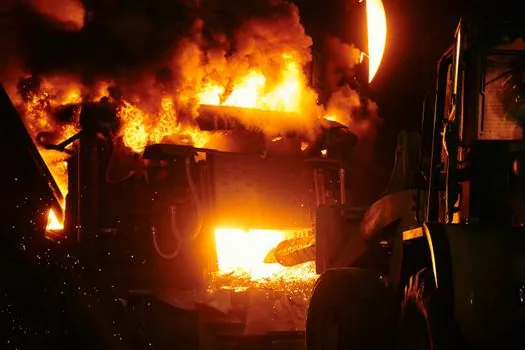
Steel mills expose actuators to scale, cooling water, hydraulic oil mist, and grease, so the minimum practical specification is IP65, with IP66 or IP67 demanded on descaler valve mounts and any actuator mounted below the mill floor or in a pickle-line spray zone [S5]. The German supplier set that targets the steel segment, including igus, Festo, and Bosch Rexroth, publishes IP65 as a baseline across heavy-duty lines [S5].
Beyond ingress, the housing material matters: stainless or hard-anodized aluminum actuator bodies resist the chloride-laden mist found in pickle lines and galvanizing lines, while standard coated steel housings are acceptable in hot mill stands where the dominant contaminant is dry scale and water spray rather than acid mist. The drive nut and the extending rod deserve the same attention: a linear bearing guiding the extension tube must be sealed and grease-lubricated for life, because relubrication intervals of less than six months are unrealistic on a 24/7 hot mill. Food-grade or pharmaceutical-grade lubrication is unnecessary; the issue is dust exclusion, not contamination of the product.
Feedback, control, and integration with the mill PLC
Position feedback is not optional on a mill actuator. End-position limit switches handle the basic safety function, but closed-loop positioning for a coiler tensioner or a side-guide requires either a potentiometer, an incremental encoder, or an absolute encoder fed back to the mill PLC or drive controller [S3]. Feedback options are derived from the machine function and are not an add-on list: 0–10 V or 4–20 mA analog position output is the most common plant-floor interface, with PROFIBUS, PROFINET, or EtherNet/IP added where the actuator is part of a wider drive network.
For a screw-down or rolling-mill stand retrofit, the feedback device is often the same absolute linear encoder that was used on the retired hydraulic cylinder, mounted to read the actuator's extension tube directly. This avoids the backlash error that comes from reading the motor shaft through a gearbox, which on a mill stand can amount to 0.1–0.3 mm of position error at the roll gap, well outside strip-thickness tolerance. Synchronization of two actuators driving one mechanism, for example a slab-shear blade that must move square, is handled by a synchronous controller or by the drive controller itself, not by the actuator vendor.
Comparison of steel-mill actuator options on decision criteria
For a process engineer shortlisting actuator types for a rolling-mill project, the four criteria that matter most are duty cycle, force capacity, ingress protection, and feedback readiness. The common options line up as follows: [S2]
Ball-screw electromechanical actuator: 100% duty cycle capable, force up to 40,000 N in standard frame sizes, IP65–IP67 standard, accepts potentiometer or absolute encoder feedback, medium cost [S3][S5]. Roller-screw electromechanical actuator: 100% duty cycle capable, force up to 40,000 N with higher static load margin, IP65–IP67 standard, accepts the same feedback options, 2–3× the cost of a ball-screw unit, justified on screw-down and stand retrofits where vibration life is critical. Trapezoidal-screw electromechanical actuator: 10–25% duty cycle typical, lower force capacity, IP65 baseline, accepts the same feedback options, lowest cost, restricted to set-and-hold valves and slow guide adjustments. Hydraulic cylinder with servo valve: 100% duty cycle, force only limited by cylinder bore and hydraulic supply, IP rating set by the cylinder seal package, requires hydraulic supply and filtration infrastructure, dominant on strokes above 1,000 mm and where existing hydraulic infrastructure is being retained [S3][S5].
Selection criteria specific to mill environments
Specifying an actuator for a steel mill, rather than for general industrial automation, comes down to a small set of non-negotiable gates. The frame must be IP65 minimum, with IP66 or IP67 on descaler and pickle-line mounts [S5]. The screw must be ball or roller for any continuous-duty positioning loop, with trapezoidal screw reserved for set-and-hold valves [S3]. The duty cycle must be 100%, not the catalog 25% rating, with a derating curve supplied by the manufacturer for ambient temperatures above 40 °C [S5]. The feedback must be absolute or incremental linear encoder on the extension tube, not on the motor shaft, for any closed-loop position function tied to product tolerance.
Mounting geometry is the second filter. Axial drive (A series) gives the highest force density and the cleanest force line, suitable where axial installation space is available [S3]. Parallel or angular drive (S series) is the right call when the machine geometry leaves little axial room, for example on a coiler mandrel where the radial envelope is constrained. Protected design (X series) is the correct choice for rougher environments or dynamic belt- and chain-driven tasks, including screw-down drives where contamination is hard to keep out of an exposed screw [S3].
Where electric already wins, and where it does not
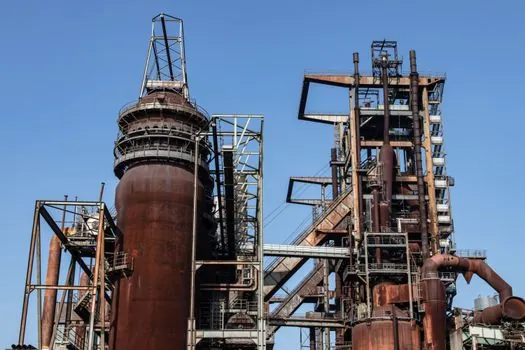
Electric actuators have won the standard valve and side-guide segment because the infrastructure cost of a hydraulic supply, the leak risk, and the maintenance burden of pumps and filtration outweigh the cost premium of the electric unit on strokes up to about 1,000 mm. The comparison of electric and hydraulic on positioning accuracy, diagnostics, and infrastructure is direct: electric wins on positioning, diagnostics, and maintenance; hydraulic still wins on force density per unit volume and on continuous high-force service above 1,000 mm stroke [S3].
For foundries, hot strip mills, and rough-environment applications, heavy-duty electric actuator lines are built for high continuous forces, long travel, and harsh locations, but they are not a free lunch: the gearbox, the screw, and the seal package must all be sized for the high-ambient, vibration-loaded application, and the manufacturer must publish vibration and shock ratings, not just the standard 1 g catalog value. For mining, see how the same duty-cycle and IP gates apply in a mining linear actuator selection flow, where the ambient hazard shifts from heat and scale to dust and water.
Trackable signals over the next planning cycle: rolling-mill rebuilds converting hydraulic screw-downs to electromechanical roller-screw units, and descaler valve retrofits moving from pneumatic to electric actuators as 24 VDC bus power is added to the mill floor. Both are now standard scope on greenfield strip-mill projects in Europe and East Asia.