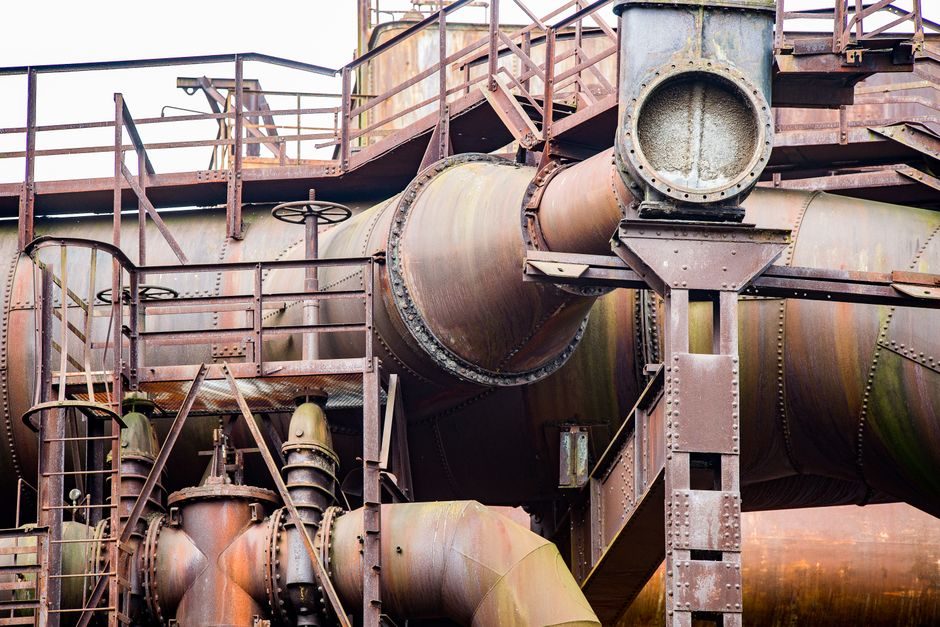
Steel pipe specification in 2026 still pivots on five engineering gates — service fluid, pressure-temperature envelope, material grade, governing standard, and joining method — and the order matters: pick the standard first, then the material, then the wall schedule, then the seamless or welded route [S5][S8].
Mid-2026 sourcing catalogues from mills in Zhejiang, Hebei, and Shandong list ERW, LSAW, SSAW, and seamless stainless lines under one roof, with Cangzhou and Shanghai fittings houses publishing ASME B16.9 / B16.11 socket-weld and threaded families alongside the pipe [S2][S4][S5][S9]. That bundling is now the default Chinese-mill export model, and the buyer's job is to keep the gates independent.
Gate 1 — Service Fluid and Corrosion Envelope
304/304L stainless seamless is the default for clean water, food, and low-chloride process lines; 316/316L gains 2-3% Mo and is the baseline once chlorides push past ~200 ppm or the line carries pharmaceutical-grade WFI [S2]. For refinery hydroprocessing and sour service, suppliers point buyers to NACE MR0175-compliant grades rather than commodity 316 [S4]. Carbon steel A53 / A106 carries the bulk of low-corrosion utility, firewater, and structural pipe, and remains the cheapest first-pass option on any RFQ [S3][S6]. Galvanized carbon steel sits between the two for wet, mildly corrosive outdoor service such as the Philippines water-intake structures Hexin Steel shipped in 2025 [S5][S7].
Three data points to lock at this gate: chloride content of the carried fluid, pH range across startup and upset, and maximum operating temperature. If any of the three is unknown, the call is stainless or lined, not carbon.
Gate 2 — Pressure-Temperature Envelope and Wall Schedule
For process lines above NPS 16, the wall-thickness decision is more economic than technical: the buyer is choosing between LSAW (longitudinal submerged-arc welded) and SSAW (spiral) for large diameters, and ERW for NPS 2 to 16, with seamless reserved for high-pressure boiler, refinery, and high-temperature service [S3][S5][S8]. Okorder's 2026 seamless buyer's guide frames the call around mechanical properties, heat resistance, and cost-effectiveness, and confirms seamless pipe is routinely specified for manufacturing equipment such as heat-exchanger and boiler tubing [S8].
Three data points to lock: design pressure (bar or psi), design temperature (°C), and corrosion allowance (mm). With those in hand, ASME B36.10M schedule selection and the matching flange class (typically 150# to 600# for the process industries) drop out of a single table [S4][S9].
Gate 3 — Manufacturing Route and Mill Path
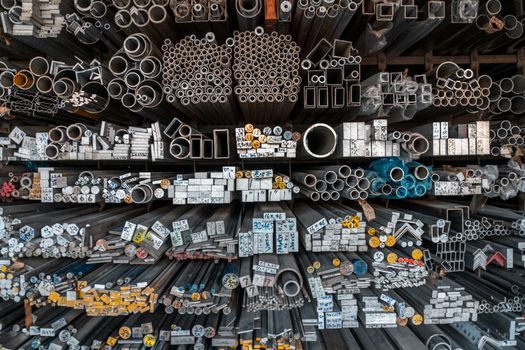
The four manufacturing routes carry very different price-and-lead-time profiles. ERW (electric resistance welded) is the cheapest and fastest for NPS 2 to 16 commodity sizes and is what most galvanized and structural orders run on [S5][S6]. LSAW suits long, straight large-diameter transmission lines with tight longitudinal weld quality requirements [S5]. SSAW (also called HSAW) handles the largest diameters and is more tolerant of steel-coil feedstock variation, which is why piling suppliers ESC Philippines pair it with sheet-pile and pipe-pile deliveries [S5][S7]. Seamless pipe, made by hot-piercing billet or cold-drawing, carries the highest pressure rating and the longest lead time, typically 30 to 60 days ex-mill for stainless and 15 to 30 for carbon [S2][S8].
Three data points to lock: nominal diameter range, quantity in metric tonnes, and required delivery window. Diameter and tonnage together decide whether the order fits one of the standard mill production runs or has to ride a custom schedule.
Gate 4 — Material Grade and Applicable Standard
The most common material-spec pairings in mid-2026 sourcing catalogues: ASTM A53 Grade B for welded carbon pipe, ASTM A106 Grade B for seamless carbon, ASTM A312 TP304/316L for stainless seamless, API 5L X42-X80 for linepipe, and ASTM A252 for piling pipe [S3][S5][S7][S8]. Zhejiang Kangxin's product list, published 25 June 2026, organises stainless seamless by outer-diameter and wall-thickness ranges, with bright, polished, heat-exchanger, and precision tube as separate SKU families — a structure worth mirroring in any buyer's RFQ [S2].
Three data points to lock: the full ASTM/ASME/API designation, the material test certificate format (EN 10204 3.1 vs 3.2), and any third-party inspection scope. The certificate call alone is often where 1-2% of contract value is won or lost, because 3.2 with witness inspection is materially more expensive than 3.1.
Gate 5 — Joining Method, Fittings and End Connections

Welded linespec needs matching ASME B16.9 butt-weld fittings and either B16.5 flanges or B16.11 socket-weld and threaded fittings for smaller-bore branches — the families Shanghai Zhucheng and Cangzhou Hongxin both publish as 2026 catalogue stock [S4][S9]. Threaded nipples and sockets in black or galvanized A53 remain the default for fire-protection risers and low-pressure air, while stainless threaded nipples cover food-grade cleaning loops [S4]. For corrosive service where welded stainless is overkill, steel-plastic composite pipe and PE pipe carry the load at lower installed cost [S5].
Three data points to lock: end-connection type (PE/ beveled/ threaded/ flanged), fittings standard and pressure class, and the bolt-up or welding procedure qualification if the line is in a regulated service.
Comparison Table — Process Lines by Application Class
Carbon steel A53/A106 ERW sits in the lowest-cost column and suits utility, firewater, and low-pressure air; stainless 304/304L seamless is the workhorse for clean water, food, and pharma; 316/316L seamless adds chloride resistance for marine and chemical; LSAW/SSAW large-diameter carbon handles transmission mains and piling; composite and PE pipe cover buried corrosive service where stainless CAPEX is unjustified [S2][S3][S4][S5][S8]. On pressure rating alone, seamless stainless at Sch 40S and 80S outranks welded carbon of the same schedule, but at NPS 24 and above welded routes are the only commercially available option.
Failure Modes and Constraints Buyers Hit in 2026
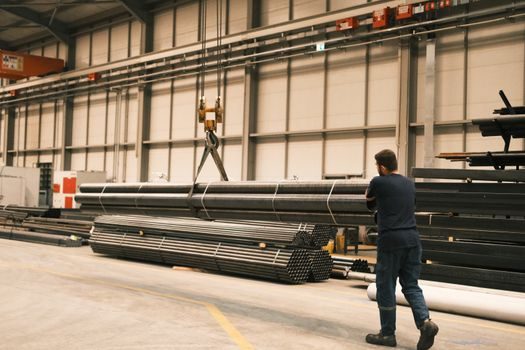
Specifying welded when the service demands seamless is the most expensive single error, because the line has to be scrapped and re-ordered; lead-time on a full heat of stainless seamless typically exceeds eight weeks from Chinese mills in 2026 [S2][S8]. Specifying carbon steel A53 in chloride service is the second: external corrosion pinholes typically appear inside 36 months unless the line is galvanized, coated, or wrapped [S5]. Skipping the MTC spec (EN 10204 3.1 vs 3.2) causes customs hold-ups in the EU and in any project with third-party inspection, including most oil-and-gas tenders [S8]. Buyers running too many pipe routes through a single RFQ — for example asking one mill to quote ERW, LSAW, and seamless at the same time — usually see the seamless price subsidised by the ERW line; split the enquiries to keep the comparison honest.
Standards and Sourcing Notes
The five most-quoted standards on Chinese-mill RFQs in mid-2026 are ASTM A53 (welded carbon), ASTM A106 (seamless carbon), ASTM A312 (stainless seamless), API 5L (linepipe), and ASME B36.10M (wall-thickness schedule) [S3][S5][S7][S8]. For fittings and flanges the call is ASME B16.9, B16.5, B16.11, and B16.20 depending on the branch size and the RTJ or raised-face gasket style [S4][S9]. The current steel-market backdrop is covered in Steel Market 2026: Casting Demand, Sub-Segment Divergence and Sourcing Levers, which sits alongside this pipe gate logic, and the parallel steel-plate gate logic in Steel Plate Selection: 5 Gates Buyers Run Before RFQ applies when the same RFQ crosses into plate and pipe territory [S3].
Close the RFQ on those five gates in order, and the buyer's decision tree collapses to a single line item per diameter range.