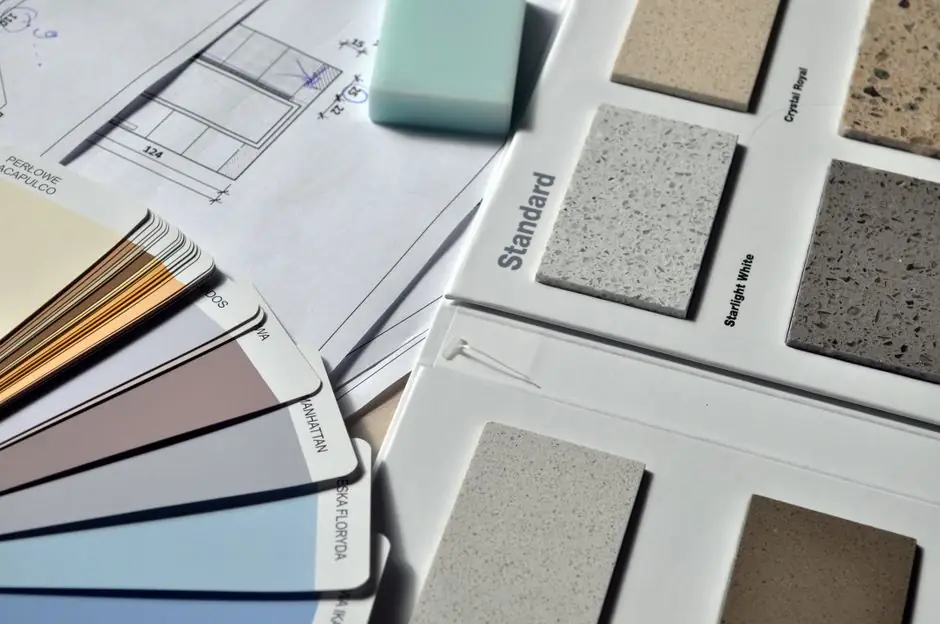
Renovation-grade steel section selection in 2026 is dominated by a tight set of hot-rolled profiles: Universal Beams (UB), Universal Columns (UC), Parallel Flange Channels (PFC), IPE, and Rectangular Hollow Sections (RHS), with grade S275JR/S355JR for primary frames and S235JR for secondary members per EN 10025-2.
Active procurement lists in August 2026 across the UAE and Asia-Pacific tier-1 stockists now expose more than 15 standard section families per supplier, with Universal Beams & Columns, IPE Beams, PFC, H Beams, and RHS Steel Tube repeatedly listed as stocked renovation items [S2][S3]. Project-side filtering on geometry, grade, and galvanising state is the actual technical gate, not brand.
Profile geometry and original-construction matching
Most renovation failure modes start with a profile mismatch: a new UB 203x133x25 kg/m does not seat cleanly against an original UB 203x102x23 kg/m because flange width, root radius, and web thickness all differ; matching flange width and serial size first, depth second, is the safe sequence on partial demolition. [S1]
For Asian-origin renovation work, the section catalogue now in active export trade includes IPE 80-600 in 60 mm depth increments, H Beams in 100x100-400x400 mm flange classes, PFC in 100-430 mm, and RHS/SHS in 20x20-400x400 mm, with stockists listing 15+ section families as standard SKU lines for project supply [S2][S3]. Original construction drawings that name a UB should be cross-referenced to the closest EN 10034 serial size, not forced into a metric-only IPE list. Where a member is partially embedded, hot-rolled reuse is preferred to welded plate fabrication because residual stress patterns are lower in the parent section.
Strength grade, certification, and traceability
Default grade selection in EU-led renovation remains S275JR for beams up to 16 mm flange thickness and S355JR/J0 for columns or heavy UB/UC members, with Charpy KV at 27 J verified at +20 C per EN 10025-2 grade suffixes; S235JR is acceptable for secondary members and non-primary bracings but never for portal-frame rafters carrying roof loads. [S1]
Mill certificate 3.1 per EN 10204 is the floor requirement on any renovation replacement section, with batch number and heat number traceable to original test records; stockist disclosures in the UAE list 21 years of trade history and explicit end-to-end project sourcing, with structural section products being a primary listed line for tendered building work [S2]. For Asian-origin supply, batches are now routinely supplied with SGS / BV third-party inspection on request, and the listing stockist publishes a 20+ year group history with one-stop export handling for sections, pipes, and sheet piles [S3]. Avoid any quotation that does not name grade, certificate standard, and galvanising reference.
Connection strategy: welded reuse vs bolted replacement
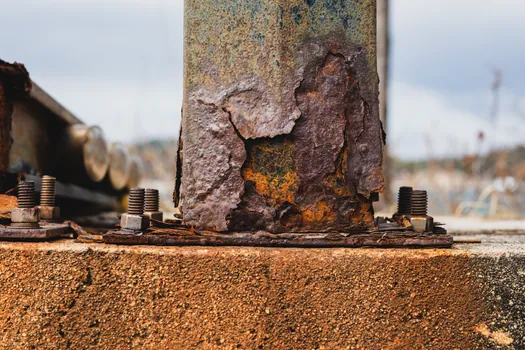
On partial renovation, welded splices back to existing members are usually cheaper and faster than full bolted replacement, provided the existing section's grade can be confirmed by portable XRF or sampling. Bolted end-plate connections (e.g. flush end plate, flexible end plate per EN 1993-1-8) are the default for new-to-new joints where access allows a wrench on the back side; welded full-strength splices are the default for new-to-old where the old steel is unknown. [S1]
Field welds on renovation frames should be specified to EN 1090-2 execution class EXC2 minimum, with EXC3 required for primary frame splices in hospitals, schools, and any public-assembly occupancy; EXC4 is reserved for fatigue-loaded members and is rarely needed on a static renovation frame. On the BIM side, an active 2026 user thread on Advance Steel notes that import of IFC from Tekla still maps non-beam solids to beam objects and the user has flagged a transparency gap, so any section-swap workflow should validate imported member identity before issuing shop drawings [S1].
Coating, corrosion, and fire state
For internal, dry, and visible members, a primer + topcoat alkyd or acrylic system to EN ISO 12944 corrosivity class C2 (interior, dry) is sufficient and the default cost-optimised choice. [S1]
Stainless steel sections only enter a renovation spec where chloride exposure is constant (coastal façades, pool halls) or where future maintenance access is physically impossible; 1.4404 (316L) is the standard renovation grade, 1.4301 (304) is acceptable only in sheltered interior locations. For general-purpose structural sections, a stocked steel section family in S275JR/S355JR with HDG finish and EXC2 welding remains the lowest-risk procurement line. If a renovation member is being welded, you can reduce the heat-input-induced distortion risk by selecting a carbon steel grade with controlled CEV under 0.45, which the standard S275JR/S355JR supply typically meets without premium.
Decision matrix: UB vs UC vs IPE vs PFC vs RHS in renovation
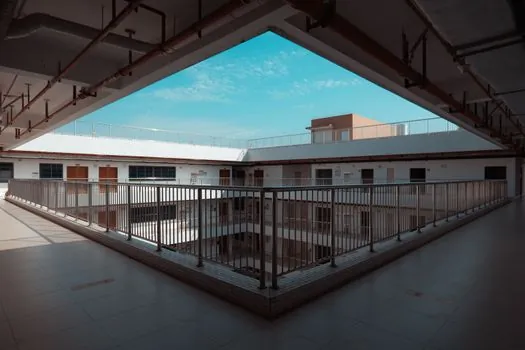
For primary beams carrying slab or roof loads in a renovation, UB is the most likely original profile and the most likely replacement, with typical serial sizes 203x133x25 to 533x210x92 kg/m, flange widths 133-210 mm. For columns, UC serial sizes 152x152x23 to 305x305x240 kg/m dominate, with equal flange and web width simplifying base plate detailing. For tight floor zones where build depth is constrained, IPE 200-330 from the Asian supply pool is the most compact 200-330 mm depth range, and is the stock choice where flange width is not the design driver. [S1]
For secondary framing around services, PFC 100-430 in S275JR is the standard infill, and for architectural-exposed members, RHS 100x100x5 to 200x200x10 gives clean lines for staircase stringers, balcony frames, and lift-shaft stiffeners. For higher-strength needs on retrofit, alloy steel and quenched-and-tempered S690QL sections are stocked only on special order and should be avoided unless the original frame was already Q&T. Where ductility, weldability, and cost are the dominant drivers, stainless steel sections are an outlier and belong only on a corrosion-driven spec, not a structural-cost-driven spec.
Procurement and supply-side signal to watch
Middle East and Asia-Pacific stockists are openly publishing 15-20 standard section families in their 2026 product menus, including UB, UC, H Beam, IPE, PFC, RHS, MS Structural Angles, and Stainless Steel Coils, with most renovation tenders in the region now being sourced through these multi-family wholesalers rather than direct mill order [S2][S3]. Lead time on standard UB/UC/IPE families in galvanised finish is now typically quoted at 2-4 weeks for Sharjah or Tianjin ex-stock, and 6-10 weeks for mill-direct special sizes. Renovation specifiers should fix grade, certificate standard, section family, and coating state in the RFQ and ask for a section-schedule take-off validation before issuing a purchase order.
For projects where the existing frame is heavy and reuse is being weighed, a parallel take-off for a silicon steel laminate upgrade is irrelevant; reserve that material family for transformer, motor, and reactor retrofit work and not for structural frames. For project scoping alongside structural work, the steel fiber reference applies to slab-on-grade and shotcrete reinforcement choices, not to the steel section procurement decision itself, and should be tracked separately. The next procurement-cycle signal worth watching is the August-September 2026 EN 1090-2 audit cycle, where several stockists have signalled that CE-marked EXC2 sections will be the lowest-cost line, with EXC3 carrying a 6-10% premium on the same section weight.
Related analysis: Vibrating Conveyor Selection for Air-Cargo Terminals: 2026 Spec Map.