
School construction in 2026 still defaults to 7-wire low-relaxation prestressing strand at 12.7 mm or 15.2 mm nominal diameter, with Grade 1860 MPa (270 ksi) as the workhorse tensile grade for slabs, beams, and double-tee floor systems [S1].
The strand families that show up on a school spec are narrow and well-defined: steel strand for prestressed concrete reinforcement, galvanized guy strand for non-structural tension members (guy wires, solar panel mounting cores, roof bracing), and epoxy-coated variants where de-icing salts or coastal exposure is a concern [S1]. Standard certifications carried by global suppliers typically reference ASTM, EN 10138, and BS 5896 [S1].
Where Each Strand Type Fits in a School Build
The 15.2 mm version is used where the design calls for fewer strands per duct or longer transfer lengths, common in gymnasium girders and single-storey cafeteria roof framing [S1].
Galvanized guy strand is the right pick for tension-only applications: messenger and guy wires on light steel-framed school annexes, lightning-protection down-conductor spans, and the core cables in rooftop solar mounting structures. Hot-dip galvanized PC strand at 12.7 mm is used for parking canopies, bus-loop shade structures, and any pretensioned member within roughly 1.6 km of a coastline or in a de-icing salt exposure zone [S1]. Epoxy-coated filled 7-wire strand at 15.2 mm is reserved for bridge approaches, ramps, and structural elements cast directly against aggressive soils [S1].
Selection Criteria and a Side-by-Side Comparison
Decision criteria that drive strand choice in a school project, in priority order: (1) structural role (pretensioned reinforcement vs. tension-only guy), (2) exposure environment (interior, weather-exposed, de-icing salt, coastal), (3) relaxation class (low-relaxation vs. regular-relaxation), (4) required tensile grade (Grade 1860 MPa vs. Grade 1725 MPa), (5) code path (ASTM A416 for North America, EN 10138 for EU/UK, BS 5896 for Hong Kong/UK legacy) [S1].
Compared against four practical criteria, the common options line up as follows: (a) 12.7 mm plain low-relaxation Grade 1860 strand, cost low, corrosion resistance low, typical use hollow-core slabs; (b) 15.2 mm plain low-relaxation Grade 1860 strand, cost moderate, corrosion resistance low, typical use long-span beams and double-tees; (c) 12.7 mm hot-dip galvanized PC strand, cost higher, corrosion resistance high, typical use parking canopies and coastal school sites; (d) 15.2 mm filled epoxy-coated PC strand, cost highest, corrosion resistance very high, typical use bridge approaches and aggressive soil contact [S1].
Who This Spec Is For, and Where It Stops Working
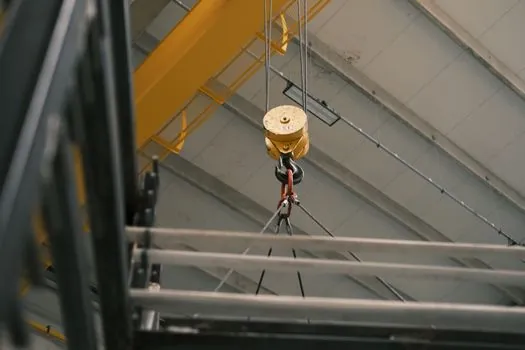
These strand families fit elementary, K-12, and small-to-medium college buildings where prestressed concrete floor systems, masonry ties, and light steel framing dominate the bill of materials [S1][S2]. Light steel framing for education-sector projects, including administrative offices, gymnasiums, cafeterias, and warehouses, typically spans up to 33 ft and uses galvanized components, with a 50-year structural warranty commonly quoted by kit suppliers [S2].
The same strand types stop being the right answer when the building program shifts to high-rise dormitories (where bonded post-tensioning with multi-strand ducts and anchorages becomes the system of record), to chemical-resistant STEM labs (where stainless steel tendons are required), or to projects calling for unbonded monostrand post-tensioning slabs in post-tensioned concrete mat foundations [S1]. Plain PC strand should also be excluded from any element in direct splash contact with chlorides, including natatorium roofs, indoor pool deck slabs, and below-grade parking within a de-icing salt spray envelope.
Material Behaviour and Tolerance Bands Engineers Must Verify
Low-relaxation 7-wire strand to ASTM A416 Grade 1860 has a minimum tensile strength of 1860 MPa (270 ksi) on the nominal 12.7 mm and 15.2 mm sizes, a minimum yield at 1% extension of 1674 MPa (243 ksi), and a minimum elongation at fracture of 3.5% over a 600 mm gauge length, with relaxation loss capped at 2.5% after 1000 h at 0.7×fpu and 20°C ambient. Strand modulus is taken as 195 GPa ± 5 GPa for design purposes, and the standard cross-sectional areas are 98.7 mm² (12.7 mm) and 140 mm² (15.2 mm). These are the values a school spec reviewer should see stamped on the mill certificate before any pretensioning bed is stressed. [S2]
Coating weights on galvanized school-project strand are typically class A or class B per ASTM A475, and the underlying carbon steel wire chemistry (C, Mn, Si, P, S limits) is governed by the same A416 / EN 10138 reference. Indented (or "crimped") 7-wire variants, produced at 12.7 mm and 15.2 mm, are sometimes substituted on short-span pretensioned members where bond improvement is required, at a small premium over plain strand [S1].
Real Use Cases Pulled From Active 2026 Programs
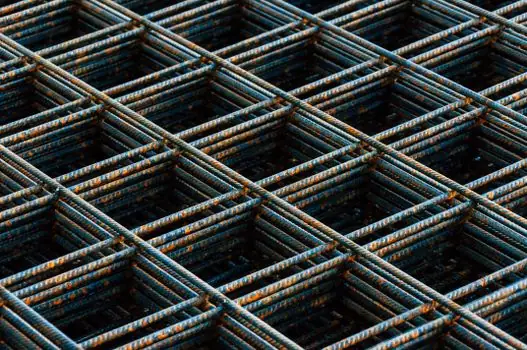
Tianjin Wasungen, a global PC strand and steel wire manufacturer, lists 12.7 mm and 15.2 mm low-relaxation, indented, epoxy-coated, and hot-dip galvanized PC strand alongside helical and indented PC wire at 5 mm, all of which are routinely quoted into school, hospital, and bridge projects in Kenya, Australia, Saudi Arabia, Algeria, and Bolivia, with ASTM, EN, and BS certification stamped per shipment [S1].
On the building-envelope side, Rocket Steel Buildings, a North American pre-engineered steel building supplier, markets 50-year warranted light steel framing kits sized for elementary schools, high schools, and research facilities on college campuses, with clear spans up to 33 ft and standard use of galvanized structural members [S2]. For sister trade packages, the spec-first treatment of alloy steel reinforcement and masonry block for school walls lives in parallel reference material, and the silicon steel selection question only comes up when a school project includes a substation or large chiller plant.
Limitations, Failure Modes, and Sourcing Constraints
The main in-service failure mode for school-project strand is corrosion-induced loss of cross-section, not fatigue, because the cyclic stress range in pretensioned floor systems is well below the endurance limit. The second failure mode is anchorage-zone bursting in post-tensioned transfer beams, which is a detailing problem (confinement reinforcement, split cones, and pocket formers) rather than a strand problem. Galvanized strand supplied in coil form must be unwound with a rotating pay-off, not pulled across a static drum, otherwise the zinc layer flakes and the as-built coating weight drops below the spec class. [S1]
Sourcing constraints in 2026 revolve around mill lead time and the consolidation of Chinese and Turkish mills into a smaller number of full-ASTM-A416 producers; galvanized 15.2 mm strand has the longest quote-to-dock lead time, and minimum order quantities for epoxy-coated filled product typically start at 20-30 t, which can price small school additions out of the epoxy option [S1]. Shipping cost, not strand cost, is usually the dominant landed figure for a North American K-12 project sourcing from Asia. Schools inside the EU increasingly specify EN 10138 instead of ASTM A416 even when the product is mill-identical, and the mill certificate needs to show both line items to avoid customs reclassification.
For a school campus with adjacent modular classrooms, a separate block-and-brick spec governs the wall package, and the strand spec should be cross-referenced with that to keep tolerance and finish responsibilities clean. Field acceptance for incoming strand coils should include a sampling-and-test plan covering strand diameter, coating weight (where applicable), and a verified relaxation test report traceable to the cast number, and any reel with visible white rust, broken wires, or a kinked lay should be rejected at the laydown yard rather than at the stressing bed.
Background reading: Degassing & refining unit selection for pump and valve foundries: a spec-first guide.