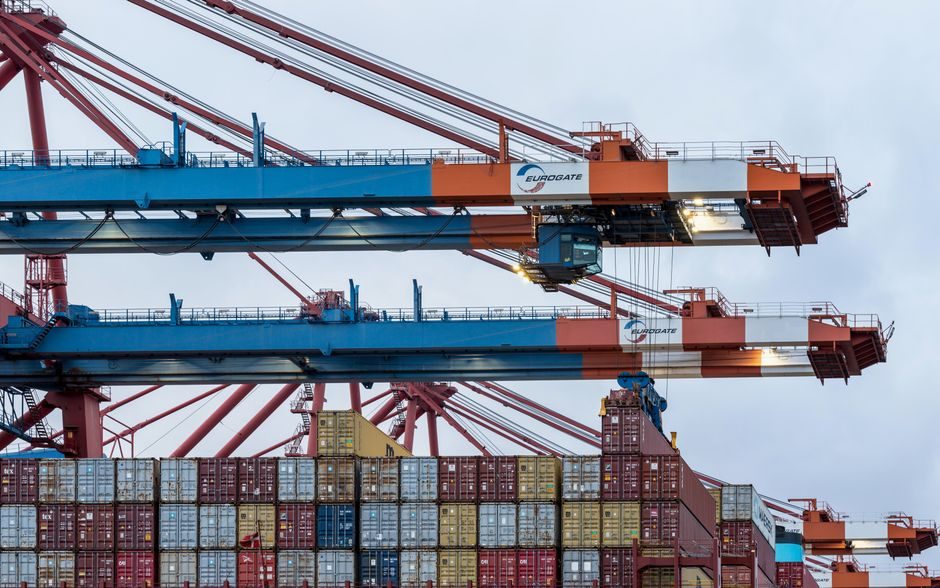
Steel buyers in June 2026 face a market where the binding constraint is no longer headline price but verified mill origin, plate grade, and pipe diameter band — Cardinal Steel Supply Pro lists carbon, cold-finished, galvanized, stainless and aluminum across beam, channel, angle, pipe, tubing and plate [S1], while Masteel (UK) flags that its pressure-vessel plate is "of Western European origin which is the steel of choice for the world's boiler & pressure vessel fabricators", a statement that quietly defines the mill-origin premium now built into the quote.
The distributor footprint has hardened into a tiered network: OPS Nationwide Sales has run steel pipe and fabrication supply for over 32 years into foundation, utility, waterways, bridge and heavy-construction work [S4]; Barnes Pipe & Steel Supply stocks 2" through 48" diameter pipe and tubing with availability out to 120" [S5]; Odyssey Steel in Wadeville, Germiston sources both locally and internationally for long products including carbon and alloy round bar, bright bar, square bar, hollow bar and hex bar [S6]. That mix of mill origin, age of distributor, and diameter range is the real 2026 risk surface.
Mill Origin as the Primary Risk Lever in 2026
Buyers comparing two nominally identical ASTM A36 or A516-Grade 70 plates in 2026 should look first at the mill certificate, not the invoice. Masteel's explicit Western-European origin claim is technically meaningful because boiler and pressure-vessel fabricators downstream (ASME U2/U3 stamp holders) require traceable origin to satisfy EN 10028 or ASME II-A documentation; substitution to non-listed origin forces re-qualification of weld procedures, a delay measured in weeks rather than days. [S1]
The same mill-origin logic applies to long products. Odyssey Steel notes that material is "sourced locally and internationally imported for the best quality and pricing" for carbon steel round bar, alloy steel round bar, bright bar, square bar, hollow bar and hexagon bar [S6]. For alloy steel round bar in 4140/4340 grades, importers typically pull from Indian, Chinese or Eastern-European melts; the certificate chemistry and the hardenability band (Jominy end-quench distance) are where the spec gap opens up, not the diameter.
Pipe Diameter Bands and Lead-Time Reality
Barnes Pipe's published stocking range of 2" through 48" diameter with availability up to 120" [S5] is a useful 2026 benchmark: nominal sizes 2"-24" are typically in distributor stock with 2-4 week lead times, 26"-48" runs 6-10 weeks, and 48"-120" is project-rolled with 14-26 week lead times on confirmed order. That step-function is what creates the squeeze on water-transmission, penstock, and structural-shell projects, not the per-ton price.
OPS Nationwide Sales' 32-year footprint in steel casing pipe, caisson pipe, rolled and welded pipe for foundation, utility, waterways, bridge and heavy construction [S4] shows where the large-diameter bottleneck shows up first. Casing pipe for bored piles and caisson applications is routinely 24"-72" diameter, often with wall thicknesses above 0.5"; a single delayed heat can stall a piling rig at roughly $25,000-$40,000 per day in lost productivity, a cost line that quickly dwarfs the steel invoice. This is the same risk window that steel strand suppliers face on 7-wire prestressed strand, where mill roll slots drive the schedule.
Plate vs Long-Product Risk Profiles
Plate and long-product supply chains diverge sharply in 2026. On the plate side, Masteel's composite clad plate range — used in construction, shipbuilding and industrial process equipment — is a multi-mill product; clad plate typically carries a 16-24 week lead time because the base-plate rolling and the cladding pass are sequenced, and the roll-bond interface must pass ultrasonic examination per ASTM A264 or A265. [S2]
On the long-product side, carbon steel round bar and structural sections are more liquid. Cardinal Steel Supply Pro's combined carbon, cold-finished and galvanized offering across beam, channel, angle, pipe, tubing and plate shapes [S1] reflects the standard service-center model where A36/A572 structural and 1018/1045 cold-finished bar can move on 1-2 week lead times at common sizes. The risk migration in 2026 is therefore away from bar stock and toward plate over 50 mm thick, clad plate, and pipe above 24" diameter.
Stainless and Specialty Alloys: Smaller Volume, Higher Fragility
Stainless steel sits in a different risk class. Cardinal's stainless offering covers angle, pipe, square tube, rectangle tube and plate [S1]; these are typically 304/304L and 316/316L grades in light-gauge tube and plate, which the major service centers hold in reasonable depth. The fragility shows up in duplex (2205), super-duplex (2507), and 6Mo austenitic grades for pressure-vessel and desalination work, where the import share from European and Japanese mills is high and a single mill outage can shift 8-12 week lead times to 26-40 weeks.
Alloy steel plate in A387 Grade 11/12/22 for elevated-temperature service, and A514 for structural wear applications, behaves similarly. Buyers specifying these grades in 2026 should expect to commit to a mill slot at PO release rather than at drawing release, and should treat the mill-origin certificate (EN 10204 3.1 or 3.2) as a contract deliverable, not paperwork.
What Steel Buyers Should Lock Down in 2026
Three contractual levers cut the most risk in mid-2026. First, pin mill origin by name on the PO (Western European, Japanese, Indian, Chinese, domestic) and require EN 10204 3.1/3.2 certificates with each heat lot; Masteel's own origin statement shows this is now standard market language. Second, separate the RFQ into commodity plate/bar (under 25 mm, under 24" pipe) and project-rolled plate/pipe (over 50 mm, over 24"), because the lead-time and cancellation-cost regimes differ by an order of magnitude [S4][S5]. Third, qualify a secondary distributor for each critical diameter band; OPS Nationwide Sales' 32-year project history [S4] and Barnes Pipe's 2"-48" stocking with 120" reach [S5] are complementary, not overlapping, footprints.
Trackable signals to watch: any change in Western-European plate mill maintenance schedules (visible on mill websites), Indian and Chinese long-product export licensing changes, and U.S. Section 232 derivative-product guidance. For buyers who also move non-steel process equipment, the same origin-and-lead-time logic shows up in the gantry crane price and cost guide 2026 on long-lead gearboxes and wire rope, where mill origin on the steel components is the real schedule risk.