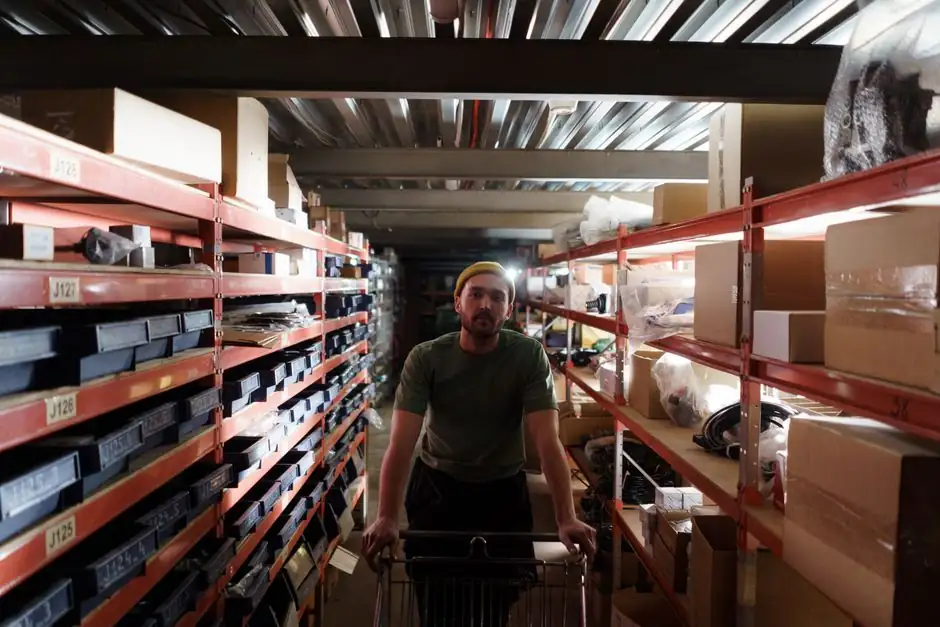
E-commerce fulfillment cages must pair with carton flow rack and pallet rack zones, not replace them, because ABC velocity segregation drives pick-path length more than any single piece of hardware [S3].
FIFO carton flow rack handles folded clothing, shoe boxes, small electronics, and beauty products, while high-density pushback or drive-in rack absorbs slow-turn bulk; stackable storage cages fill the overflow and returns zone that fixed rack cannot serve economically [S3][S4].
ABC Velocity Zoning Drives Cage vs Rack Choice
SKU velocity zoning puts A items (top 20% of SKUs, roughly 80% of pick frequency) within a 1.5 to 3 meter pick path, B items on accessible shelving, and C items on high-density rack or in stackable storage cages along the perimeter [S4]. Carton flow rack delivers FIFO rotation for fast movers and small parcels, removing the walking time that erodes single-order pick rates in low-SKU-per-pick e-commerce work [S3]. For C-class bulk and overstock, the practical move is a stackable wire-mesh storage cage rated to the forklift handling envelope, which keeps the same floor footprint flexible as SKU mix shifts across Q4 peaks and post-holiday troughs [S1][S3]. A common mis-spec is forcing C-class pallet volumes into carton flow lanes; the rollers and lane pitch are tuned for single-carton faces, not pallet loads, and overloading them stalls picks faster than any algorithmic fix can recover.
Mesh Aperture, Wire Diameter, and Load Rating
Mesh aperture should be smaller than the smallest stored carton face, typically 50x50 mm or 50x100 mm for parcels down to a 100x150 mm mailer, and the wire diameter should sit in the 4 to 6 mm range for a 500 to 1000 kg rated stackable cage [S3]. For parcels that include small-parcel polybags or jiffy envelopes, drop a liner or specify a 25x25 mm mesh; otherwise bags sag through the aperture and create pick-floor litter that drives mis-picks. Heavier C-class palletized goods belong on purpose-built pallet rack with engineered anchor-to-floor pull-out values, not on a generic cage-on-pallet stack. When ABC analysis shows a SKU slipping from B to C, redeploy it from carton flow to a stackable cage rather than letting it sit in a high-velocity lane and burn walking time [S4].
Footprint, Stackability, and Carrier Handline
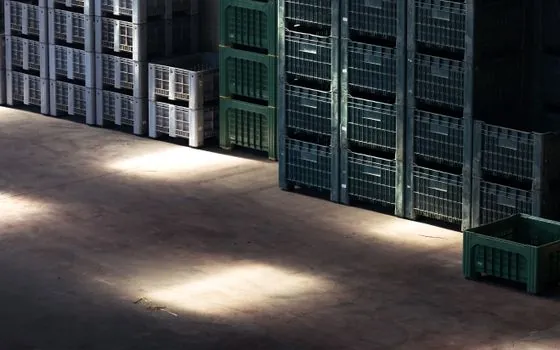
Standard footprints in the 800x600 mm, 1200x800 mm, and 1200x1000 mm sizes map cleanly to EUR half-pallet, EUR full-pallet, and UK/GMA pallet footprints, and 4-high stacking in stillage mode is typical for 1000 kg rated cages with corner-post stacking engagement [S3][S4]. The handling equipment list at receiving, picking, and returns should drive the access face design: a 3-sided or half-drop gate on the long side is faster for a single picker than a fully removable panel, but only if the pick zone has room to swing the gate without blocking the aisle. A 600 mm aisle cannot host a 1200 mm swing gate, so plan the gate action against the aisle width before you order.
Returns, Buffer Stock, and Seasonal Scaling
Returns processing is a separate zone in any mature e-commerce layout, and the storage assets there are a different problem from forward-pick: cages here need to be mobile, labelable, and segregated by reason code rather than SKU [S1]. Modular adjustable shelving, which can be reconfigured between peak and trough season without tooled disassembly, handles the SKU-mix shifts that come with new product launches and Q4 ramps [S4]. E-commerce warehouse cost ranges from $0.50 to $5 per square foot depending on shared versus dedicated and automation tier, and the equipment inside that footprint is the second lever after labor [S2]. Storing larger quantities to take advantage of bulk purchasing discounts is a stated growth-phase benefit, but only if the storage hardware can absorb the volume without re-slotting the whole pick face [S1]. For a deeper look at how the same storage handling decisions play out in port logistics, the spec overlap on mesh aperture, fork-pocket position, and stackable load rating is direct.
Comparison: Cage vs Carton Flow vs Pallet Rack by Selection Criteria
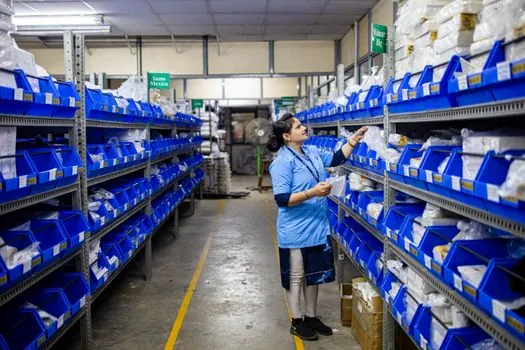
Three options, four criteria: stackable storage cage wins on flexibility and capital deferral, carton flow rack wins on pick speed per cubic meter, and pallet rack wins on bulk density and engineered load paths [S3][S4]. Cost per pick position is the discriminator most operations teams actually negotiate on, and the ranking there depends on whether the SKU is A, B, or C in the velocity profile. The wrong fulfilment centre shelving choice can drop single-order pick rates measurably; the right setup, including properly specified storage rack for the C-class zone, is closer to a step change than a marginal gain [S4]. If a single SKU sits between A and B classes for more than two demand cycles, default it to a flow lane; if it sits in C for the same window, move it to a stackable cage and free the flow lane for a true A item.
Failure Modes and Sourcing Constraints
Common failure modes include mesh deformation from overloaded stacks, gate-swing collisions in sub-2-meter aisles, and zinc-plated finish breakdown in climate-controlled zones where condensation cycles the steel [S3][S4]. A heavier-duty rack and a 6 mm wire on the corner posts are the usual mitigations, and galvanized-versus-powder-coat selection is a real specification decision in any facility that sees humidity swings, not a marketing checkbox. Sourcing constraints to track over the next 90 days: galvanized steel price moves that flow into cage unit cost, and lead times on 1200x800 mm stillages that have stretched at peak-season fabricators. The work this week is to re-tag every C-class SKU with its current 90-day pick count and queue the cage-versus-rack decision against the next quarterly slotting review.
Related analysis: Storage Cage Selection for Port Logistics: Mesh, Payload, and Footprint Spec Map.