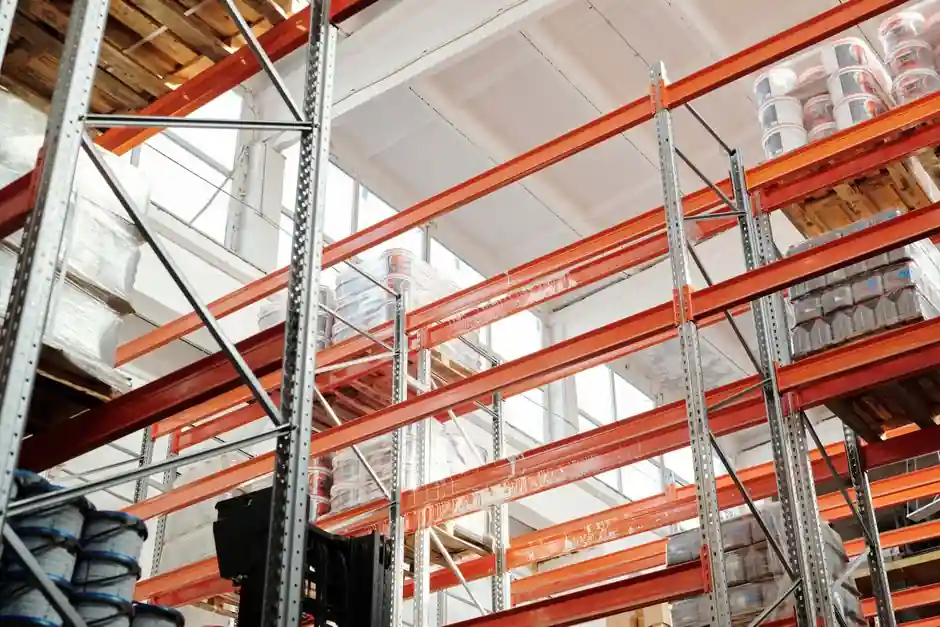
Unplanned equipment downtime in farming operations costs up to 30% more in repair expenses than scheduled preventative maintenance, per American Society of Agricultural and Biological Engineers figures cited in the Aug 2025 farm-maintenance brief [S2]. Storage racks, the fixed steel structures holding seed, fertilizer, bagged feed, and produce inside storehouses, fall inside that same reliability envelope and are typically the silent contributor to that downtime number.
The fix is not exotic. It is a four-part routine built around a Computerized Maintenance Management System (CMMS) log, galvanic-corrosion inspection at beam-to-column and base-plate joints, forklift-impact surveys on the lowest 1.5 m of uprights, and a written load-capacity label audit that matches the placard to the actual stored product. CMMS-tracked assets are explicitly the first item in the Sept 2026 top-10 farm-maintenance checklist [S1], and the same logic applies to fixed racking as to tractors and harvesters.
Why rack maintenance gets skipped on farms
Racks, silos, storehouses, and conveyor systems are listed alongside tractors and harvesters as the fixed-asset class farmers must maintain themselves [S3]. In practice, a single operator on a small family farm is often the only person responsible for both a 250 hp tractor and a 6 m tall selective rack, which is the standard case for maintenance oversights in this asset class [S3]. The same source flags a second risk: many farm workers have limited formal training, and the consequences of poor maintenance on a load-bearing structure are injury, not just an unscheduled oil change [S3].
Selective pallet rack systems are the most common configuration inside on-farm storehouses, and they are also the configuration most sensitive to base-plate corrosion because of seasonal humidity swings between wet harvest months and dry overwinter storage. A standard storage rack audit should therefore be timed at the seasonal transition, the same point the Aug 2025 source identifies as the inspection window for tractors and harvesters [S2].
The four-task inspection routine
Each task below maps to a verifiable acceptance criterion; if the criterion fails, repair, replace, or escalate rather than re-set the inspection timer.
1. Beam-to-column and base-plate corrosion check. Probe welded and bolted joints with a wire brush; any section loss greater than the visual reference threshold on a manufacturer-supplied shim means the member is flagged. Galvanic corrosion between zinc-coated uprights and bare-steel forklift contact is the dominant failure mode on farm racks, since stored fertilizer and lime raise local humidity.
2. Forklift-impact survey of the lowest 1.5 m of every upright. Mark any deformation that exceeds 5 mm lateral offset, and unload the affected bay until the upright is straightened or replaced. Spec the replacement upright to the same yield and base-plate footprint as the original, not a "similar" section.
3. Load-placard audit. Read the placard on every rack bay and confirm it matches the heaviest unit load currently stored; a single mis-placarded bay invalidates the rack's rated capacity for that column line. Capacity audits are the single lowest-effort, highest-payoff task, and they are the only step that fully prevents overloading, which is the root cause of most catastrophic agricultural rack collapses.
4. Anchor and base-plate torque check. Re-torque base-plate anchors to the rack manufacturer's spec at the seasonal transition; a single loose anchor on a 6 m upright can swing the frame out of plumb enough to disengage a beam under load.
CMMS task structure that actually works
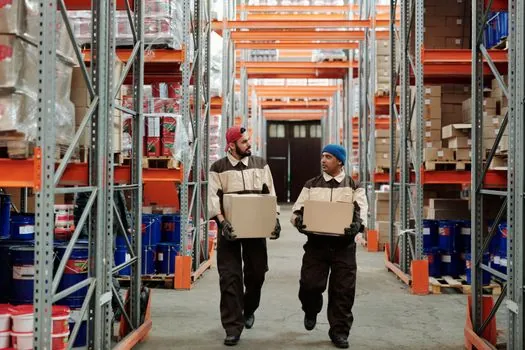
CMMS-tracked assets are explicitly identified as the first item in the Sept 2026 farm-maintenance best-practices list [S1], and the same source notes that agricultural asset-management software should track every piece of equipment on the farm, including fixed storage and handling infrastructure. In practical terms, each rack bay gets a unique asset ID, and four recurring work orders feed the CMMS: weekly visual sweep, monthly corrosion probe, quarterly beam-connector torque check, and annual third-party rack inspection.
The CMMS also gives operations a defensible maintenance record for insurance, which matters because farm property claims increasingly require documented inspection logs. Worker-hours for the four work orders above typically run 5 to 8 minutes per bay per month on a 200-bay storehouse, which is well inside the envelope of what a single farm maintenance worker can absorb alongside tractor and harvester routines [S3].
Cross-link the rack CMMS record to the storage handling equipment it supports: conveyors, mixers, and bag-stacking platforms all have downtime that traces back to a damaged rack bay forcing a different storage footprint.
Capacity placard vs real load: the comparison that matters
Three rack configurations dominate on-farm storehouses; selection is a function of unit load, aisle width, and forklift class. The table below lines them up against the maintenance criteria that drive downtime cost. [S2]
Selective pallet rack: lowest unit cost, single-deep loading, 2.7 to 3.0 m typical beam levels, most common configuration on mid-size grain and feed operations, requires the most rigorous base-plate corrosion checks because every bay is accessible.
Push-back and pallet-flow rack: highest density per square metre, but the roller and cart mechanisms add a new failure mode (cart-roller seizure) that selective and drive-in do not have. Maintenance cost per bay is the highest of the three, but throughput per square metre justifies it on operations handling more than 300 pallets per week.
The Aug 2025 source documents that properly maintained farm machinery reduces fuel consumption by 10 to 15% over its operational lifecycle [S2], and the same principle applies: a rack maintained on schedule keeps forklift drivers running predictable pick paths, which is the indirect fuel-saving channel on the warehouse side of the operation.
When NOT to repair in place
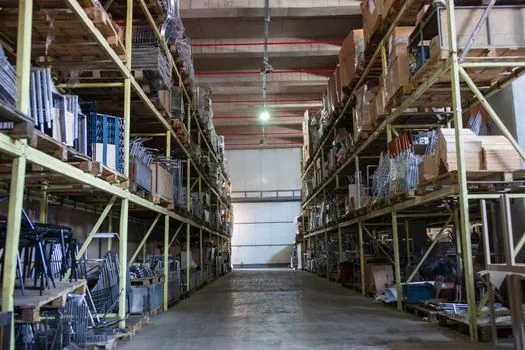
Three conditions trigger a full member replacement rather than a field repair: base-plate section loss visible without magnification, any upright with lateral deformation exceeding 5 mm after a forklift strike, and any beam whose end-connector safety clip is missing on more than one location. Continuing to load these conditions treats the symptom, not the cause, and on a load-bearing structure the failure mode is progressive, not recoverable in service. [S2]
For corrosion-limited repairs, use a cold galvanizing compound on the cleaned substrate, then re-torque the affected base plate to spec. Hot-dip galvanizing is preferable for new installations in fertilizer storage, where chloride and ammonia off-gassing accelerate coating loss.
Two trackable signals to watch in the next maintenance cycle: insurance carrier requests for documented rack inspection logs (already standard for ASRS, now filtering down to manual storehouses), and the spread of CMMS platforms that include a fixed-asset module capable of holding beam-level load data, not just equipment hours [S1]. Storage cage audits for bagged feed and small-parts storage are the next logical extension once the rack program is stable.
Related analysis: Multi-Gas Detector Suppliers and Manufacturers: 2026 Sourcing Map.