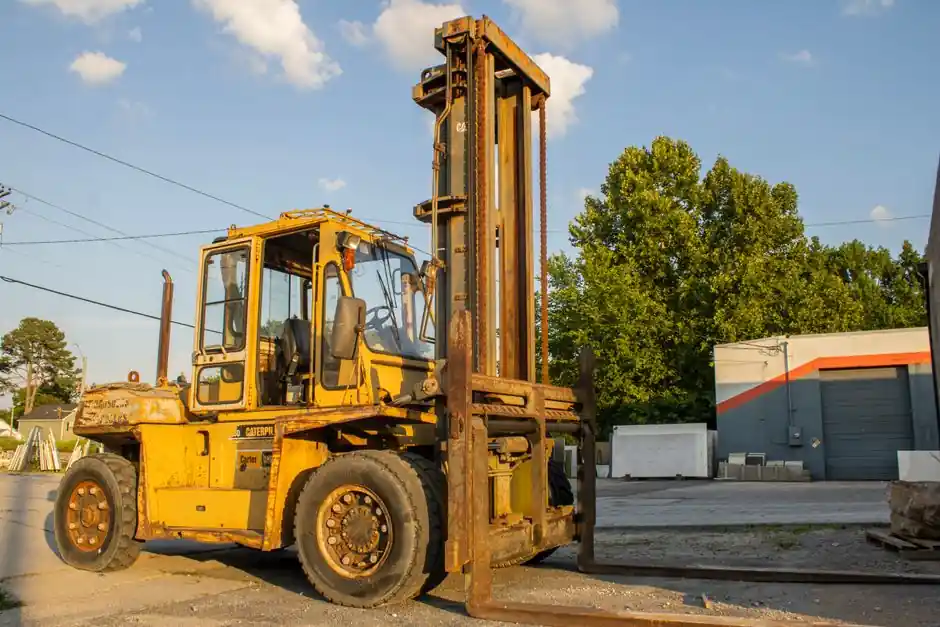
A compliant forklift commissioning cycle runs through four sequenced blocks, appearance, functional, performance, and safety-device checks, and is gated by OSHA 1910.178 for U.S. sites, with ANSI B56.1 referenced for the underlying truck standard [S1][S6].
Whether the unit is a freshly installed manual stacker or a diesel forklift like the LiuGong CLG 840H or Hangcha XC50T, the same logic applies: visual examination first, operational assessment second, documented sign-off last, and any defect routes the truck out of service until repair [S3][S4].
Pre-Start Visual and Fluid Checks
Walk-around visual inspection is the first gate on every OEM-specific checklist: confirm overall structure is intact, no cracks or deformation, that fork locking pins are seated, and that warning labels, decals, and data plates remain legible [S2][S3][S6]. The capacity plate must match the fitted attachments, and the operator manual must be present on the truck, both explicit OSHA pre-operation items [S6].
Fluid checks follow the same ordering rule across diesel units: engine oil on the dipstick, hydraulic fluid with forks fully lowered, coolant at the reservoir, brake fluid at the cap, and diesel or fuel level topped to the recommended mark; pneumatic tyres get a pressure check, solid tyres get an integrity and crack check, and lug nuts are verified tight [S3][S4]. Visible leaks under the engine compartment, oil, coolant, or diesel, are a hard stop: the truck is tagged out and reported before any further test [S3][S4].
Functional Test of Controls, Mast, and Steering
Functional testing covers control levers, brakes, mast lift/lower, and steering, and is where most latent commissioning defects surface [S2]. The parking brake must hold the unloaded truck on a specified slope of at least 20%, the steering wheel or joystick must have no sticking, and centering after turn must be automatic, with the steering system showing no oil leakage [S2].
For the mast, the operator tests full lift and full lower with forks under no load, listens for abnormal noise, and confirms the lifting and tilting hydraulic cylinders show no leaks; mast chains are checked for even tension, and a side-shift or tilt feature, if equipped, is cycled to verify smooth operation [S3][S4]. On diesel models the operator starts the engine, observes startup behavior, tests horn, lights, reverse alarm, and the seat belt, and confirms the overhead guard is free of cracks before any driving test [S3][S4].
Performance and Load Verification
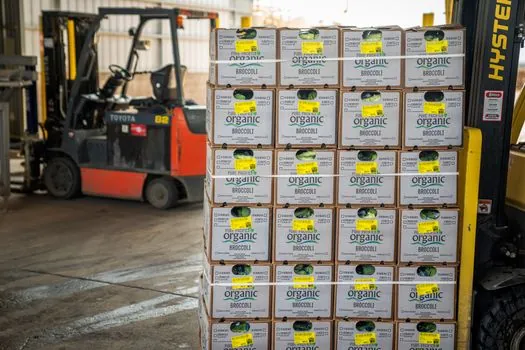
Performance verification moves from no-load checks to a standard load test: lifting, lowering, steering, and driving under load must remain stable, fork tip thickness, wear, and height difference are checked against safety standards, and lifting chain elongation is measured against the breakage-risk threshold [S2]. Stability is then tested empty and loaded, longitudinally and laterally, and braking stability is verified on a slope so the truck neither slips nor tips on the grade [S2].
The fork heel-wear 10% rule is a recurring acceptance line in OEM daily procedures: forks that have worn past 10% of original thickness at the heel are a structural compromise and disqualify the truck until the forks are replaced [S4]. After load and stability runs, the operator drives forward and reverse in an open area, checks steering responsiveness and brake function, confirms the parking brake holds, listens for irregular sounds, and clears any active instrument-panel error codes before the shift starts [S3][S4].
Safety Devices, Commissioning Sign-Off, and Documentation
Safety-device inspection is a dedicated block, not a footnote: the lift limit switch must auto-stop the fork at the limit position, the emergency descent device must lower the load quickly under fault, the reverse alarm must sound when the truck is put into reverse, and any fitted fire extinguisher and the operator seat belt are checked for presence and condition [S2][S3]. OSHA further requires that any mechanical irregularity be reported immediately and the vehicle removed from service until repair, with the standardized digital checklist capturing the defect at the point of finding [S1].
For U.S. operations the closing step is documentation: sign and submit the daily checklist, tag the unit if unsafe, route the tag-out to maintenance, and review the logbook for unresolved issues from the previous shift before re-energizing the truck [S3][S4][S6]. A useful cross-reference for site equipment managers sizing adjacent acceptance work, the same commissioning discipline appears in our Hot Chamber Die Casting Machine Testing and Commissioning Procedure, where the four-block structure of appearance, function, performance, and safety gates the same way.
What Forklift Commissioning Is For, and Where It Does Not Apply
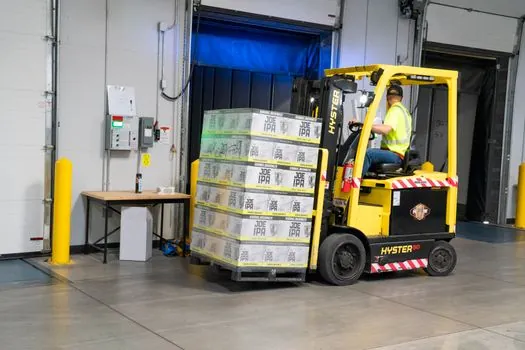
Forklift testing and commissioning is built for the powered industrial truck itself: compliance with OSHA 1910.178, ANSI B56.1 truck design, and the OEM pre-shift checklist [S1][S6]. It is not the same as forklift handling testing, which evaluates unitized loads and large cases/crates for damage correlation with the distribution handling system, typically run by ISTA and ISO 17025 certified labs against package-handling protocols [S5].
It also does not replace operator certification: only trained and certified operators should handle forklifts, and the daily inspection assumes a competent operator at the controls [S1]. For rough terrain forklift deployments on uneven ground, the slope-hold and stability tests carry extra weight and should be repeated at the actual jobsite grade rather than a flat yard.
Daily vs. Post-Installation: How the Procedure Differs
Daily pre-shift inspection is a repeat of the visual and operational subset: walk-around, fluids, tyres, fork straightness and pin engagement, then a low-speed forward/reverse, lift/tilt cycle, and sign-off [S3][S4]. Post-installation commissioning is the deeper version of the same logic: add structural integrity of the overall frame, hydraulic line and joint leak checks at installation interfaces, parking-brake slope test at not less than 20%, full load and stability runs, and limit-switch, emergency-descent, and reverse-alarm functional verification before the truck enters service [S2].
The two cycles share the same pass/fail vocabulary, structural compromise, hydraulic leak, fork wear past limit, parking-brake failure on slope, inoperative limit switch, and route any failure to tag-out and maintenance before the next attempt [S1][S2]. For fleet managers comparing acceptance protocols across equipment categories, our Excavator Procurement Brief covers a similar gate-and-document flow on the heavy-machinery side, with comparable pass/fail escalation logic.
Limits, Failure Modes, and What to Track Next
Common failure modes that show up during commissioning: hydraulic fitting looseness at new pipe joints, fork-tip height mismatch from a prior truck in the same fleet, mast chain over-elongation from factory preload, and reverse-alarm wiring faults that only show under load [S2][S4]. A unit that passes the no-load functional test but shows fork tip height difference or chain elongation under load should not be accepted, regardless of how clean the visual pass looked [S2].
Track three signals on the next commissioning cycle: parking-brake slope-hold result against the 20% threshold, fork heel-wear measurement against the 10% rule, and the number of items caught at visual versus functional stage, since a visual-heavy catch rate usually means the operational block is being short-cut. [S1][S2][S4].
Spec-level background on the components involved: tensile testing machine.