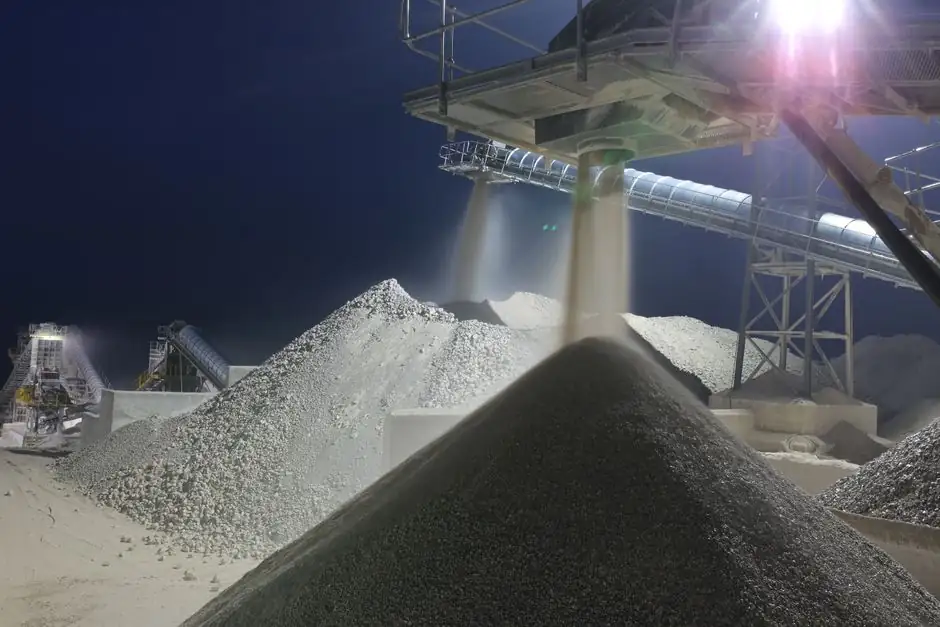
Quarry storage racks handle abrasive limestone, granite dust, and high-density aggregates in environments that punish thin-wall roll-formed components, so structural hot-rolled steel selective, drive-in, and cantilever racks dominate specification sheets for crushing plants and quarry yards [S1][S5].
Selection starts with the heaviest single pallet: a 48 in. x 40 in. GMA pallet of crushed stone can exceed 4,000 lb when fully loaded, and design must size beam capacity to the heaviest loaded pallet plus a growth margin, not to the average [S2]. SKU count, throughput method (FIFO vs LIFO), and aisle equipment determine whether selective, drive-in, or cantilever fits the quarry laydown yard [S5].
Quarry load profile vs standard warehouse
Quarry racks carry crushed stone, riprap, armor stone, and bagged mineral product on pallets or in bulk bins, with single-pallet weights often 2,500-4,500 lb for dense aggregate and lower for bagged material, so beam and upright capacity must be derated for impact loads from forklift placement on uneven quarry aprons [S2][S5].
Dust, moisture, and chloride exposure from de-icing salt in northern operations push specifiers toward hot-rolled structural steel sections rather than thin-wall roll-formed sheet, because thicker section walls tolerate surface abrasion and resist the column damage that initiates progressive collapse [S1][S4]. Cantilever racks are commonly specified for the long, bulky items that quarry maintenance shops stockpile, including drill steel, casing, crusher wear parts, and pipe, none of which fit standard pallet rack bays [S1][S3].
Rack type comparison for quarrying
Selective pallet rack gives one-pallet-deep access on both sides and suits quarry parts rooms and bagged-product warehouses with high SKU counts and frequent picking, but it spends floor area on aisles, so density falls below drive-in and push-back alternatives [S3][S5]. Drive-in and drive-through racks raise density by removing cross-aisles and letting forklifts enter the bay, trading selectivity for cube utilization in quarry buffer storage of single-SKUs of crushed stone or filter media [S3][S5]. Cantilever racks store long, irregular quarry consumables like drill rods, wear plates, and timber, with single- or double-sided column formats sized to load arm length and capacity [S1][S2][S3].
Selection pivots on four decision criteria: (1) SKU count and turnover drive selective vs drive-in choice; (2) load geometry (palletized vs long/bulky) drives cantilever vs pallet rack; (3) throughput direction (FIFO vs FILO) drives flow rack vs drive-in; (4) aisle equipment and ceiling height set the maximum beam level and bay depth, with 20-40 ft common in quarry warehouses [S1][S3][S5]. Quarry sites that stage raw aggregate in deep lanes before crushing favor drive-in or pallet flow for FIFO rotation, while crusher spare parts rooms favor selective rack for random-access picking of bearings, mantles, and liners [S4][S5].
Steel grade, finish, and impact loading
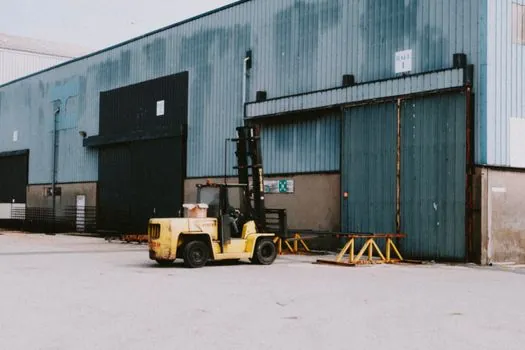
Structural steel racking uses hot-rolled sections with thicker walls than roll-formed sheet, and is the recommended upright and beam material where racks face cold-storage condensation, wash-down, or abrasive quarry dust, because thicker section tolerance is forgiving of surface pitting and column damage that would buckle a thinner roll-formed column [S4]. Powder-coat and hot-dip galvanize are the two finishes most often called out for quarry outdoor racks, with galvanize preferred for yard storage where salt and water contact is constant and repaint cycles are impractical [S1][S4].
Quarry forklifts travel over broken concrete and aggregate spillage, so column protectors, end-of-aisle guards, and rack-supported wire mesh decking are near-mandatory accessories, not optional add-ons, to absorb the impact energy of an off-center load placement and prevent beam disengagement [S3]. Wire decks also keep bagged mineral product and crushed stone from falling through the beam flanges into the aisle, which is a recurring near-miss in bulk-stone operations [S3].
Sizing the bay, beam, and upright
Beam capacity is published per pair and rated for a uniformly distributed load across the beam length, so a 96 in. beam at 5,000 lb per pair drops allowable capacity as beam length grows, and quarry specifiers should request the manufacturer's capacity chart at the actual beam length, not a generic rating [S1][S2]. Upright frame capacity depends on the unsupported column height and the bracing pattern, with the common 42 in. x 96 in. or 42 in. x 120 in. teardrop frame serving selective rack and heavier 4 in. or 5 in. structural columns used where frame height exceeds 20 ft [S1][S3].
For cantilever, base plate size, column section modulus, and arm capacity are the three numbers to verify, with single-sided and double-sided formats having different anchor-bolt patterns that affect slab and footing design at quarry installations [S2][S3]. Column base plates on cantilever racks should be anchored to a concrete footing sized for the moment load, not to an asphalt surface, which is a common mistake when cantilever racks are placed on quarry haul roads [S1][S3].
Inspection, code compliance, and lifecycle
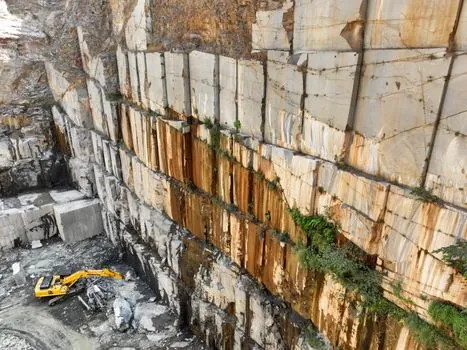
Rack inspections should follow a documented cycle: immediate post-impact check, monthly visual walk-through, and annual engineered audit by a qualified rack inspector, with damaged components unloaded and replaced rather than reused, because bent beams and buckled columns lose capacity in ways that are not visible in service [S3][S5]. The RMI/ANSI MH16.1 specification is the common North American design code for adjustable pallet rack, and European sites often reference EN 15635 for racking operation and inspection; quarry safety officers should require the manufacturer to publish a load plate on each rack bay showing capacity in lb or kg and the configuration it applies to [S1][S2].
Quarry environments compress service life versus a clean warehouse, so specifiers should plan a 15-20 year replacement cycle for outdoor structural rack and a 20-25 year cycle for indoor selective rack, with hot-dip galvanize adding roughly 5-10 years of coating life over powder-coat in chloride exposure [S1][S4]. Damaged components, especially beam end-connector seats and column bracing, are the typical replacement parts; keeping spare teardrop step beams and wire decks on hand limits downtime when a forklift strike takes a bay out of service [S2][S3].
Quarry-specific application map
Crusher wear-parts storage (mantles, concave segments, blow bars) maps to selective rack with heavy 5 in. structural uprights and 5,000-6,000 lb beam pairs sized to the heaviest crusher component, with overhead clearance for crane or forklift retrieval of large cone segments [S3][S5]. Drill steel and consumables (rods, bits, casing) map to double-sided cantilever rack, with arm length matched to the longest drill string and arm capacity rated for steel mass per arm [S1][S3]. Bulk aggregate buffer storage before screening or loadout maps to drive-in rack for single-SKU, high-density lanes, or to pallet flow rack where FIFO rotation is required to keep age-sensitive product moving [S3][S5]. Bagged cement, lime, and bagged mineral product map to selective rack with wire mesh decking, and bag stacks rarely exceed 3,000 lb per pallet, so standard 4,000 lb beam pairs cover the typical case [S1][S3].
Two trackable signals to watch before placing an order: (1) request the manufacturer's capacity chart at the exact beam length and frame height for the bay, and confirm a load plate is shipped with each rack; (2) confirm the base plate and anchor pattern against the slab or footing design, and reject any cantilever rack that ships without engineered anchor drawings, especially for outdoor quarry yard installation [S1][S2][S3].
For component-level specifications, see storage rack, pallet rack, and storage cage.
See also our earlier report, Asphalt Paver Selection for Demolition Tie-In Work: Spec Map.