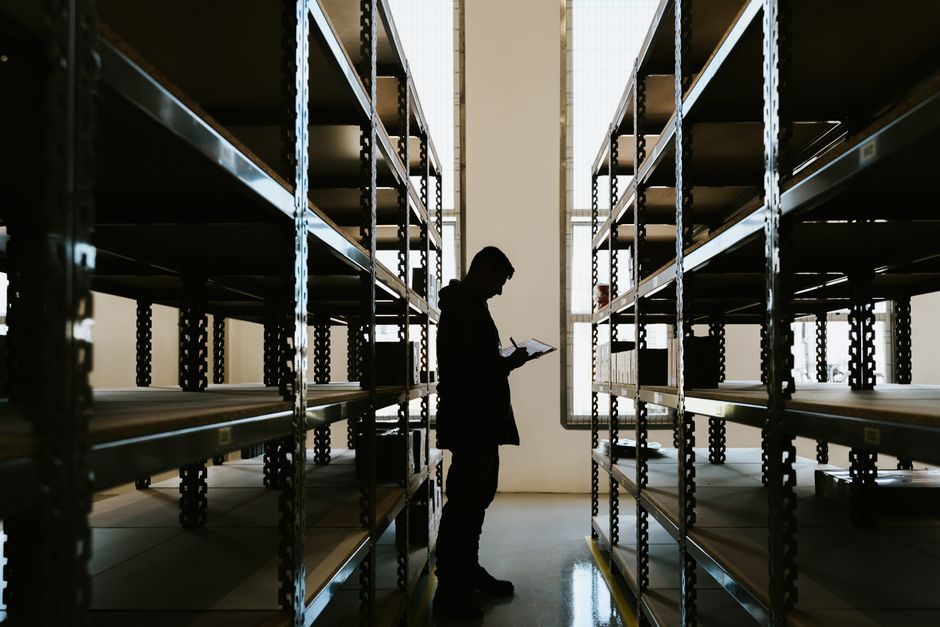
Across a typical 15-year service life, an industrial storage rack accumulates cost across five buckets: acquisition (steel, freight, installation), compliance (racking inspection to a recognised damage-tolerance code), damage and repair, operational downtime, and end-of-life disposal or relocation [S1]. Engineering references define TCO as the full lifecycle envelope of purchase, use, maintenance, support, and disposal — the methodology that exposes costs hidden during budgeting [S1].
For a pallet rack bought at the lowest quoted price, acquisition often represents only 30-40% of the 15-year spend; the remaining 60-70% sits in the use and disposal phases, driven by forklift impacts, beam reconfiguration, and floor settlements [S1][S2]. The TCO framing used in capital-equipment literature treats hardware capital as a minority share of a multi-decade envelope — Gartner's widely cited 2003 estimate put 5-year PC ownership at roughly $44,250 per machine, of which only 25% was capital cost, with 75% buried in support and operations [S2]. The same 75/25 logic applies to rack steel: the beams and uprights are visible, the floor-anchor torque checks are not.
Acquisition cost: steel grade, section size, and finish stack the bill
Material is the single largest line item on a rack quote. Hot-rolled structural steel per ASTM A36 / A572 grades sets the base price, while cold-formed high-tensile coil (commonly 340-450 MPa yield) is used for upright frames and beam sections to push load capacity without adding section weight. The next driver is surface finish: powder coating over a phosphate pre-treatment, hot-dip galvanisation to ASTM A123, or zinc-rich epoxy primer each move the per-tonne price and the corrosion-life rating. Galvanised pallet beams in cold-store duty routinely command 25-40% price premium over painted equivalents but extend repaint-cycle intervals from 3-5 years to 10-15 years. [S1]
Beam profile, column gauge, and bracing pattern add to the same line. A heavy-duty teardrop pallet rack with 3.0-4.0 mm column wall, 50 mm adjustable beam pitch, and a seismic zone factor above 1.0 typically prices 20-30% above a selective rack in a non-seismic, ambient, low-cycle duty. Freight on rolled steel is volatile and freight-inclusive (CFR / DAP) quotes can swing 8-12% quarter-to-quarter; in remote or landlocked sites, freight has been known to match the in-plant fabrication labour on a small order. Tier 1 Chinese mills (e.g. Sha Steel, Baosteel) and Tier 1 European mills (e.g. Voestalpine, SSAB) sit at different price points and different EN 15512 / FEM 10.2.09 / AS 4084 sourcing paths, and the choice cascades into the certification trail carried in the rack's data plate.
Compliance cost: the inspection code is the operating manual
Every operational year carries a compliance overhead. Under EN 15635 (the European in-service racking code) and the equivalent AS 4084-2012 framework in Australia / NZ, a "competent person" must inspect the installation at intervals not exceeding 12 months, and the operator must run internal visual checks on a defined cadence — weekly for the typical warehouse, immediately after any reported impact [S1]. This is not optional advisory guidance; it is the operating envelope that determines whether an insurer pays out after a beam collapse.
For seismic-zone installations, RMI / ANSI MH 16.1 (US) and EN 16681 govern the lateral design, and the documentation pack includes anchor patterns, base-plate thicknesses, and slab pull-out values that must be re-verified after any slab repair. Compliance costs show up as (a) the competent-person annual fee, (b) replacement of damaged components flagged orange/red under the damage-tolerance criteria, and (c) re-training of forklift drivers, since 70-80% of rack damage in pallet-rack duty originates from MHE impact rather than from overload. The same compliance line item is what catches many buyers off guard: the rack was bought, but the inspection contract, the spare-beam inventory, and the MHE driver training all live in separate annual budgets.
Damage and repair cost: orange tags, beam straightness, and floor tolerance
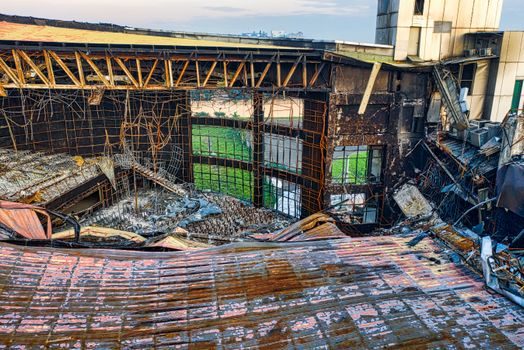
Damage cost is the most underestimated line. The generally accepted damage-tolerance threshold for an upright frame is roughly 5% deviation from straight over the column length, or a localised 25 mm out-of-plumb in any direction — once exceeded, the frame is condemned, not straightened, because work-hardening of the cold-formed section has already taken the yield point past design margin. Beam end-connector deflection above the RMI / EN threshold (typically a few mm of splay at the safety lock) triggers a same-shift lockout on that bay until replacement. [S2]
Floor tolerance compounds the issue. A slab flatness of FM 2 / TR-34 defined tolerances (typically a few mm over 3 m) is the operating floor for high-bay narrow-aisle (VNA) rack. Where floor tolerances drift, rack frames rack out of plumb, beams skew, and forklift wheels start clipping the lower brace — and the orange-tag count rises linearly with the deviation. A common rule of thumb: every 3 mm of unaddressed floor settlement adds 5-10% to the annual component-replacement budget for the affected aisle.
Downtime cost: when the rack owns the schedule
Downtime in rack-operated facilities is rarely about the rack itself failing without warning. It is about the bay being locked out for component swap, the aisle being half-closed for re-levelling, or the sprinkler clearance being re-checked after a layout change. Each of these locks out a small but continuous slice of throughput. In a 24/7 operation, a single locked pallet position costs the throughput equivalent of its slot utilisation rate — at a 2-day dwell time and 85% utilisation, locking 10 positions for 2 days effectively removes 10 SKU slots and the surrounding flow, with knock-on effects on pick-path productivity. [S2]
Reconfiguration labour is the second downtime vector. Selective pallet rack sold on the "adjustable every 50/76.2 mm" pitch is cheap at acquisition but expensive in the second half of its life when slotting changes drive a stream of beam unhooks, beam swaps, and frame re-anchors. Drive-in / drive-through rack has higher acquisition cost and lower slotting flexibility, which inverts the trade-off in high-SKU-count, low-variety operations. Cantilever rack for long goods accepts a third profile: lower frame density, but the same impact-damage logic applied to the cantilever arms.
TCO comparison by rack type on five decision criteria

Lining the common rack families against the cost drivers above:
Selective pallet rack — lowest acquisition cost per pallet position; highest slotting flexibility; highest MHE-impact exposure; suitable for 5-20 SKU/aisle flows. Cantilever rack — moderate cost per arm; arms are replaceable separately from the column, lowering lifetime component cost; arm impact and base-plate anchor issues dominate. Mezzanine-supported rack — adds 80-120 USD/m² of structural floor over the rack cost; unlocks vertical cube and shortens pick travel, often the single largest TCO reduction lever in a brownfield expansion. Each of these shifts the cost between lines but rarely the total — the same 15-year spend envelope just lands in different buckets, which is exactly the insight the TCO discipline is designed to expose [S1].
End-of-life and relocation: the budget most buyers never build
Disposal is the line item that breaks the upfront-purchase logic. Hot-dip galvanised steel is fully recyclable and carries a scrap value that partially offsets dismantle labour; painted steel is also recyclable but contaminated with coating, and some end-of-life streams require blasting before melt. Buyers who anchor-rack with chemical anchors instead of mechanical wedge-anchor bolts routinely face higher dismantle costs because the chemical capsule has to be drilled out, not unscrewed. [S1]
Relocation is the second silent line. The TCO framing treats relocation as an asset, not a cost, when the data-plate convention is followed from day one [S1][S2].
Sourcing and standards: how to read a quote so the TCO is honest
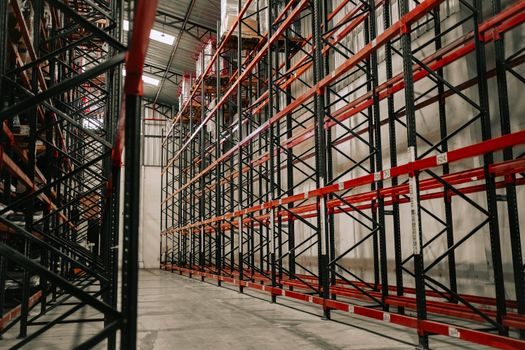
A TCO-clean quote states: steel grade and mill standard (ASTM A36 / A572, EN 10025 S235JR / S355JR), frame and beam gauge in mm, yield strength, finish specification (powder-coat thickness in microns, galvanisation class to ASTM A123 or EN ISO 1461), load class and beam-deflection limit, conformance to EN 15512 / FEM 10.2.09 / AS 4084-2012 / RMI MH 16.1, anchor pattern with calculated pull-out, and a data plate per bay. Quotes that omit the mill standard, the deflection limit, or the data-plate commitment are the quotes that produce the surprise 5-year repair bills, because the operating envelope is undefined and the inspection will fail. [S2]
For cross-checking a buy against a storage rack reference, the same data plate governs: load per beam, load per bay, frame capacity, and the seismic zone factor used in design. Treat the data plate as a contractual document, not a sticker, and the TCO discipline carries through to disposal. Buyers who standardise on a small number of rack families and pre-qualify 2-3 mills reduce both price volatility and the compliance overhead, and they recover the pre-qualification cost in the first 18-24 months of operating life.
For buyers weighing rack against a wider materials-handling decision, the same lifecycle-cost logic that drives the pipe clamp price breakdown and the hydraulic cylinder 2026 cost levers applies — finish, certification, and MOQ tier move the line items, but the inspection and downtime lines are universal. The next trackable signals are the EN 15512 revision track and any post-2025 update to the FEM 10.2.09 seismic annex; both govern the same TCO envelope and both land in the same 15-year horizon.
The underlying component specifications are covered under total station.