
Strapping band specification is decided by four lockable parameters — width, thickness, base material, and joint method — and the band must match the strapping machine head geometry on the line where it will run. The most common mistake buyers make is ordering on price-per-kilogram instead of on the band's rated break strength, then discovering the band cannot survive the dynamic shock load on a moving pallet.
Across Chinese and Indonesian supplier catalogues as of 2026-07-01, PET (polyester) strapping is the dominant specification for palletizing and brick-pack applications, offered in widths from 9 mm to 25 mm and thicknesses from 0.5 mm to 1.4 mm [S1][S2]. Spare-part listings for fully automatic strapping machine lines confirm PET as the standard consumable across flexographic-printing and corrugated end-of-line operations [S2].
Load Class, Width and Thickness — the First Spec Gate
Width and thickness combine to set the break strength of any strapping band; standard catalogue sizes in 2026 cluster at 9 mm / 12 mm / 16 mm / 19 mm / 25 mm width with 0.5–1.4 mm thickness, and the larger the cross-section, the higher the rated tensile load. PET band 12 mm × 0.6 mm is the typical entry-level pallet strap, while 19 mm × 1.0 mm and 25 mm × 1.4 mm cover heavy unit loads on brick, lumber, and steel-coil packs [S1][S2].
Specifying below the load class is the most common field failure: a 9 mm band on a 600 kg stone pallet will elongate past the buckle and creep under warehouse heat. Use width as the primary lever for break strength, and reserve thickness adjustments for compatibility with the sealing head of the line's strapping machine [S2].
Base Material — PP, PET or Steel
Material is the second gate. PP (polypropylene) is the low-cost choice for light, stable pallet loads below roughly 200 kg where elongation is tolerable. PET (polyester) is the workhorse for 200–1500 kg unit loads because it holds tension longer than PP and recovers from shock loading — Chinese factory listings in 2026 continue to push PET as the default "environmental protection" strap for export pallets [S1].
Steel strapping remains specified for sharp-edged steel coils, hot-rolled plate, and any load where the band itself will see surface temperatures above PET's softening range. Steel is the only class that survives a band-on-band cut from a coil edge; PET and PP both fail by saw-through in that service. A practical field rule: if the load is wood, cardboard, or soft-pack, choose PET; if the load has hard edges or heat, specify steel [S1][S2].
Joint Method and Tooling Cross-Fit

Joint method is the third gate and is fixed by the tooling on the line. Heat-welded (friction) joints are the standard for PET on automatic and semi-automatic strapping machine heads; they require a consistent PET resin with a controlled surface coating so the weld reaches parent-metal strength. Buckle (notched-wire) joints are the manual option for field repair kits, with a typical 60–75% joint efficiency versus a heat weld at ~85–90% [S2].
Battery-powered combination tools ("battery strapping tool" in supplier catalogues) accept both 13 mm and 16 mm PET and tension-and-weld in one pass, and are now the default portable option for low-volume pack stations [S1]. Manual tensioners plus separate sealers are still specified for very low throughput and for environments where lithium batteries are restricted. Any tool change should be cross-checked against band width and thickness before order — a 16 mm tool will not tension a 19 mm band, and a 0.6 mm band will slip in a 0.5 mm tool's gripper [S1][S2].
Elongation, Creep and Storage Stability
Elongation class is the fourth gate and the one most often skipped on a purchase order. PET typically elongates 6–14% at break, versus PP at 15–25% — that difference is what makes PET hold a load for months of warehouse storage without losing tension [S1]. For long-term storage or export containers exposed to temperature swing, specify PET with low-creep additive and verify the supplier's creep curve, not just the break-strength number on the datasheet.
PP loses tension measurably within weeks under sustained load, so it is wrong for anything stored longer than a single shipping cycle. Steel does not creep, but it rusts and stains product, so painted or wax-coated steel is the variant for white-goods and food-grade packaging. A side-by-side comparison across the three common materials reads: PP — lowest cost, highest elongation, highest creep, not for long-hold loads; PET — mid cost, low creep, weldable, default for most pallet loads; steel — highest break strength per mm, no creep, sharp-edge service only.
Supplier Sourcing and OEM/ODM Channels in 2026
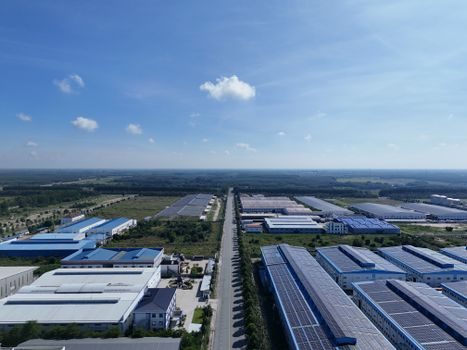
Supplier landscape in 2026 splits into two channels: branded PET specialists (Changsha ZILI Packing Materials and similar exporters [S1]) and broad catalogue platforms listing 2–6 PET / PP / battery-tool SKUs per supplier, including Inner Mongolia OEM/ODM workshops on Made-in-China.com with custom embossing and private-label runs [S3]. Indonesian and Southeast Asian buyers typically source through factory-direct specialists running manual tool, PET, and stretch-film lines under one roof [S2].
For OEM/ODM, the minimum economic runs in 2026 sit at one 20 ft container per spec for embossed band and roughly 500 units for battery tools [S3]. Buyers should lock a sample-run approval before the production-run PO: the sample must be run through the buyer's own strapping machine head, not just tensioned by hand, because the sealing-temperature window is resin-specific and varies batch-to-batch.
What Strapping Band Selection Is NOT For
Strapping band is not a substitute for stretch film on a stretch-wrapping line, and it is not a primary restraint for rail or sea containerized loads above 1500 kg unit mass — those require steel strapping, dunnage, and lashing chains specified to AAR / IMO rules. PET and PP band are also wrong for any load that will see surface contact above roughly 80 °C (PET) or 60 °C (PP) — at that point specify steel or a high-temp textile alternative. [S1]
Inside a plant, do not specify PET where the line is currently set up for steel: the strapping machine arch, sealer dies, and tension path are different. Cross-compatibility between PET and steel on the same head is not a field upgrade — it is a retool. If a buying team is unsure which side of that line they sit on, they should use the same gate logic that applies to any industrial consumable decision, including the spec-gates approach used in Sander Selection Criteria: 7 Spec Gates for 2026 Buyers and the Spring Washer Selection: 4 Lockable Spec Gates for 2026 Buyers framework — fix the four gates first, then price.
Trackable Signals for the Next Buying Cycle

Two signals are worth tracking on the next 90-day sourcing cycle: first, the PET resin spot price in Q3 2026, which feeds directly into PET band price-per-kg and is the main cost lever for PET lines [S1][S2]; second, the rollout of higher-capacity battery tools rated for 19 mm and 25 mm PET, which would shift the entry-level tool segment the way 16 mm tools shifted it in the previous cycle [S1]. Lock the four gates — load class, material, joint, elongation — before price comparison, and the band spec will survive a year of warehouse, line, and supplier changes.
For component-level specifications, see pressure transmitter.