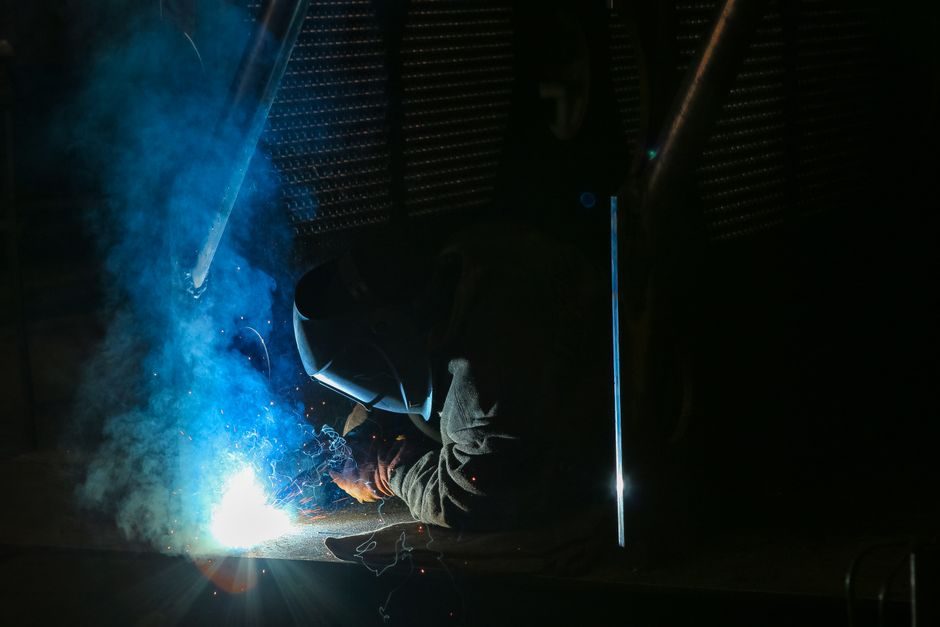
Specifying a stud welder in 2026 is a process-first decision, not a brand decision: capacitor discharge (CD), drawn-arc (DA), and short-cycle (SC) machines target different stud diameters, base materials, and duty cycles, and the wrong family is the single most common reason a quote returns to the buyer inside 30 days [S1].
Entry-tier DA inverters (380 V, 25 kVA-class) list at US$1,880-2,250 per set on the China wholesale channel as of 2026-05-30 [S3], while heavy shear-stud DA sets (welding diameter up to 25 mm) sit at US$5,800-6,850 per 5-piece MOQ on the same channel [S3]; specialist CD stud and collet supply in the UK/EU runs on a separate, accessories-heavy pricing curve from suppliers like Studfast, who have stocked the category since 1988 [S1].
Process Family: CD vs Drawn-Arc vs Short-Cycle
Capacitor discharge (CD) stud welding guns weld small-diameter studs (typically M3-M8) to thin sheet steel, stainless, or brass in milliseconds from a bank of charged capacitors, leaving a clean, low-heat-affect fillet and almost no reverse-side marking — which is why CD dominates the sheet-metal, electrical-panel, and HVAC-fastener trades [S1].
Drawn-arc (DA) stud welding uses an inverter to weld shear studs up to 25 mm diameter on thick plate [S3]. Short-cycle (SC) is a ferrule-less, mid-arc-length middle ground used for 6-12 mm studs where the operator does not want to crack the ferrule debris away.
Matching Stud Diameter, Base Material, and Power
Selection starts with three linked numbers: stud diameter, base-material thickness, and base-material grade. A practical rule engineers apply without consulting a manual is stud diameter should not exceed the base-plate thickness in mm for CD on mild steel; DA loosens this to a roughly 10:1 plate-to-stud ratio on heavy structural plate, and that is why a 25 mm shear-stud set exists at the top of the wholesale range [S3].
Stainless and aluminium base materials change the math. For stud and collet sizing on a CD gun, the collet/chuck set is a separately consumable line item from specialist suppliers like Studfast, not bundled with the gun [S1].
Duty Cycle, Inverter Topology, and 380 V vs 110/220 V

Duty cycle is the spec most buyers under-spec. Entry Chinese DA inverters in the US$1,880-2,250 band are typically rated for intermittent production, not full shift use, and the more expensive 25 mm-capable sets (US$5,800-6,850) advertise heavier transformer/inverter stacks that can sustain a fabricator's shift at 8-12 studs/min [S3].
Input voltage dictates the install class. Chinese-export DA sets in the 25 kVA range take 380 V three-phase, which means a North American buyer using 240 V single-phase needs a step-up transformer or a different SKU — a fact that often surfaces only after the crate lands. CD guns, by contrast, run from 110/220 V single-phase and plug into a normal wall outlet, which is one reason the CD category retains its own specialist supply chain separate from the heavy DA channel [S1].
Stud Material, Ferrule, and Consumable Sourcing
Studs are not generic fasteners. Mild-steel CD studs, stainless CD studs, and threaded weld studs each have a tip geometry matched to a specific gun/charge-voltage combination, and the collet that grips the stud must be sized to the stud's nominal diameter and shoulder — this is why Studfast lists collets and chucks as a separate, ongoing consumable category rather than a one-off accessory [S1].
DA consumables stack as ferrule + stud + arc shield; the ceramic ferrule contains the molten pool, breaks away after solidification, and is single-use. Shear studs above 16 mm typically ship as a kit with a matching ferrule, and the heavier 25 mm-capable welders are most often procured as a 5-piece MOQ rather than unit-quantity, reflecting the consumable bundling in the structural trade [S3].
Who a Stud Welder Is For — and Who It Is Not For
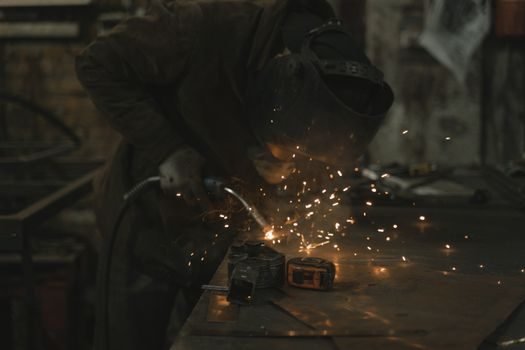
Stud welding pays back when a project calls for dozens to thousands of identical fasteners on a repeatable base material: metal-deck and shear-stud contractors, electrical-panel builders, insulation-pin installers, and ship fitters. It is the wrong tool for a job shop doing a few mixed welds per week, where a general-purpose arc welder or a TIG welder set on the bench is more flexible. Buyers looking for a generic hot-work station should compare a stud welder against general joining processes rather than force a stud gun into a fit-up that wants stitch welding or seam welding. [S1]
For a buyer whose work is mostly thin sheet and short runs, a portable CD gun sourced from a specialist supplier like Studfast is usually the lowest total cost of ownership [S1]. For a structural or shipyard buyer running thousands of 16-25 mm shear studs, a 380 V DA inverter in the US$5,800-6,850 bracket is the entry to the right duty class [S3]. For comparison shopping on a parallel capital-equipment category, see this single girder crane buying guide — the duty-cycle and headroom trade-offs map cleanly onto stud welder sizing.
Standards, Compliance, and What to Verify Before Paying
CE marking on the Chinese DA sets in the wholesale channel is a 2024-09-25 attestation per the listing data, and buyers should treat that as the baseline minimum rather than a guarantee of current production-line compliance [S3]. For structural shear studs, the governing reference is the AWS D1.1 structural welding code family, and most procurement specs in the bridge and deck trades require the studs themselves to carry an ICC-ES or equivalent evaluation report — the welder listing alone does not satisfy the stud-side requirement.
For operator safety, the arc and ferrule dust from DA welding fall under the same hot-work and respiratory PPE rules as any open-arc process, and the WelderStream category coverage on welding hoodies, auto-darkening helmets, and FR clothing is a useful cross-check before the welder is installed [S2]. Buyers who need to specify a broader fastener spec, not just the welder, can compare stud material against the alloy steel price and cost guide to keep stud procurement and welder selection on the same budget envelope.
Common Failure Modes Buyers Hit in Year One
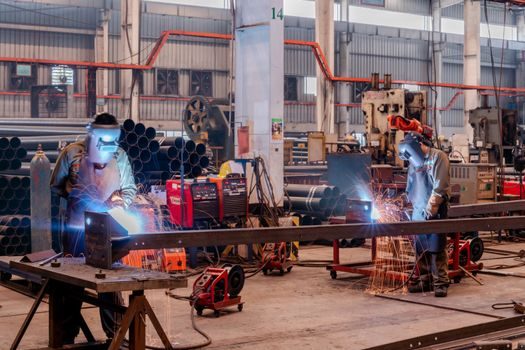
The fix for three of the four is procedural, not technical: confirm the duty cycle at the stud diameter the buyer actually plans to weld, confirm the input voltage before the crate ships, and stock at least 10% spare collets/chucks the day the gun arrives. The fourth — ferrule geometry — is best handled by ordering ferrule and stud as a matched pair from a specialist supplier who stocks the consumable line as a category, not a sideline [S1].
Comparison: CD vs Drawn-Arc vs Short-Cycle at a Glance
CD: best for M3-M8 studs on thin sheet, single-phase 110/220 V, millisecond arc, no ferrule, lowest heat input; typical price band — gun plus collet set, quote via specialist channel [S1]. Drawn-arc stud welders are available as 380 V inverter sets for thick plate, handling shear studs up to 25 mm diameter, with wholesale prices of US$1,880-2,250 and US$5,800-6,850 from listed manufacturers [S3]. Short-cycle: best for 6-12 mm studs where ferrule cleanup is undesirable, ferrule-less, mid-arc, single or three-phase depending on model.
Selection boils down to three decision criteria lined against each other: stud diameter, base material, and duty cycle. CD wins on small studs and thin sheet; DA wins on large studs and heavy plate; SC is the ferrule-less compromise in the 6-12 mm band. For a parallel fixed-asset decision matrix that uses the same three-criterion logic, this belt conveyor buying guide applies a similar belt/load/incline comparison and is worth reading alongside a stud-welder spec.
Tracking signals for the rest of 2026: the Made-in-China DA wholesale range held flat between 2026-05-30 and mid-June with no published price revision in the visible channel data [S3]; the specialist CD consumable supply channel in the UK has remained stable with Studfast continuing to list CD stud, collet, and chuck as a stocked category [S1]. For related measurement-equipment purchases on a comparable buying cycle, the industrial conductivity meter buying guide follows the same process-first, spec-second selection logic.