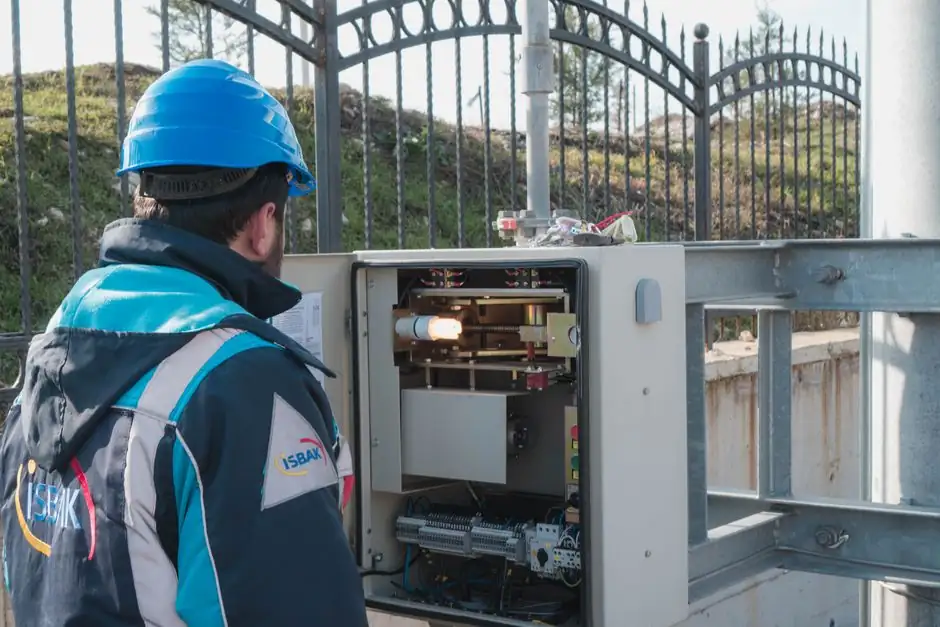
Specifying a power mixer for an electrical-installation project is governed by four binding axes: ATEX 2014/34/EU category 2 or 3 zoning, IEC 60079-0 / IEC 60079-1 flameproof enclosure rating, IP55–IP67 ingress class, and 400 V / 50 Hz (or 460 V / 60 Hz) three-phase supply with 6–7× locked-rotor inrush headroom [S3][S4].
Industrial power mixers in the 0.55–75 kW per-stage band handle 1–500 mPa·s fluids up to pastes above 50,000 mPa·s, and the same motor frame can be correctly or wrongly applied depending on whether the electrical installer has read the duty-cycle and zoning spec gates first [S3].
ATEX/IECEx Zone Mapping vs Motor Terminal Box Rating
Where solvent vapours, grain dust, or resin powders are present, ATEX 2014/34/EU category 2 (zone 1/21) or category 3 (zone 2/22) certification is mandatory for the motor terminal box, and IEC 60079-0 / IEC 60079-1 govern the flameproof Ex d enclosures [S3]. An installer who buys a standard TEFC motor for a zone 1 solvent-blending tank will fail the area classification on day one.
The zone decision cascades into the cable glands, the VFD enclosure, and even the local isolator: every component in the run must carry the matching Ex marking, not just the motor. IECEx equivalents are accepted in most jurisdictions outside the EU, but the installer still needs the equipment certificate number on the nameplate for the inspector to verify [S3].
IP Rating, Washdown Chemistry, and Outdoor Exposure
Ingress protection pairs with the zone rating: IP55 is the common floor for indoor washdown, IP65 for outdoor chemical service, and IP66/IP67 for submerged or hose-down zones [S3]. A mixer specified to IP55 will not survive a CIP cycle with hot caustic, and the seal failure on the output shaft will look like a gearbox problem at teardown.
For tank-side installations, the cable entry to the motor terminal box must hit the same IP class as the motor itself, which means double-sealed glands on IP66/IP67 units, not standard rubber-grommet entries. A useful cross-check is the power mixer reference page, which lists the IP/Ex taxonomy used in 2026 OEM data sheets.
Supply Voltage, Locked-Rotor Inrush, and Feeder Sizing
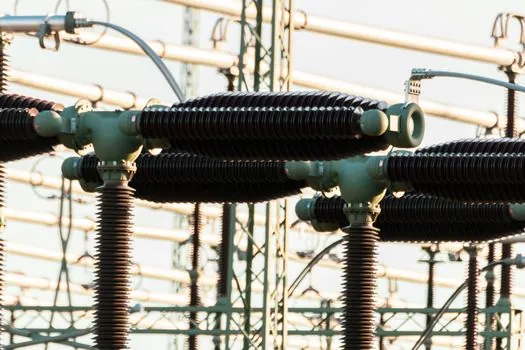
Power supply is the spec most often misread. A 75 kW mixer drawing 130 A at 400 V looks benign on a nameplate, but its locked-rotor current can spike to 6–7× full-load current, which forces the upstream power-transformer and the power-cable cross-section to be sized for that inrush, not for the running current [S3].
Soft-starters or VFDs smooth that inrush but introduce their own harmonics that the site power-meter will register as a poor power factor if no line reactor is fitted. For mid-duty mixers in the 5.5–22 kW band, a VFD adds a second benefit: it lets the installer trim the tip-speed envelope (3–8 m/s for low-viscosity blending, 1–3 m/s for high-viscosity pastes) without changing the gearbox ratio [S3].
Smaller commercial and pilot-plant mixers connect to standard residential outlets and typically specify a C16 / 16A fuse per the OEM electrical-connection guide [S2], but those units are not Ex-rated and should never be installed inside a classified area regardless of how convenient the single-phase outlet is.
Motor Class, Gearbox Service Factor, and Why Nameplate kW Lies
Power mixers fall into three motor-class bands: light-duty 0.55–4 kW for water-like fluids under 1,000 mPa·s, mid-duty 5.5–22 kW for slurries in the 1,000–10,000 mPa·s band, and heavy-duty 30–75 kW for high-solids pastes above 50,000 mPa·s [S3]. The same 7.5 kW nameplate can be the right call for a 5 m³ blending tank and the wrong call for a 0.5 m³ paste vessel [S7].
For top-entry mixers on a concrete-agitator charging hopper, the gearbox is sized at a service factor of 1.5–2.0 to absorb the shock loads that come from aggregate bridging. Under-speccing that factor is the most common cause of premature bearing failure, because the electric motor can deliver 200–300% starting torque for the first 5–10 seconds while the gearbox can only carry 150% continuously [S3].
The 2026 OEM baseline for continuous three-shift planetary and pan mixers is a gearbox service factor ≥1.75, with bearing L10h life rated at ≥50,000 h on the output stage [S4]. Planetary and pan mixers also gate on rated kW per cubic metre: 30–90 kW/m³ for refractory and SCC pan mixers versus 18–30 kW/m³ for standard planetary units [S4].
Air-Powered vs Electric: When the Electrical Installer Should Walk Away
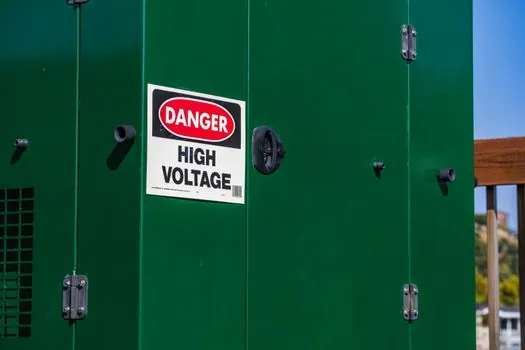
Electric mixers are not ideal for mixing flammable materials, since they create the possibility for an electric spark in the motor to catch the materials on fire. Air-driven mixers have no electrical components submerged in the mixture and are therefore much safer in flammable-service tanks [S1].
Air mixers increase compression to boost torque output, enabling them to generate more torque than similar electric mixers, while electric mixers transfer nearly 100% of their energy to the motor and are more energy-efficient because air pressure is often lost at various points through leaks [S1]. The electrical installer should flag any zone 0 or zone 1 flammable-vapour tank for an air-driven alternative rather than trying to specify a higher Ex class on an electric drive.
For mobile and crawler-mounted mixers in quarry applications, the prime mover is a 100–250 kW diesel Tier 4-Final/Stage V unit driving a hydraulic piston motor and planetary gearbox, which is the only architecture where the prime-mover spec drives the mixing-energy spec rather than an induction motor nameplate [S4].
Control Architecture, Fieldbus, and the 2026 Default Panel
The supply feeder, VFD (where fitted), and motor protection are covered by IEC 60079-x in classified areas and by IEC 60204-1 for general machine safety. The 2026 OEM default is a PLC plus 7" HMI with recipe storage of ≥200 entries and Profinet/EtherCAT fieldbus, replacing the discrete-relay panels common on machines built before 2018 [S4].
For a clean installation, route the fieldbus cable in a separate tray from the power cable, keep at least 200 mm of separation on parallel runs, and cross at 90° where they must intersect. Earthing the VFD chassis to the same ground bar as the motor frame prevents the bearing-current discharge that otherwise eats the outer race within 18–24 months on 30–75 kW units.
If the project also involves sawing or drilling work on the same site, a separate spec for circular saws and impact drills for electrical installation is worth pulling in, since the temporary site feeder for those tools often shares the same distribution board that the mixer will land on during commissioning.
Air vs Electric, ATEX vs IP, VFD vs Soft-Starter: A Quick Decision Matrix

Four decision axes separate the realistic candidates: (1) zone class, (2) ingress exposure, (3) inrush / feeder headroom, and (4) torque behaviour under viscosity. Air-driven mixers win on zone 0/1 flammability and on torque under stall; electric mixers win on energy efficiency, IP sealing, and fieldbus integration [S1][S3].
On the electrical side, VFDs win on tip-speed trim and soft-starters win on capital cost for fixed-speed 5.5–22 kW units; line reactors become mandatory above 30 kW to keep the low-voltage electrical feeder from logging nuisance harmonics [S3][S4]. Magnetic-drive bottom-entry mixers eliminate the dynamic seal entirely but cap out around 15–22 kW because of torque-transmission limits through the containment shell [S3].
For a 30 kW top-entry pan mixer in a non-classified but washdown-heavy indoor plant, the practical pick is a 400 V / 50 Hz IE3 induction motor, IP65 enclosure, cyclo gearbox at service factor 1.75, VFD with line reactor, and Profinet panel. For the same mixer moved into a zone 1 solvent area, the spec changes to Ex d IIB T4 motor, ATEX cat 2, IP65 cable glands, and a certified VFD panel installed outside the classified area [S3][S4].
Acceptance Test, Failure Modes, and When to Walk Away from a Repair
On commissioning, measure locked-rotor current at first start, run the motor uncoupled for 30 minutes to capture the no-load current and bearing-temperature baseline, then load-couple and verify the gearbox oil temperature stabilises below 90 °C on a 75 kW continuous-duty unit. Mechanical seal faces typically rate for 6,000–8,000 operating hours in abrasive service before planned rebuild, and helical-bevel gearboxes need oil changes at 4,000–6,000 h or 12 months, whichever lands first [S3].
Do not repair a gearbox with spalled teeth or a motor winding with a ground-fault reading below 1 MΩ at 500 V; both conditions are replacement events, not rewinds. For a broader electrical automation audit on the same plant, the panel-builder should be able to produce a single-line diagram showing the mixer's locked-rotor contribution against the transformer's short-circuit impedance, which is the document the inspector will ask for first.
Trackable signals for the next 6 months: the EU ATEX 2014/34/EU enforcement notices on uncertified mixers in zone 1, the 2026 IEC 60204-1 revision cycle for machine safety, and any 400 V grid-code update that tightens harmonic-emission limits on 30–75 kW industrial drives.