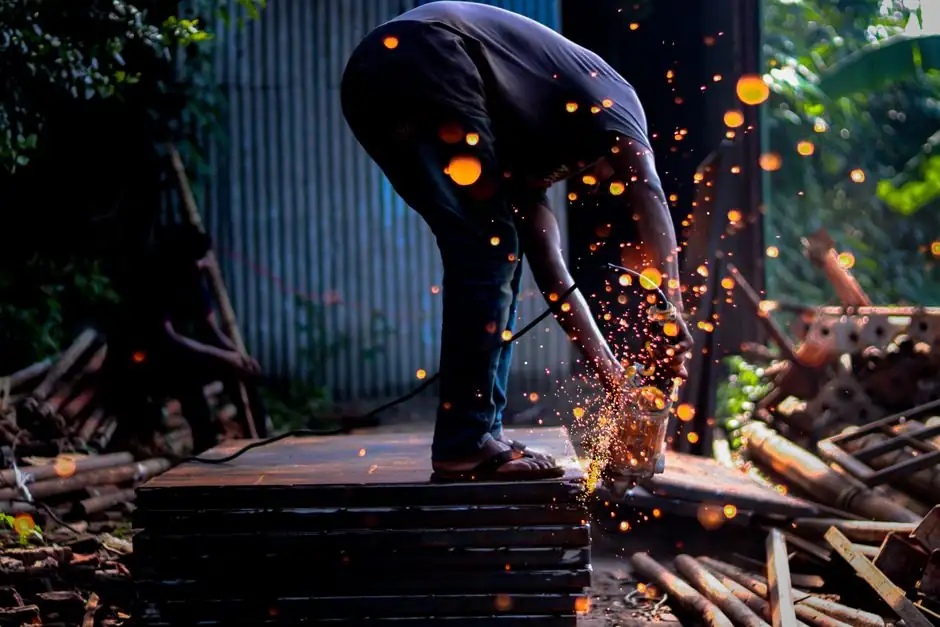
Steel-construction sander selection resolves into four tool families matched to substrate gauge and joint type, with 75-100 mm inline belt sanders delivering the highest stock removal on 2.0-3.0 mm black-iron plate and random-orbit 125-150 mm pad sanders at 5-6 mm orbit the safe default for thin-gauge finish work [S1].
The decision is governed by three intersecting constraints: substrate alloy and gauge, abrasive grit and bond type, and the dust class dictated by site adjacency to coatings, zinc fumes, or combustible residue. Each constraint eliminates a tool family before brand or wattage ever enters the conversation [S1].
Substrate Map: Carbon Steel, Stainless, and Galvanized Members
Stainless-steel members (304/316, typically 1.5-4.0 mm for architectural handrails and lintels) cannot be abraded with ferrous grit because embedded contamination promotes later rust staining, so non-ferrous aluminum-oxide or zirconia discs are mandatory, with passivation follow-up on any grinding that breaks the factory oxide layer. Galvanized sections in the 0.7-1.2 mm range used for secondary framing deform under aggressive contact, which forces the tool choice back to a 5 mm orbit random-orbit on 80-120 grit aluminum-oxide discs [S1].
encyclopedia entry for context on the metal grades above: [alloy steel and carbon steel cover the substrate families in scope].
Comparison: Random-Orbit vs Inline Belt vs Angle Grinder vs Detail Sander
Across the four sander classes used on steel-construction work, the decision pivots on four criteria: material-removal rate, gauge-deformation risk, dust-management compatibility, and access into tight corners. Random-orbit sanders (125-150 mm pad, 5-6 mm orbit, 400-1,200 W) sit in the middle on removal rate, lowest on gauge-deformation risk because the orbit pattern averages contact pressure, and pair directly with 27-32 mm extraction ports feeding a Class L or Class M vacuum [S1].
Inline belt sanders (75 x 457 mm or 75 x 533 mm belt, 160-330 m/min) deliver the highest removal rate, which is wasted on sub-0.7 mm galvanized but is the right tool for grinding weld beads on 2.0-3.0 mm black-iron commercial supply risers and structural gusset welds. Angle grinders (100-125 mm disc) with flap or fiber discs handle 6-25 mm plate stock removal and weld-seam undercut grinding, but they are the wrong tool for any finish work because disc contact area cannot average pressure on thin gauge. Detail sanders (triangle or mouse format, 100 x 150 mm pad, 1.5-2.0 mm orbit) win on access into a 100-150 mm corner or behind a stiffener plate, but their small footprint and 0.7-1.1 kg mass make them unsuitable for any seam grinding longer than 200 mm [S1].
Abrasive and Grit Selection by Joint Type
Weld-bead grinding on carbon-steel plate calls for 36-60 grit zirconia or ceramic fiber discs at 80 m/s peripheral speed, with ceramic running cooler and lasting longer on hard welds, per independent manufacturer-aggregated data showing up to 5x life over aluminum oxide on steel [S3]. For weld-blending transitions to base metal, step up to 80-120 grit on the random-orbit before any paint or intumescent coating is applied.
For de-coating and paint-strip operations on legacy steel, 16-24 grit ceramic or zirconia belts cut fastest but leave a profile too deep for most coating systems, while 40-60 grit is the practical compromise between removal rate and anchor-pattern depth for re-coating. Daily maintenance of any belt sander on steel work must include complete dust evacuation from the motor housing, dust collection system, and belt compartment, plus a belt inspection for embedded metal particles, tears, or tracking drift after every shift [S3].
A related spec walkthrough for the heavier cutting tool used in plate-prep sitelines: [marble cutter selection for steel construction covers the adjacent abrasive-cutting family at 100-125 mm disc scale].
Dust Class, Zone Mapping, and Health Constraints
When sanding falls within 1-2 m of a freshly coated steel member, an ungrounded weld, or a galvanized cut edge, dust class governs tool selection more than grit does. Abrasive dust from galvanized steel carries respirable zinc and iron compounds, from stainless steel carries hexavalent chromium risk on hot work, and from coated legacy steel may carry lead if the structure predates 1978, so a Class M vacuum with HEPA H13 or H14 final filter is the floor for any steel-construction sanding operation [S1].
Random-orbit sanders in the 400-1,200 W range can be paired directly with 27-32 mm extraction ports, and an open-coat stearate disc at 8,000-10,000 opm clears swarf without glazing the abrasive face on softer non-ferrous contact work, which is the same principle that carries over to 3003-H14 aluminum return-air box fabrication. Inline belt sanders need a separate high-flow extraction shroud because the belt itself throws dust and swarf at the belt direction, and angle grinders without an engineered shroud are unsuitable where extraction is mandatory [S1].
Use-Case Fit: Who Each Sander Family Is For
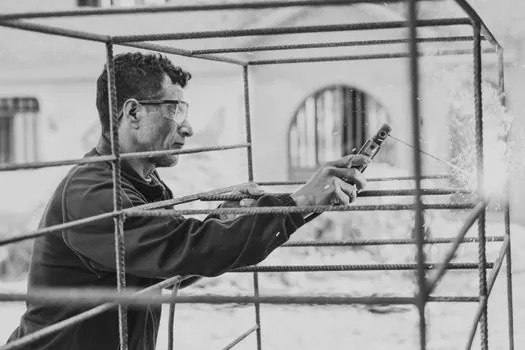
Random-orbit 125-150 mm pad: for steel-construction finishers and coating applicators who need a controllable surface profile on 2-6 mm plate and 0.7-1.2 mm galvanized secondary framing. Inline belt 75 x 457 mm or 75 x 533 mm: for structural fitters and welders grinding out gusset and base-plate welds on 2.0-6.0 mm carbon-steel plate. Angle grinder 100-125 mm with flap disc: for demolition crews and ironworkers doing heavy stock removal and weld-seam undercut grinding on 6-25 mm plate. Detail/filament sander: for finishers and architectural metalworkers working corners, stiffener pockets, and around bolt heads where the random-orbit pad will not reach [S1].
Who it is NOT for: any sander selection that pairs a high-removal inline belt with sub-0.7 mm galvanized will dimple the panel and is wrong by construction, and any random-orbit paired with a non-extraction setup on galvanized or coated steel is wrong by health-and-safety. If the work is heavy plate stock above 6 mm, a right-angle grinder is the correct primary tool, not a random-orbit or detail sander [S1][S3].
Limitations, Failure Modes, and Cost-of-Ownership Signals
The most common failure mode on steel-construction sanding is premature abrasive wear, traced in field reports to dust accumulation in the motor housing, embedded metal particles in the belt, and tracking drift that lets the belt run off-center. A daily discipline of complete cleanout, belt inspection, and tracking verification addresses all three [S3].
Heat management is the second failure mode: steel sanding generates enough frictional heat to discolor the workpiece, warp thin gauge, and shorten abrasive life. Variable-speed control is essential, and pairing a Makita 9403-class 11-amp belt sander with a 60-80 grit zirconia belt on steel is the commonly cited professional setup in aggregated research [S3]. For fleet-level economics, the sander total cost of ownership breakdown covers the abrasive-consumption and dust-extraction cost lines that dominate steel-construction sanding budgets.
Sourcing, Standards, and Spec Verification
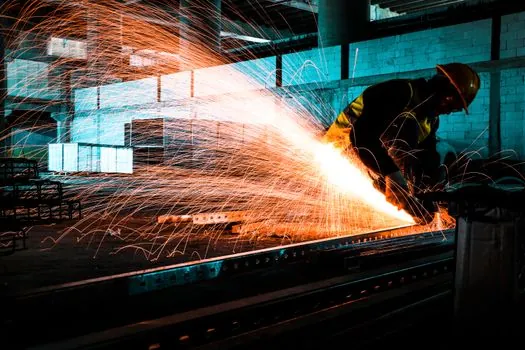
The Makita 9403 4" x 24" belt sander is the most-cited professional steel-work sander in 2026 independent reviews, with an 11-amp motor and 84 dB noise floor making it acceptable for indoor structural fit-out. Pairing it with 60-80 grit zirconia belts delivers the typical steel-fabrication stock removal target [S3].
encyclopedia entry for tool-family context: [sander and construction tools sit alongside the broader equipment taxonomy]. For adjacent cutting-tool selection on the same site, marble cutter spec map for HVAC installation covers the 100-125 mm class for thin-gauge steel sitelines. Track next: any 2026-Q4 update to ISO 13788 surface-finish tolerance bands for structural steel under intumescent coating, and any OSHA revision to respirable-crystalline-silica thresholds as they interact with coated-steel dust.