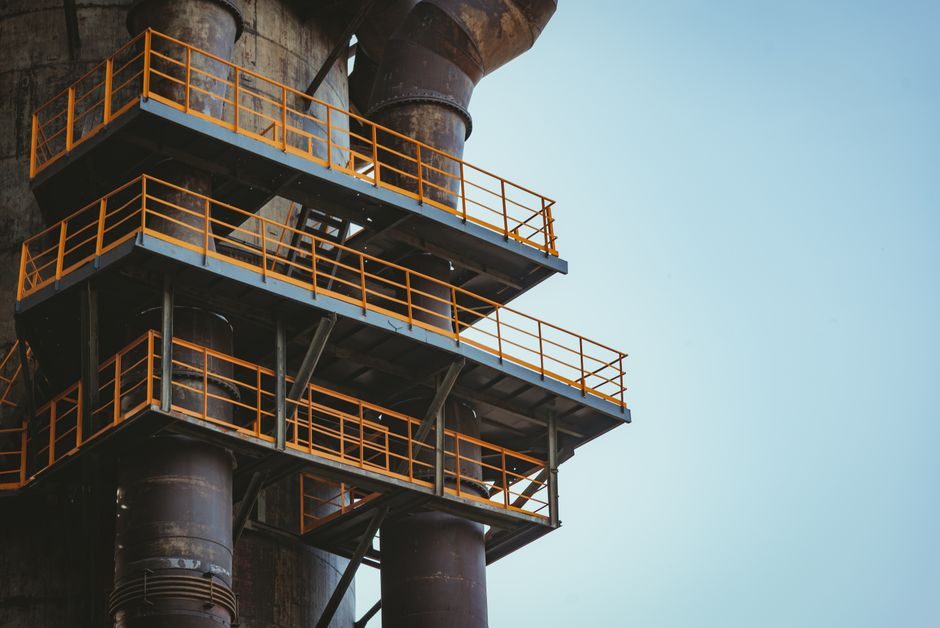
The 2026 suspended working platform catalog is built around a fixed envelope: modular platform lengths in 1.3 m, 1.5 m and 1.7 m increments; hoist models LTD5, LTD6 and LTD8; and a per-section live load band of 200–300 kg [S1]. A buyer who locks those four numbers first will cut the long-list by roughly 80% before any commercial comparison.
The category covers facade access gondolas, window-cleaning cradles, BMU-style roof cars and rail-mounted platforms built by manufacturers such as Wuxi Ketong Engineering Machinery, alongside more than 40 Chinese OEM-export factories serving Russia, Brazil and the Gulf [S1][S2]. With that supplier density, the buying risk sits in specification gaps, not in sourcing risk — meaning the spec sheet, not the brochure, decides the project.
Hoist Class: LTD5, LTD6, LTD8 Rated Load Bands
The hoist is the single most expensive replaceable unit on a suspended working platform and the one part stamped with a serial plate you cannot fudge. Catalog data from the 1.7 m platform series maps the hoist to the rated load tier: LTD5 platforms are typically paired with 5 kN-class hoists, LTD6 with 6 kN-class units and LTD8 with 8 kN-class units, all driving a single 1.5 kW–2.2 kW motor at roughly 8–9 m/min lifting speed [S1]. Under-sized hoists on a 300 kg platform (which is the live load plus two workers plus tools, not the platform itself) will trip the overspeed governor within a few hours of duty-cycle use, so the hoist model is not a procurement detail — it is the safety envelope.
Selection rule: pick the hoist class first, then the platform length, never the reverse. The platform and the hoist are CE-typed as a unit under EN 1808, and mixing a 1.7 m platform with an LTD5 hoist will fail a third-party conformity audit. For an in-depth look at adjacent working-at-height decisions, see this aluminum ladder vs scaffolding spec cut.
Platform Length Modules: 1.3 m / 1.5 m / 1.7 m and Total Span
Suspended platforms are built from bolted modules in three stock lengths — 1.3 m, 1.5 m and 1.7 m — that combine to spans of 2.6 m up to about 12 m without intermediate suspension cables [S1]. Most facade projects fall in the 6 m to 9 m band because that is where the deflection of a standard 3-section deck stays under the 1/500 span limit that EN 1808 considers acceptable for a loaded platform.
The 1.3 m module exists for elevator shafts, atrium soffits and any location where the working face is broken up by columns or window mullions. A common spec mistake is to specify one continuous 9 m platform where three short modules could ride two independent suspension rigs, halving the load on each parapet anchor. A wider overview of how the platform fits the broader working-at-height category is in the aerial work platform encyclopedia entry; for the cradle-style variants used in window cleaning, see the suspended platform encyclopedia entry.
Suspension Rig: Counterweighted Parapet vs Roof Trolley vs Davit

The suspension rig is the part the buyer most often under-engineers. Three families dominate 2026 catalogs: (a) counterweighted parapet beams in 1.2 m and 1.5 m outreach, which transfer the live load back through ballast blocks of 600 kg to 1,000 kg per side; (b) roof trolleys running on fixed rails for buildings with permanent track cast into the parapet coping; and (c) davit arms with wall-plate anchors for narrow rooftops where counterweight is impossible [S1]. Each rig type interacts with the platform length above it — a 9 m platform on a 1.2 m parapet beam with 800 kg ballast is fine on a 200 mm concrete parapet but will overturn a 100 mm slab.
For projects where the platform rides a permanent rail along the parapet coping, the relevant reference architecture is the platform trolley layout; for permanent BMU-style tracks on commercial towers, the suspended ceiling interior-maintenance cradle is the closest cousin. Rail-mounted window-cleaning platforms are explicitly listed in OEM catalogs as a 200–300 kg capacity subclass with a fixed-length cradle that cannot be reconfigured in the field [S1].
Rated Load: 200 kg, 250 kg, 300 kg Per Section
Per-section rated load is the second most-disputed number on a spec sheet, after hoist class. OEM catalogs for 1.7 m platforms split the range into three stock tiers — 200 kg, 250 kg and 300 kg — and the choice is dictated by the worker-plus-tool plus material payload, not by the platform weight [S1]. Two painters with a 30 kg paint pot, a 20 kg hose reel and 10 kg of sundries are already at the 200 kg ceiling before any spare board is laid down.
For cladding-replacement or window-glazing work, spec the 300 kg tier and accept the heavier counterweight. For pure inspection or rope-access-style surveys, the 200 kg tier plus a smaller counterweight is often the more rational answer. The same logic applies on a platform scale check at handover: weigh the loaded platform, not the empty one, and confirm the reading sits 15%–20% below the nameplate.
Motor, Cable Spec and Duty Cycle
Most LTD5–LTD8 hoists ship with 1.5 kW to 2.2 kW three-phase motors running at 380 V / 50 Hz (or 220 V single-phase for the LTD5 light class), driving a wire rope of 8.3 mm or 9.1 mm diameter at 8–9 m/min [S1]. Two hoist motors per platform are normal on the 6 m+ spans so that the platform can self-level if one side stalls. Duty cycle is the silent killer: a hoist rated for 30 starts per hour will burn out its brake coil inside six months on a re-cladding project where the platform is being raised and lowered 80+ times a day.
Cable specification drives rope life, not just safety. The 8.3 mm 6×19 IWRC galvanized rope is the default; for coastal or pool-chlorine atmospheres, switch to 8.3 mm 6×19 stainless for roughly 25% cost uplift. The relevant safety reference architecture for a temporary platform in a working-at-height scenario is the aerial work platform classification — the rules around fall-arrest, edge clearance and rope stretch are shared across both.
Standards and Compliance: EN 1808, OSHA 1910.66, CE Marking
Every CE-marked suspended platform bought in 2026 is conformity-assessed against EN 1808, the European safety standard for suspended access equipment, and any platform entering a US site must also satisfy OSHA 1910.66 (Powered platforms for building maintenance) [S1]. The two regimes are not identical: EN 1808 calls for a secondary overspeed governor with manual reset, while OSHA 1910.66 §1910.66(e)(2) demands a two-rope system with independent suspension means. A platform built for one regime is not automatically legal in the other.
Buyers should ask for the EN 1808 type-test certificate by serial number, the OSHA compliance letter where applicable, and a documented factory acceptance test (FAT) record. Wuxi Ketong and similar integrated manufacturers publish type-test reports on request, and OEM catalogs explicitly flag the platform series as "CE-certified for EN 1808" with the 200–300 kg capacity stamp on the same line as the LTD5/6/8 hoist code [S1][S2].
Decision Matrix: Scoring the Short-List
A 2026 selection matrix should score each candidate platform against seven weighted criteria and reject anything that scores below the threshold. A workable structure is the criteria-based grid (criteria down the left, candidates across the top, weighted score per cell) borrowed from standard decision-matrix practice, where the criteria-hased matrix is the most defensible form for a capex purchase above roughly USD 50,000 [S3]. The seven criteria to populate, with typical 2026 weights, are:
1. Hoist class match to rated load (weight 20%) — does LTD5/6/8 align with the 200/250/300 kg tier?<br/>2. Module length fit to facade geometry (15%) — can the 1.3 / 1.5 / 1.7 m mix reach the full elevation without a 12 m+ span?<br/>3. Suspension rig compatible with roof structure (15%) — parapet counterweight, roof trolley or davit?<br/>4. EN 1808 / OSHA 1910.66 compliance (20%) — type-test certificate by serial, not generic brochure claim.<br/>5. Motor duty cycle vs project daily starts (10%) — at least 20% margin over planned starts/hour.<br/>6. Counterweight and parapet load on existing structure (10%) — typically 600–1,000 kg per side, distributed over 2 m of parapet length.<br/>7. Spare-parts and after-sales lead time (10%) — LTD hoist motors and brake coils should be ex-stock in the destination country.
Any short-list candidate scoring under 70% on this matrix should be dropped before the commercial negotiation; the matrix is the filter that separates engineering-fit suppliers from catalog resellers [S3]. Track the suppliers that publish full type-test certificates (Wuxi Ketong is one example) versus those that publish only CE-declaration-of-conformity pages [S2]. The same matrix is used inside OEM catalogs to map the LTD hoist to the platform length to the rated load, so the buyer is essentially reverse-engineering the supplier's own logic.
Watch three signals over the next two quarters: (a) hoist-motor price moves in the 1.5–2.2 kW three-phase class, which historically lead the platform price index by 4–6 weeks; (b) EN 1808 type-test renewal dates on the LTD5/6/8 hoist family, since a lapsed certificate quietly removes a platform series from any CE-tender short-list; and (c) OEM factory moves out of Jiangsu and Shandong into Vietnam and Indonesia, which lengthens spare-parts logistics to GCC and EU projects and should be priced into the after-sales line. For adjacent decisions on the same project — concrete supply, shoring, lifting — see the concrete batching plant selection spec gates and climbing formwork cost guide.