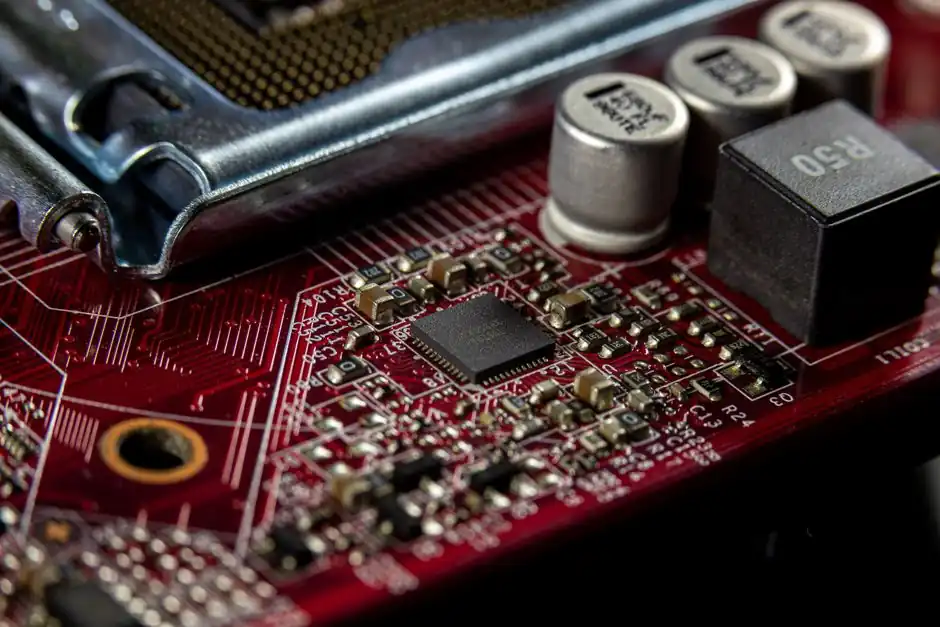
A switching power supply minimizes wasted energy by switching its pass transistor between low-dissipation, full-on and full-off states, whereas a linear regulator continually dissipates power in its pass transistor.
Its higher efficiency supports smaller and lighter assemblies, with one comparative design reported as less than half the size and up to 80% lighter than an equivalent linear supply [S5].
How Switching Regulation Improves Efficiency
A switched-mode power supply controls its switching transistor between low-dissipation, fully on and fully off states, spending little time in high-loss transition intervals [S2].
Regulation is achieved by changing the on-time-to-off-time ratio, or duty cycle, rather than maintaining a continuous voltage drop across a linear pass transistor [S2]. This principle underpins the higher electrical efficiency of switching converters and their common use in place of linear regulators where efficiency, size, or weight matters [S2].
The primary advantage of a switching power supply is reduced power loss because its pass transistor switches between low-dissipation, full-on and full-off states. Less waste heat can mean smaller heat sinks and enclosures, although total efficiency still depends on load, topology, input range, and thermal design.
Size, Weight, and Power Density
Switch-mode units can be under half the physical size and as much as 80% lighter than a comparable linear power supply while delivering the same desired output power [S5].
The size reduction comes from high-frequency transformer operation. The higher operating frequency permits a much smaller magnetic component.
That advantage has a qualification: high-frequency conversion adds filtering, shielding, layout, and protection requirements. Commercial switching topologies generally require a greater component count and more complex circuitry than linear regulation [S2]. A smaller finished unit can therefore represent more engineering effort behind a compact enclosure.
Linear and Switching Supplies Compared

The decision cannot be made from efficiency alone. The main trade-off is between efficient conversion and low-noise simplicity. [S2]
The table is a selection rule, not a universal efficiency ranking. Use switching conversion where power density, weight, or heat reduction dominates. Use linear regulation where low-noise output and circuit simplicity outweigh the loss and size penalty [S4].
Noise, EMI, and Power-Factor Risks
Switching currents can create electrical noise if they are not properly suppressed, and simple switching designs may also have a poor power factor [S2].
High-frequency noise and electromagnetic interference can affect sensitive electronic equipment, making switching supplies less suitable where the load requires exceptionally clean power, including sensitive medical applications [S5]. Linear supplies are associated with low-noise operation and high output stability, but their low efficiency remains a structural disadvantage [S4].
In rugged industrial installations, EMI can be reduced by placing the supply inside an insulated control enclosure away from sensitive instrumentation. Copper or aluminum foil, and braided shielding on cables, are listed as practical high-frequency interference-control measures [S5]. A qualified industrial UPS may also be required when the load must remain operational during an AC interruption, which is a separate requirement from low-noise conversion.
Best-Fit Applications
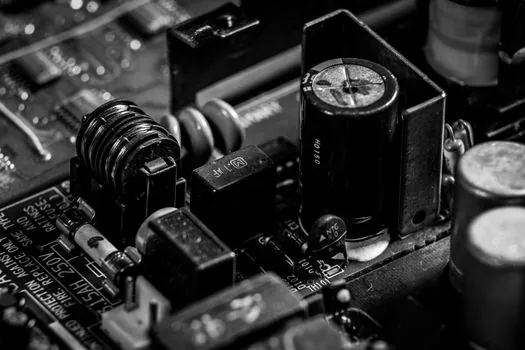
Switching supplies are suited to high-power delivery in a small frame because pulse-width modulation produces less heat than the transformer-and-regulator approach used in a comparable linear design [S5].
They also replace linear regulators when the engineering priority is higher efficiency, reduced size, or reduced weight [S2]. This makes them practical for compact equipment, distributed power systems, and applications where heat removal or enclosure volume limits the design.
The approach is less attractive for analog-sensitive or highly noise-sensitive loads unless the switching stage includes adequate filtering and shielding [S5]. Linear regulation remains relevant where predictable low-noise output takes priority over conversion efficiency, particularly around sensitive instrumentation [S4].
Design Controls and Failure Risks
These frequencies create material consequences for PCB layout, magnetics, thermal design, and EMI control.
Three controls deserve attention during specification. First, evaluate load regulation and output ripple rather than quoting conversion efficiency alone. Second, require an input power factor appropriate to the installation, since a simple design may perform poorly on this measure [S2]. Third, define the noise limits of the connected equipment before selecting shielding, filtering, enclosure placement, and cable construction [S5].
For lower-power or precision subsystems, a DC-DC converter may be preferred because the switching stage can operate from an already established DC input. If a transformer or galvanic separation is required, the associated power transformer specification and isolation requirements become part of the system selection.
Track conversion efficiency at the intended load, measured output ripple, input power factor, and the enclosure temperature rise. These four checks expose the practical outcome of the headline efficiency rating while confirming that noise and thermal constraints remain inside the equipment requirement.