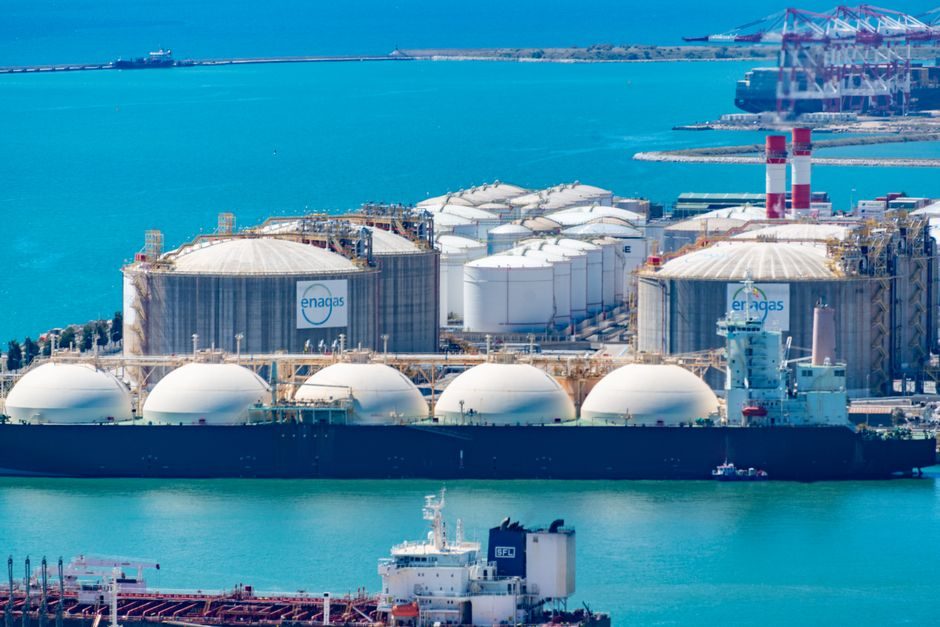
Tank cleaning machines in oil and gas service are specified against four hard engineering constraints: hazardous-area zone rating (ATEX 2014/34/EU or IECEx), pump flow-pressure band, nozzle/jet impact force, and enclosure ingress protection — most fixed units ship to IP65 minimum and tank-internal skids to IP68 [S1][S4].
The 2026 sourcing landscape splits into three tracks: capital equipment from European machine-tool OEMs and cleaning specialists, midstream hydroblasting and chemical-cleaning service contractors, and short-term hire fleets for shutdown turnaround windows [S2][S3][S4]. Storage-tank cleaning alone is treated as an end-to-end waste-management package, with most integrated providers bundling sludge removal, jetting, vacuum recovery, and wastewater treatment rather than selling the tank cleaning machine as a standalone SKU [S4].
Hazardous-area zone classification and motor certification
Electrically driven tank cleaning heads, spray balls, and rotary jet heads installed inside hydrocarbon storage must be rated for the tank's classified zone — typically ATEX 2014/34/EU Category 2 (Zone 1) for fixed-internal units, with Category 3 (Zone 2) acceptable for external wash-down skids on bonded and grounded service [S1]. Pneumatic and hydraulic drive remains the default for the most aggressive Zone 0 internal service because it eliminates the ignition source entirely; air-driven rotary heads commonly operate at 3-7 bar supply with consumption in the 0.3-1.0 m³/min band [S4].
For service-vessel de-rating, IECEx-certified fixed cleaning machines on FPSO turrets and drilling rigs are now standard procurement language, and procurement teams increasingly demand dual-marked units (ATEX + IECEx) so the same asset can be redeployed across North Sea, West African, and Australian jurisdictions without re-certification [S1]. Material traceability on wetted parts to NACE MR0175 / ISO 15156 is also a hard requirement whenever H₂S partial pressure exceeds 0.0003 MPa, because sour-service cracking of austenitic spray-nozzle bodies has been a documented failure mode on sour crude and amine service tanks [S1][S4].
Flow, pressure, and nozzle-impact engineering bands
High-impact rotary jet heads in crude and slop-oil service are typically sized in the 150-400 kPa wash pressure band at 50-150 L/min flow, with dual-nozzle "knuckle" heads pushing impact force into the 15-40 N per nozzle range so that hard, baked-on hydrocarbon deposits can be removed without entry by personnel [S4]. Higher-pressure hydroblasting — usually 350-700 bar at 20-50 L/min — is contracted out as a service rather than purchased as a fixed machine, because the hose, gun, and pump-skid assembly is too specialised to justify capital cost on a single tank farm [S1].
Medium-pressure chemical circulation, where a hot (60-80 °C) detergent or biodegradable solvent is re-circulated through a spray-ball manifold for 4-12 hours, is specified at 200-500 kPa and flow rates matched to the tank's cross-sectional area; the rule of thumb used by integrated cleaning contractors is roughly 5-8 L/min per metre of tank diameter for a 360° spray ball, and 10-15 L/min per metre for a slotted spray nozzle [S4]. Comparing the three principal options for crude/diesel service: a fixed spray-ball system delivers the lowest capital cost (USD 8,000-25,000 for a 10 m diameter tank) and the longest cycle time (8-24 hours), a rotary jet head sits in the middle (USD 25,000-80,000, 2-6 hours), and contract high-pressure hydroblasting carries no capital outlay but is billed at hourly rates that scale steeply with sludge volume [S1][S4].
Service contractors vs capital purchase vs hire fleet
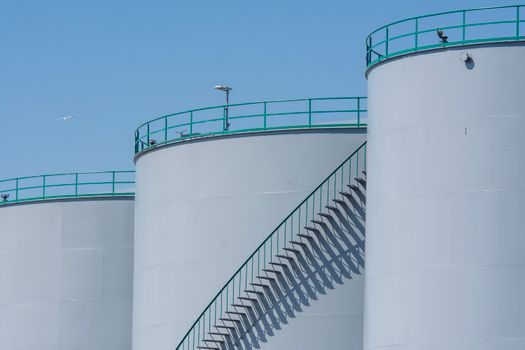
For tanks above roughly 5,000 m³, or for service intervals beyond 18 months, integrated cleaning contractors are specified more often than outright purchase — the bundled package typically includes confined-space rescue, gas testing to LEL / H₂S / O₂, vacuum recovery of hydrocarbon sludge, and on-site wastewater treatment to local discharge consent limits [S4]. For midstream operators running continuous service with tanks in the 500-3,000 m³ band, capital purchase of a fixed rotary jet head amortises inside 3-5 shutdown cycles and removes the mobilisation premium that service contractors add for remote sites [S1].
Short-term hire is the third track: cleaning-machine hire fleets typically stock 200-bar and 350-bar electric and diesel hydroblasting units, wet/dry vacuum skids, and walk-behind scrubber-dryers, with daily rates that make a 7-21 day shutdown window economic for tank farms that clean once every 24-36 months [S3]. The three options are not fully interchangeable — a hire unit will not carry dual ATEX/IECEx marking as standard, so any tank cleaning machine destined for Zone 1 or Zone 2 classified space must be sourced through a certified service contractor or purchased as a purpose-built unit, never hired off-the-shelf [S3][S4]. Procurement teams running shutdown planning alongside structural and containment work also build the cleaning window around the tank container calibration and maintenance schedule, because calibration and cleaning share the same confined-space, gas-test, and scaffolding access scope.
Material selection, sealing, and ancillary filtration
Wetted materials on the spray head and seals are the second-highest failure driver after motor burn-out, with stainless steel 316L as the baseline for hydrocarbon service, alloy 20 or alloy 825 stepping in for sour crude, and PTFE/FKM seal pairs handling the 60-80 °C chemical-circulation envelope [S1][S4]. For amine, glycol, and produced-water service, the industrial gas blanketing regime on the tank roof creates an oxygen-starved, CO₂-rich headspace that drives stress-corrosion cracking in standard 304 stainless; suppliers therefore default to 316L or higher-nickel grades whenever the tank's stored fluid has any aqueous phase at all [S1].
Filtration of the re-circulated wash fluid is increasingly built into the cleaning skids as a closed-loop polish stage, using self-cleaning wedge-wire strainers rated to 100-200 µm in the main circulation line and a downstream self-cleaning filter on the chemical feed, which extends nozzle life and prevents the differential-pressure spikes that historically shut cleaning cycles down partway through a 12-hour circulation [S4]. Where the wash water ends up in a vapour-recovery or flare-header system, fixed gas analyzers are tied into the cleaning skid's PLC to interlock the pump against LEL excursions, and operators are starting to request inline LEL / H₂S monitoring as a standard contractual line item rather than a cost-plus add-on [S1][S4].
Trackable signals for the next planning window
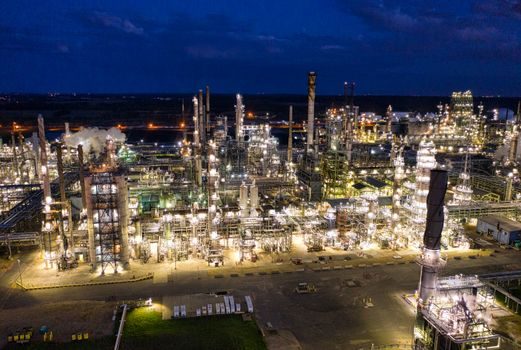
Three signals are worth watching in the second half of 2026: dual ATEX/IECEx re-certification of fixed rotary jet heads as standard OEM offerings, broader stocking of 350-bar Zone 2 hydroblasting units in hire fleets, and the publication of any consolidated API or ISO technical-report update covering automated tank cleaning in crude, LNG, and amine service. Operators planning 2027 turnarounds should confirm whether their preferred service contractor has standing IECEx audit reports and whether the wastewater-treatment sub-vendor is licensed for the destination site's discharge consent [S1][S3][S4].