
A single-row tapered roller bearing carries radial and one-direction axial load simultaneously, with typical dynamic load ratings an order of magnitude higher than comparably sized deep-groove ball bearings of the same bore — the geometry is the reason, not the steel [S2].
The compromise is structural: the rollers and raceways are angled, so the inner and outer rings must be axially clamped against a second bearing (or a second row) to function. That makes installation sensitive and rules out true "fit-and-forget" cartridge use [S3].
What a Tapered Roller Bearing Actually Is
The defining geometry is a frustum-shaped roller running between two cone-frustum raceways on a common apex line; load is resolved along that line into a radial component and an axial (thrust) component [S3]. One row handles one axial direction, so designers almost always mount a second bearing back-to-back (DB), face-to-face (DF), or tandem to take reaction thrust from the other side.
Standardised metric series (30000-family: 30200, 30300, 32000, 32200, 32300) and inch series (HM, HH, M, L) dominate industrial catalogues; 30307 and 30210 are among the most quoted single-row part numbers on Asian B2B sourcing portals [S2]. The four-row configuration — four single rows inside one outer ring — is a heavy-industry specialty used in rolling-mill back-up rolls and large gearboxes, where a single shaft position must absorb radial load up to several thousand kilonewtons [S3].
For context within the broader roller bearing family, the tapered design sits between the deep-groove ball bearing (lower load, higher speed, no axial) and the spherical roller bearing (matched or higher radial, self-aligning, heavier) — picking the tapered variant is almost always a load-path or thrust-handling decision.
Where Tapered Roller Bearings Win
Tapered rollers carry combined loads cleanly because the line contact between roller and raceway generates a contact ellipse an order of magnitude larger than the point contact in a same-bore ball bearing; dynamic load ratings in the 50–300 kN range are routine for 50–100 mm bores [S2].
They are also separable: the inner ring assembly (cone + rollers + cage) and the outer ring (cup) can be mounted independently, which is exactly why automotive wheel hubs, trailer axles, and railway axleboxes use them — the production line can press the cup into a housing and the cone onto a shaft in separate stations [S2].
For high-rigidity gearboxes, the back-to-back or face-to-face pair creates a defined distance piece between the two bearing apex lines, which controls shaft tilt and axial stiffness to within a few arc-minutes when set correctly — a property the crossed-roller guide design pushes further at the cost of load capacity.
Where They Lose to Other Bearings

The same line contact that raises load capacity also raises friction and heat; sustained speed factors (n × dm) for single-row tapered bearings are typically capped around 300,000 mm·rpm for oil lubrication, well below what a sealed deep-groove ball bearing or a cylindrical roller bearing tolerates in the same envelope [S2].
Misalignment tolerance is the second hard limit: the rollers must run on the common apex, so static misalignment between inner and outer raceways is usually held to 1–4 arc-minutes depending on series. The self-aligning bearing family explicitly trades load capacity for ±1.5–3° self-aligning freedom, which is why tapered designs are ruled out on long shaft spans with visible deflection.
Finally, they are not "sealed-for-life" in the consumer sense: even sealed variants need relube intervals in dirty or wet service, and a worn seal path on the large-diameter outer ring is a common field failure — comparable duty on a deep-groove ball bearing with 2RS contact seals can run maintenance-free for the same hours.
Selection Criteria, Side by Side
For the same 60 mm bore, the engineering comparison a designer actually runs comes down to four axes:
1. Combined load capacity — Tapered single-row 30312 typically rates ~170–200 kN dynamic; same-bore deep-groove ball 6312 around 80–95 kN; same-bore cylindrical NU312 around 130–150 kN; the tapered-roller-bearing wins on radial-plus-thrust.
2. Pure radial load with zero thrust — Cylindrical roller or deep-groove ball win on friction and speed; specifying a tapered pair just to carry radial load wastes the thrust capacity and adds friction.
3. Misalignment — Tapered 1–4 arc-min, cylindrical 2–6 arc-min, self-aligning spherical 1.5–3°.
4. Mounting complexity — Tapered high (must set endplay or preload, often with shims or a clamp sleeve); deep-groove ball low; cylindrical medium (one ring can float axially, simplifying the other).
Common Use Cases in 2026 Sourcing
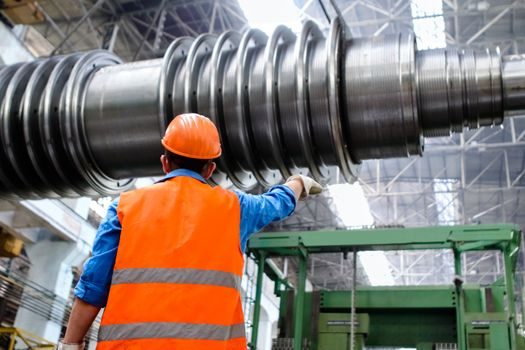
Active factory listings on China B2B sourcing portals show OEM/ODM tapered-roller-bearing output clustered around automotive wheel-hub kits (30200-series), conveyor gearbox input shafts (30300 / 32300-series), and rolling-mill four-row assemblies, with unit prices at 50–100 mm bore in the US $0.50–100 per piece range depending on tolerance class and brand [S2][S4].
Industrial, OEM, medical, rail, and military programmes continue to source single-row assemblies with runout held under a few microns — Taper Roller Bearings of Lexington, KY, a 1972-founded US specialist, advertises maintained tolerances "consistently less than the width of a human hair" for that market segment [S1].
For related heavy-machinery context, the same taper-family geometry appears in road-roller drum bearings, conveyor idler rolls, and large gearboxes — these applications all share the "high radial + one-direction thrust + paired mounting" signature that defines the part.
Failure Modes and What Triggers Them
The three failure modes a maintenance engineer sees on tapered bearings before any other are: spalling from overload or under-lubrication (raceway flakes, vibration rise on the 1× running frequency), micro-spalling from edge loading after a set-screw creeps on the shaft (load shifts to the roller end, contact stress spikes), and false brinelling when the parked machine vibrates through a small amplitude and brinells the raceway at roller pitch [S2].
Each one ties back to the part's design intent: it is a high-load, low-misalignment, correctly-set bearing. If the application violates any of those three, the part wears out early regardless of grease choice. The roller-chain and roller-conveyor families have analogous "use it as designed or it fails" behaviour, for the same geometric reason — line contact is unforgiving.
Verifiable Signals to Track

Watch ABMA STD-20 (the US bearing tolerance standard) and ISO 492 (the equivalent international tolerance class) updates, since 30300-series and 32000-series tolerancing has tightened roughly every 10–15 years and pushes what is specified for the same part number [S2].
Also track four-row tapered bearing capacity ratings from rolling-mill OEM catalogues (typically AIST / Fives / SMS group technical bulletins) — these numbers move with case-hardening steel cleanliness and define the upper edge of what a tapered assembly can do in 2026 [S3].