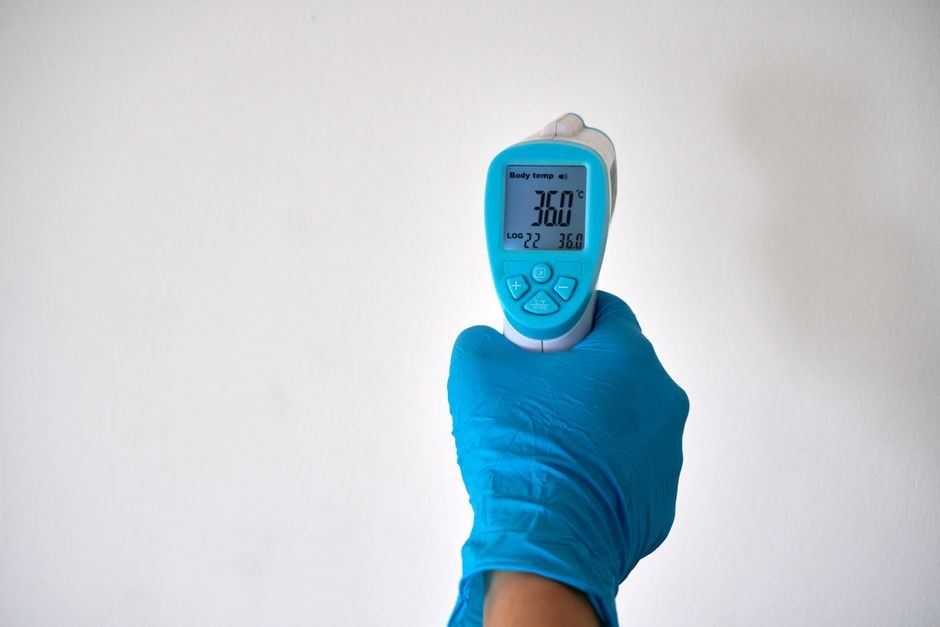
Selecting a temperature controller in 2026 starts with the sensor input and the control law: J/K/T/R/S thermocouples, Pt100/Pt1000 RTDs and linear mV/mA inputs each dictate the front-end, while ON/OFF vs PID determines the steady-state and dynamic behaviour of the loop [S4].
Process-class units from West Control Solutions span single-loop, multi-loop, programmer and limit-controller families, with DIN-rail form factors such as the MAXVU Rail coexisting with panel-mount Pro-16 PID and dual-loop Pro-EC44 units [S1]. Industrial reference platforms from Omron formalise the same selection axes: input type, control mode, output type, and alarm/retransmission options [S4].
Control modes: ON/OFF, self-tune PID, multi-loop, limit
ON/OFF control with a fixed hysteresis is the lowest-cost implementation, but it produces a continuous oscillation around setpoint and is only acceptable where the process can absorb cycling, for example in simple ovens or frost-protection circuits [S4]. PID with auto-tuning is the default for any process that holds a band tighter than about ±2°C, and the integrated over-voltage protection and offset-compensation features found on TX7-ua-class controllers show how far entry-level PID has come [S5].
Multi-function controllers such as the West KS 98-2 combine PID control, process monitoring, sequence control, data logging and alarm handling in a single modular automation platform, which removes the need for a separate PLC and chart recorder on small skid builds [S1]. For safety, a dedicated limit controller is specified independently of the regulating controller, so a sensor or heater fault cannot defeat the over-temperature interlock.
Sensor input, accuracy and front-end constraints
Universal inputs accepting J, K and Pt100 in a single instrument are now standard on mid-range units, with the TX7-ua platform advertising selectable thermocouple and RTD ranges plus a programmable sensor-status indication [S5]. For narrow-band optical filter ovens, Andover specifies a regulation accuracy of ±0.25°C across a 30-60°C control range, ambient operating range 0-30°C, 110-220VAC 50-60Hz at 1.0A, and a 50mm-diameter filter mount as the baseline dimensional envelope [S2].
Input accuracy is a chain: thermocouple cold-junction compensation, RTD lead-resistance error (≈0.385 Ω/°C for Pt100 in 4-wire mode), and ADC quantisation all add up. Where a controller quotes display accuracy, the sensor and wiring budget must be subtracted before sizing the loop; a 0.1% of span controller still leaves the thermocouple wire as the dominant error on long runs [S4].
Output type, comms and panel integration

Output options follow the actuator: relay (typically 5A/250VAC for mechanical valves and small heaters), 4-20mA or 0-10V for thyristor power controllers and proportional valves, and logic-level driver outputs for solid-state relays. Omron's classification scheme explicitly separates output type from control mode, reflecting that the two are independent decisions made at the same time [S4]. Field comms such as Modbus RTU over RS-485, Ethernet/IP or PROFINET are now routinely expected on multi-loop and KS 98-2-class units, while single-loop panels often still ship with only the analog retransmission output [S1].
The controller selection must therefore match the existing plant signal architecture, not the marketing brochure.
Specifications vs duty cycle: who each class is for
An entry-level 1/16-DIN ON/OFF panel is correct for a lab water bath, a tropical aquarium chiller or a hopper frost-stat where setpoint drift of ±1-2°C is tolerable, and where cost dominates. A 1/4-DIN PID with universal input and auto-tune is the workhorse for plastics extrusion, packaging shrink tunnels and food ovens running in the 100-350°C band, which is why Chinese mould-temperature controllers from suppliers such as Wensui Intelligent Equipment cluster in the US$752-878 / piece range and Plaskit-style process controllers sit US$500-10,000 per piece depending on feature set [S3]. A multi-loop or modular unit like the KS 98-2 belongs on skids with several interrelated zones, sequence logic and onboard data logging [S1]. A dedicated limit controller belongs wherever the heater power justifies an independent safety path, typically above 5kW or in any application covered by a safety standard requiring a separate SIL-rated interlock.
For research-grade optical work, the relevant envelope is the Andover 50mm DC filter oven: ±0.25°C regulation, 30-60°C setpoint range, 110-220VAC supply, AR-coated windows included as a 300-450nm, 450-700nm, 700-1200nm or 1200-1600nm kit priced at $116-153 each depending on the band [S2]. This is a useful sanity check for any "±0.1°C precision" claim made on a generic industrial PID.
Comparison of the four common options
On four decision criteria, the four controller classes compare as follows. (1) Steady-state accuracy: ON/OFF = ±hysteresis band, typically ±1-2°C; auto-tune PID single-loop = ±0.1-0.5°C; KS 98-2-class multi-loop = ±0.1-0.3°C with auto-tune; limit controller = trip accuracy around ±1°C, optimised for repeatability rather than tightness. (2) Cost band: ON/OFF panels from a few tens of dollars, mid-range single-loop PID in the low hundreds, multi-loop modular platforms in the low thousands, Andover's DC filter oven controller listing at $1,146-1,508 depending on options [S2]. (3) Comms/IO: ON/OFF = relay only; PID = relay + analog + optional Modbus; multi-loop = full fieldbus plus onboard logging; limit = relay output plus alarm repeat [S1][S4]. (4) Commissioning effort: ON/OFF is minutes, PID self-tune is typically 1-2 loop cycles, multi-loop needs structured engineering, and a limit device must be proven periodically as part of the safety case [S5].
Sourcing, standards and what to verify on the datasheet
Buyers running mould-temperature or plastics-process lines continue to source heavily from Chinese platforms, with the 2026 made-in-China listing showing mould-temperature-controller pricing of US$752-878 per piece from Wensui Intelligent Equipment and broader process-controller pricing spanning US$500-10,000 per piece across verified suppliers [S3]. For a control loop, always confirm the sensor input list (TC types, RTD types, mV/mA ranges), display accuracy in °C not just % of span, sampling/update period, output type and rating, and the comms protocol list with the corresponding firmware version [S4].
Distributors supporting PMA, West and CAL brands carry the full West CS documentation library, with certificates, interface descriptions, 3D CAD and application notes published online, which makes the second-source qualification paperwork easier than for an unbranded Asian panel [S1]. For adjacent process instrumentation such as signal calibrators used to validate the controller's input/output chain, or safety barriers when the controller sits in an intrinsically safe loop, the selection logic is similar: spec bands first, brand second, lead-time third.
Before signing a PO on a 2026 build, three signals to track: published accuracy figures at the operating ambient rather than at 23°C reference, the firmware revision that locks the auto-tune algorithm, and the local distributor's stock position on the specific output option you need — relay-only vs analog-output variants on the same model number are routinely built to different lead-times [S1]. For background on the wider control-law trade-off, the PID vs ON/OFF selection reference lays out the same decision tree with more depth on the tuning side.
Spec-level background on the components involved: linear guide, crossed roller guide, and temperature controller.