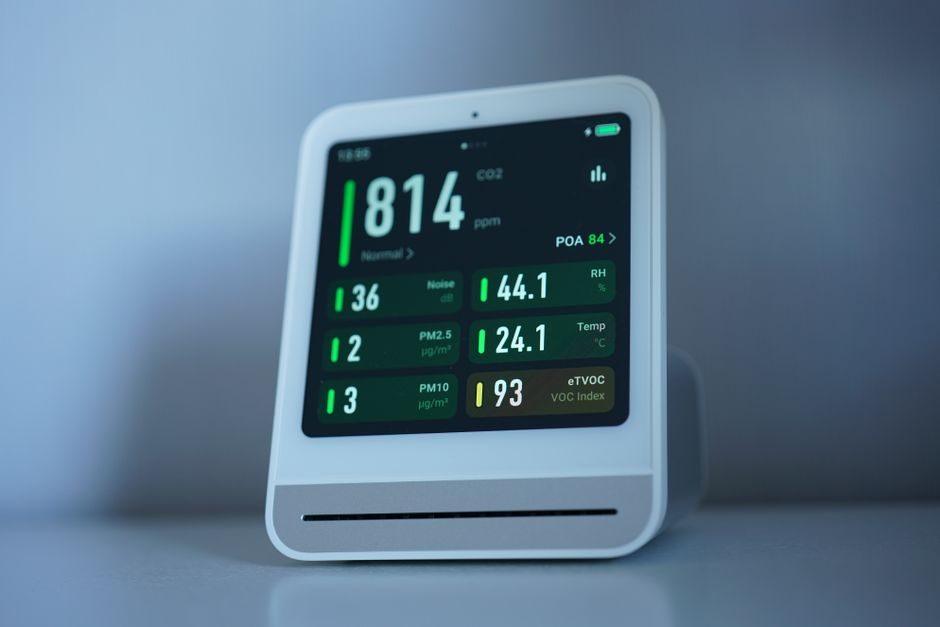
A bench-rate 2026 industrial temperature monitoring device costs between $80 for a single-use USB trip logger (Sensitech TempTale 4 family) and $3,000+ per node for an IP65 wireless transmitter with auto-calibration (VersaTrak ANC series) [S3][S2]. Mid-range plant gateways with Ethernet/4G backhaul — exemplified by the Micromega Recovib Monitor at 4 or 8 channels — sit in the $1,500–$2,800 band when quoted through DirectIndustry [S1].
Those numbers describe hardware only. Real spend on a 100-point pharmaceutical or cold-chain roll-out in 2026 typically lands at $150,000–$400,000 once probes, brackets, network, and cloud software are stacked — a 1.8–2.5× multiple of the bare sensor list, matching the cost-of-ownership ratio seen across comparable condition monitoring system deployments.
Cost Drivers: Sensor Class, Enclosure, and Calibration
Three variables move the price more than any other: sensing element class, ingress protection, and whether calibration is factory-traceable or field-automatic.
Enclosure rating is the second lever. An IP20 panel-mount module suitable for a clean control cabinet is the cheapest variant; an IP65 sealed head rated -40 °C to +75 °C, like the Recovib Monitor, adds roughly 25–40 % to the bill of materials versus the indoor equivalent [S1]. For pharmaceutical and outdoor use, temperature monitor IP65 or IP66 housings are now the de-facto specification rather than an option.
The third lever is calibration. NIST-traceable factory certificates with k=2 uncertainty add $40–$120 per probe on a new order. Patented Automatic Node Calibration (ANC) systems like VersaTrak's push that cost into the firmware and spread it over the asset life instead, which is why their per-node price is higher but lifetime recalibration is near zero [S2]. The trade-off is real: pay $300 up-front per probe, or $900 up-front and skip three recalibration cycles.
Price Tiers: Single-Use Logger, Plant Transmitter, Modular DAQ
Tier 1, single-use / trip loggers (Sensitech TempTale 4, Berlinger): $80–$260 per device, USB or PDF export, intended for one cold-chain lane. Accessories such as the USB Interface Plus Reader list in the low-hundreds and re-use across thousands of probes [S3]. This is the right tool for one-off lane validation, not for permanent plant monitoring.
Each VersaTrak transmitter reads two temperature points plus door status, so a single device often covers a refrigerator-and-freezer pair [S2]. This is the dominant band for pharmaceutical, food, and laboratory roll-outs in 2026.
Tier 3, modular industrial DAQ (Micromega Recovib Monitor 4/8, multi-channel vibration-temperature safety units): $1,500–$3,200 per chassis with 4 or 8 IEPE/current/voltage input channels, 120 dB dynamic range, IP65 fanless enclosure, and NTP time sync [S1]. Specify this tier when the application mixes vibration, temperature, and current sensing on rotating machinery or structural-health assets, not for clean room point monitoring.
Comparison Matrix Across Common Selection Criteria
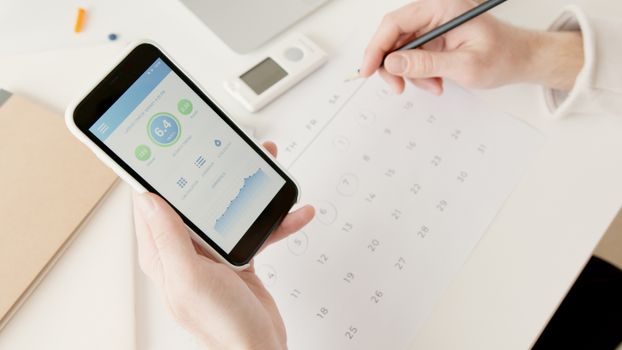
Single-use USB logger, plant wireless transmitter, and modular DAQ diverge sharply on duty cycle, total channels, and lifetime cost. The table below uses the four criteria that move a 2026 buy decision. [S2]
Single-use USB loggers: $80–$260 hardware, 1 channel, 1 trip per device, 1-year typical service life, no integration. Plant wireless transmitters: $450–$1,200 per node, 1–2 channels plus door, 5–10 year service, full BMS/cloud integration [S2][S3]. Modular DAQ: $1,500–$3,200 per chassis, 4–8 channels, 10+ year service, IECEx/ATEX options for hazardous area [S1].
Stated differently, the per-channel cost inverts with tier: $80–$260 per channel for loggers, $225–$1,200 per channel for transmitters, and $190–$800 per channel for DAQ chassis — but only the higher tiers carry the IP65 rating and NTP time sync that plant audits in 2026 expect. For a 100-point cold-chain project, the lifecycle cost gap between Tier 1 and Tier 2 closes inside two years because manual probe swaps and missed excursions outweigh the lower sticker.
Standards, Compliance, and What They Cost
Pharmaceutical, blood-bank, and vaccine cold-chain buyers in 2026 typically reference USP <1079>, CDC "Strive for 5" storage guidelines, and Joint Commission reporting requirements — Autima's "Strive for 5 compliant" framing shows how deeply the CDC language has migrated into Australian environmental monitoring marketing [S4]. NIST-traceable calibration, validated software (21 CFR Part 11 for pharma), and audit-ready reporting are the three line items that push a $500 sensor toward the $900 mark.
For industrial hazardous-area buyers, the gating standards are ATEX 2014/34/EU for EU deployment and IECEx for the rest of the world. ATEX/IECEx-certified temperature heads typically carry a 15–30 % price premium over the same transmitter in a safe-area enclosure, with longer lead times of 8–14 weeks. Buyers who do not need hazardous-area certification should explicitly exclude the ATEX option on the RFQ — leaving it in as a default wastes both budget and schedule.
Wireless systems in 2026 must also address radio regulation: 900 MHz band in the US, 868 MHz in the EU, and 2.4 GHz Wi-Fi worldwide. VersaTrak ships variants of the same transmitter in each band, and the 900 MHz + Wi-Fi dual-radio configuration is the most expensive SKU at roughly 20 % above the Wi-Fi-only version [S2]. For cross-border pharmaceutical logistics, that premium is the cost of one platform everywhere.
Total Cost of Ownership: Hardware Is Roughly 30–50 % of the Bill
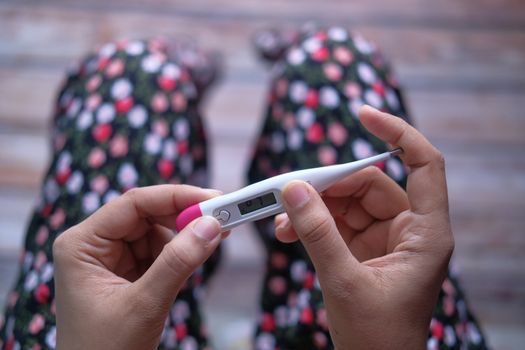
Over a 10-year life, the cumulative operating cost lands at 2–4× the initial purchase order, consistent with the temperature controller total-cost benchmarks used in process-control audits. [S2]
Software is the line item most buyers underestimate. VersaTrak's 24/7 technical support, Joint Commission reporting automation, and Watch-Dog infrastructure-health monitoring are bundled into their node pricing, which is why their per-node list is above mid-market [S2]. A lower up-front node that charges separately for cloud, alerts, and audit exports usually catches up by year three. Calculate on a 10-year total, not on the PO.
Installation labor is the line item most affected by topology. A wired 4–20 mA loop is cheap per meter but expensive to validate, while a 900 MHz wireless mesh installs in roughly half the time and re-routes around facility changes without re-pulling conduit. For retrofits in operating hospitals or food plants, wireless is almost always the lower 10-year TCO despite the higher node price.
Selection Criteria and Who Should Specify What
Specify single-use USB loggers when the use case is one shipment, one lane, one validation — for example, a clinical-trial drug dispatch or a seasonal produce export where a permanent node is not justified [S3]. They are the wrong tool for a hospital pharmacy, a vaccine cold room, or any continuously occupied storage space.
Specify wireless plant transmitters (VersaTrak-class) when the buyer needs continuous monitoring, audit-ready reporting, and a 5–10 year duty cycle in a regulated environment [S2]. This is the dominant 2026 specification for hospital pharmacies, blood banks, vaccine for children (VFC) refrigerators, food processors, and life-sciences warehouses. A spec-first buyer's map for these decisions is detailed in the Temperature monitoring device selection 2026 spec-first buyer's map.
Specify modular industrial DAQ (Recovib Monitor-class) when the monitoring scope extends beyond temperature into vibration, current, or structural-health channels on rotating equipment or remote assets [S1]. This is the correct tier for petrochemical, wind, and heavy-industry buyers who already operate linear guide and crossed-roller guide condition monitoring infrastructure and want a single platform.
Buyers comparing 2026 capital projects should also revisit relay protection cost benchmarks such as the Motor Protection Relay Price & Cost Breakdown 2026 — many of the same panel-space, IP rating, and certification levers apply, and aligning the RFQ template across relay and temperature buys typically yields a 10–15 % volume discount from a single vendor.