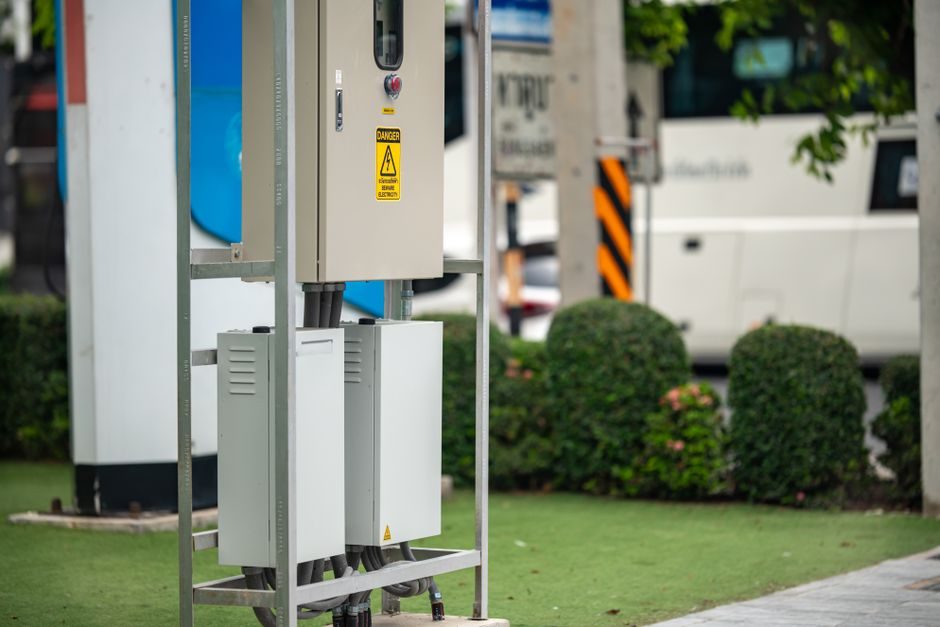
Factory-floor price for a basic three-phase thermal overload relay sits at US$47-50 per piece at 1-piece MOQ, while electronic motor-management relays with communication list at US$100-180 per piece, observed on China B2B platforms on 2026-07-12 [S3]. Commodity general-purpose intermediate relays — sometimes used as auxiliary stages in protection chains — drop to US$5.00 per piece at 1-piece MOQ from Zhejiang OEM Wenzhou Zhechi Electric [S7].
Tripping-current range alone spans two orders of magnitude: TECO's RHU/RHN thermal series covers 0.1 A to 38 A in a contactor-mounted footprint with manual or automatic reset, complying with IEC and China GB standards and holding CSA, UL, CE, and RoHS certificates [S1]. That current envelope — not the unit price — usually decides whether a single relay suffices or whether a current transformer step-down is required upstream.
Price Tiers by Function Class
Three functional classes dominate 2026 sourcing catalogs: thermal overload, electronic motor protection, and intelligent/communication-capable relays [S1][S3][S4]. Thermal overload blocks sit at the entry tier, with electronic protection in the mid-tier and communication-protocol digital relays (Modbus, PROFIBUS, Ethernet) at the top tier, where Littelfuse publishes a motor & pump protection selection guide grouping ground-fault, phase-loss, and load-side monitoring into one relay family [S4].
A plain thermal relay like the TECO RHU/RHN with trip class 10A, phase-failure protection, 0.1-38 A range, and IEC/GB dual compliance falls at the entry tier; Hangzhou Antin Power Technology lists a protection relay motor at US$100-180 per piece, and Changzhou Sanghao lists a similar unit at US$47-50 per piece, both with 1-piece MOQ on the Made-in-China portal as of 2025-07-13 listings [S1][S3]. The four-fold price gap between the two Made-in-China listings with identical MOQ reflects feature differentiation — communication protocol, display, and I/O count — rather than core thermal-mechanism cost.
What Drives the Cost Up or Down
Four cost drivers move the relay price more than anything else: current range and trip class, communication protocol stack, certification scope, and order volume tier [S1][S3][S4]. Trip class 10A versus 20A changes bimetal alloy mass and calibration time; adding Modbus RTU or Ethernet/IP adds a microprocessor, isolation barrier, and firmware stack; ATEX/IECEx certification for hazardous areas adds third-party test fees that frequently exceed the relay's raw BOM.
Order volume acts as a hard multiplier: a single-piece MOQ at US$100-180 per piece collapses to a per-piece cost that can drop below one-fifth of that figure at 1,000,000-carton annual capacity, as Wenzhou-area OEMs advertise for protection relays alongside AC drives, VFDs, soft starters, and SVG/Statcom units [S2][S7]. Certification scope is the silent cost — a CE-marked relay suited to a panel builder in a dry control room is materially cheaper than a relay carrying UL listing for North American industrial machinery plus CSA for Canadian sites, even at identical ampere rating [S1].
Selection Criteria: Matching Spec to Motor

Match relay current range to motor full-load amps (FLA) with the relay set at roughly 1.15× FLA for normal-duty service, and verify trip class against motor thermal-withstand time [S1][S4]. A 0.1 A minimum tripping current lets a single device cover fractional-horsepower sub-100 W motors up through 38 A direct-mount units — a 380-fold span that consolidates stocking SKUs [S1].
For motor-management relays with embedded ground-fault and phase-loss logic, Littelfuse organizes its catalog around feeder protection, arc-flash protection, and pump controls as separate function blocks — the same physical relay platform typically accepts option modules that add ground-conductor monitoring, resistance grounding/NGR monitoring, and remote indication without replacing the base unit [S4]. When the upstream motor protection relay choice cascades into a feeder or transformer protection scheme, the relay's communication protocol becomes the binding constraint, not its current rating.
Total Cost of Ownership Beyond Unit Price
A US$50 thermal relay that fails to coordinate with downstream industrial relay logic and trips a healthy 30 kW motor costs more in one lost production hour than the entire panel's relay inventory for a year. The economic argument for digital motor protection — versus a basic thermal block — rests on unplanned-downtime avoidance, energy-cost visibility, and predictive-maintenance data, not on unit price. [S3]
Lifecycle costs hide in three places: spare-parts stocking across a multi-ampere-range fleet, mean-time-between-failure (MTBF) on the output relay contacts that drive contactor coils, and the engineering hours to set and document trip curves on every starter [S1][S4]. A contactor-mounted thermal block with CSA, UL, CE, and RoHS certification can be replaced in under two minutes with a screwdriver; a digital unit with custom firmware setpoints requires a trained technician and a programming tool, so the panel's total installed cost must include commissioning labor. For a quick view of how these costs interact with frame size and trip class, the selection map for 2026 walks the tiering logic in a single chart.
Who Needs a US$5 Relay, Who Needs a US$180 Relay
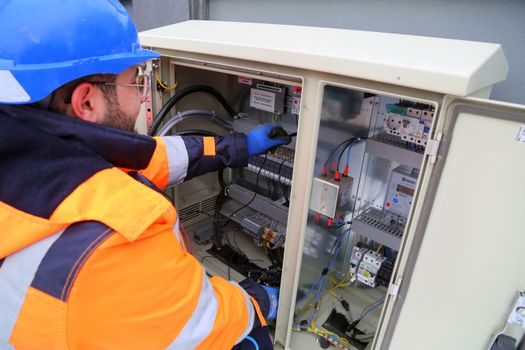
Commodity 5 A / 10 A general-purpose intermediate relays at US$5.00 per piece fit signal-conditioning, logic-interface, and pilot-duty switching roles inside a larger motor-protection scheme — they do not carry motor FLA and cannot replace a thermal or electronic motor protection relay [S7]. At the other extreme, a US$180 digital motor-management relay earns its price in continuous-process plants where one avoided trip event pays for the entire protection panel.
Buyers running a few small pump panels on fractional-horsepower motors can standardize on a US$47-50 thermal unit from a Made-in-China Gold Member manufacturer and capture most of the protection value [S3]. Plants with hundreds of VFD-driven motors, network-connected switchgear, and regulatory pressure for energy reporting should plan for the US$100-180 tier and budget for the communication infrastructure around it [S3][S4]. Watch for two cost signals into late 2026: order-volume tier announcements from Zhejiang OEMs (where [Wanlida](https://m.ecvv.com/product/4174500) advertises 1,000,000 cartons per year on a combined AC-drive / protection-relay / SVG line) and any IEC 60947-4-1 trip-class revisions that would force recalibration of installed thermal fleets [S2].
Spec-level background on the components involved: linear guide.