
A 2026 motor protection relay is a current- or temperature-sensing element that trips a contactor or breaker when winding thermal stress, single phasing, earth fault, short circuit, locked rotor, hot-start abuse, or bearing failure is detected on a 3-phase induction motor [S3].
Industrial induction motors above 250 HP are normally driven on the high-voltage side to keep cable ampacity manageable, and over 90% of installed industrial motors fall into the induction class — which is why the relay tier discussion below assumes a 3-phase AC induction machine unless otherwise stated [S3].
Four Functional Tiers and Where Each One Earns Its Slot
Thermal / bimetal overload relays (class 10, class 20, class 30 trip curves) remain the lowest-cost path for sub-100 A direct-mount service on a contactor, and are most often specified where nuisance-trip avoidance matters more than communications [S1]. Electronic overload relays add adjustable FLA setting, phase-loss detection, and ground-fault indication in a DIN-rail package, with current ranges that commonly extend from 0.1 A to roughly 100 A per module [S1]. Microprocessor-based protection relays — the tier Naidian labels "microcomputer integrated protection" — add RS485, CAN, or 4-20 mA outputs and are specified for sub-35 kV cable lines, transformers, motors, and capacitor banks where a SCADA or PLC backhaul is required [S1]. The fourth tier covers arc-flash relays, ground-fault relays, and NGR monitors that sit ahead of the motor starter and clear arcing or high-resistance ground faults in the feeder before the contactor even closes [S7].
A practical selection rule: thermal for direct-on-line sub-100 A drives where a wiring change is the biggest cost; electronic for adjustable FLA in OEM panel builds; microprocessor for any motor feeding back to a SCADA tag; feeder-side ground-fault or arc-flash for HV switchgear upstream of large motors [S7].
Protection Functions to Map Against Motor Failure Modes
Thermal overload protection, short-circuit protection, single-phasing protection, and earth-fault protection form the four mandatory elements that any relay marketed for HT induction motors is expected to provide [S3]. Beyond those, no-load running protection and bearing-temperature trip (via a BTD) are the two value-adds that separate a mid-tier electronic unit from a microprocessor-based one [S3].
Locked-rotor and permitted-hot-start count protection is a different problem: a thermal curve alone cannot distinguish a stalled rotor from a normal acceleration, so units that integrate a stalled-rotor timer plus a hot-start counter are the ones a buyer specifies on compressor or crusher duty [S3]. Bearing-failure prevention is best handled by a temperature detector in the bearing housing wired to a trip input on the same relay, not by an analog gauge on a panel [S3].
Current Sensing, Thermistor Inputs, and Ground-Fault Methods
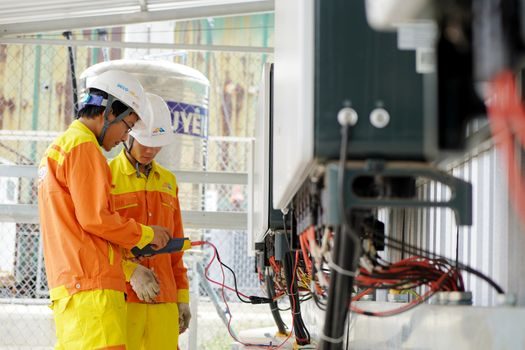
Most relays in the first three tiers operate on the basis of current taken by the motor, using internal CTs or external CTs sized 1.5-2x motor FLA for overload and short-circuit elements [S3]. The KRIWAN INT69 family is a common example of a relay tier that takes a PTC thermistor input directly from the motor windings and trips on winding temperature, which is a different sensing principle from current-based overload and is preferred on small hermetic compressor motors where locked-rotor current can be hard to distinguish from supply transients [S5].
For the feeder-side ground-fault and NGR-monitor tier, the relay monitors zero-sequence current or the voltage across a neutral grounding resistor, and the protection philosophy is to clear high-impedance arcing faults before they escalate — a different objective from the motor-terminal overload units described above [S7].
Price Bands, MOQ, and Sourcing Reality on China Platforms
On Made-in-China.com, motor protection breakers (MPCB class) cluster at US$6.80-24.00 per piece at 1,000-piece MOQ from Shanghai-based suppliers as of 2026-05, which is the realistic price band a buyer should anchor a tender against when sourcing in volume [S6]. Wanlida's product line — AC drive, VFD, soft starter, SVG/Statcom, active power filter, protection relay, and SVC — ships at a 10-carton MOQ with 1,000,000 cartons/year supply ability, illustrating the scale of Chinese relay and motor-control OEMs competing in the same enclosure-and-busbar ecosystem [S4].
Pump-OEM accessory pricing (Wilo, listed 2026-05) is a different signal: motor protection relays sold as pump accessories are priced per pump skid rather than per relay piece, so any cross-shop against the MPCB-band number above must adjust for skid-level bundling [S2].
Selection Criteria: Who Needs Which Tier

A buyer specifying on a sub-5.5 kW pump or fan motor in a non-networked panel should stay on thermal or electronic overload, accept the loss of remote trip diagnostics, and accept that ground-fault coordination will be provided by an upstream breaker [S1]. A buyer integrating a 22 kW+ motor into a PLC/SCADA system should specify a microprocessor relay with at least one serial comms port, an adjustable phase-loss timer, and a bearing-temperature trip input — the four-port communication interface (RS485/CAN/4-20 mA) is the differentiator that justifies the price step from electronic to microprocessor [S1].
A buyer building an HV switchgear lineup feeding large motors (above 250 HP / 186 kW) must add a feeder-side ground-fault or arc-flash relay regardless of the motor-tier choice, because the contactor and overload relay cannot clear a feeder arc fast enough to meet arc-flash energy targets [S3][S7]. The pump-protection relay family (e.g. KRIWAN INT69) is the right answer only when the motor has integral PTC thermistors and the buyer is willing to wire the thermistor leads back to the relay — substituting a current-only relay on a PTC-equipped motor loses the temperature-trip function entirely [S5].
Options Compared on Four Decision Criteria
Thermal/bimetal overload: lowest unit cost, no remote comms, no ground-fault element, limited to sub-100 A direct-mount. Electronic overload: adjustable FLA, phase-loss trip, optional ground-fault, mid-band price, no event log. Microprocessor protection: full function set plus RS485/CAN/4-20 mA and event log, premium price, requires configuration software. Pump-thermistor relay (INT69 class): PTC input-based, fast winding-temperature trip, intended for small hermetic and OEM pump motors, no overload current element [S1][S3][S5][S7].
Decision logic: if FLA is below 100 A and the panel has no SCADA tag, pick thermal or electronic; if a SCADA tag and event log are mandatory, pick microprocessor; if the motor is small, hermetic, and PTC-equipped, pick a thermistor-input pump relay; if HV switchgear arc-flash energy is the constraint, add a feeder-side ground-fault or arc-flash relay on top of whichever motor-tier relay is chosen [S1][S7].
Limits, Failure Modes, and What Not to Specify
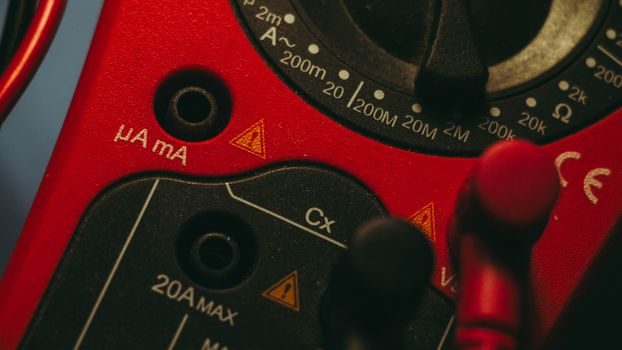
A thermal/bimetal relay cannot tell a hot start from a normal restart, so a buyer who needs hot-start limiting on a crusher or compressor must move up at least one tier or accept nuisance trips [S3]. A current-only relay on a heavily-loaded, low-voltage-supply motor will trip on undervoltage-induced thermal stress, but a buyer who actually wants to alarm on the undervoltage itself must add a voltage-monitoring element, which a current-only relay does not provide [S3].
Specifying a pump-thermistor relay on a motor without PTC thermistors wastes the unit entirely — the trip input will see an open circuit and the relay will not function as intended [S5]. Specifying a microprocessor relay on a sub-5.5 kW DOL pump is over-spending; the comms and event log will never be read, and the thermal or electronic tier would deliver the same trip protection at a lower unit cost [S1].
Standards, Sourcing Signals, and Trackable Next Moves
Cross-reference any relay shortlist against the relevant IEC 60947 series for low-voltage switchgear and controlgear, and against IEC 60255 for measuring relays and protection equipment on the MV side; relay classes 10, 20, and 30 trip curves should be named on the data sheet and matched to motor starting time [S3]. Comm port selection (RS485 vs CAN vs 4-20 mA) should be locked to the SCADA RTU or PLC card already on the panel, not chosen from the relay catalog [S1].
Trackable signals to watch: manufacturer data sheets that name the IEC 60255-151 functional standard for overcurrent protection, IEC 60947-4-1 for contactor-mounted overloads, and IEC 61850 for substation comms, all of which are common on microprocessor relay data sheets but rarely cited on thermal-bimel units. A related spec lens that affects panel layout is covered in linear module types and classifications, which pairs with enclosure-and-busbar decisions when the relay is being mounted into a larger starter panel. For grounding and ground-fault coordination on the feeder side, the arc-flash and NGR-monitor tier sits in the same panel ecosystem as the protection relay, and the selection logic for feeder-side monitoring is laid out in power monitoring system vs temperature monitoring device spec-driven decision map. A wider read on Chinese OEM platform sourcing behaviour is given in cleanroom system suppliers 2026 India and China vendor map with spec boundaries, which carries the same MOQ-and-supply-ability logic that shows up in the Wanlida and MPCB price data [S1][S4][S6][S7].
For the relevant spec sheets and selection criteria, see motor protection relay, linear guide, and microcomputer protection.