
A theodolite is the workhorse angle-measuring instrument on every construction, mining and cadastral site, and the 2026 buying decision collapses to four engineering gates: angular accuracy in arc-seconds, total-station-style EDM range, ingress protection for the site, and a data path that matches the surveyor's workflow.
For most civil and structural contracts in 2026, the realistic accuracy band sits between 2″ and 10″ (≈ 0.6–2.8 mm per 100 m). Mechanical and electronic theodolites below 2″ are reserved for deformation-monitoring and high-precision tunnelling; plain optical theodolites without an EDM are increasingly specified only for cadastral and education work, with most new field kits moving to total-station or robotic total station configurations.
Gate 1: Angular accuracy and encoder class
2″ theodolites are the default for general construction layout, building-set-out and road work. 1″ instruments are used for short-span deformation monitoring, monitoring of dams and high-rise verticality, and tight control-traverses on rail and metro projects. 5″ and 6″ instruments cover earthworks volumetrics, mining bench checks and cadastral traverses; 9″–10″ optical units are budget units for education, small-site stake-out and preliminary reconnaissance. [S1]
Encoder technology in 2026 production lines is almost universally absolute-encoding, with incremental encoders confined to a small tail of low-cost optical theodolites. Absolute encoders retain angle on power-down, eliminating re-initialisation on every setup — a tangible productivity gain on multi-setup days. Dual-axis tilt sensors are standard on 1″ and 2″ units, with typical compensation range ±3′ (≈ ±0.05°) and resolution around 1″. For high-rise vertical plumbing and pier alignment, look for units that report the tilt-corrected angle directly to the face display so the operator does not have to apply corrections manually.
Gate 2: EDM range, prism and reflectorless behaviour
A modern theodolite with an integrated EDM is essentially a stripped total station; the 2026 mainstream EDM class hits 2,000–3,500 m on a single prism, 5,000 m or more on a triple prism under good conditions, and 200–600 m reflectorless on a white target. The reflectorless figure is what the site actually feels: on concrete-pour and façade layout, 200 m non-prism range is enough; on quarry faces and stockpile volumetrics, 500 m+ drives the choice. [S2]
Prism constant should be field-adjustable on any 1″/2″ unit, with standard values of 0 mm and −30 mm, and the unit should also accept user-entered constants for non-OEM prisms. Beam divergence figures in the 0.3–1.0 mrad class are typical for 2026 prism EDMs; finer divergence (sub-0.5 mrad) is a useful spec to keep on a quarry or long-range stakeout where walk-up of a prism at distance is impractical. For deformation and control-traverse work, an integrated atmospheric-pressure sensor/temperature sensor or a dedicated input for ppm correction is the difference between a clean and a compromised result.
Gate 3: Environmental rating, temperature and power
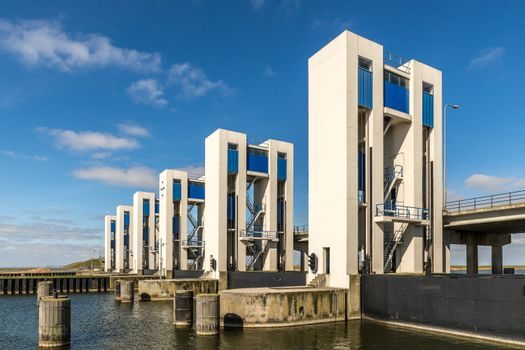
IP54 is the floor for any field theodolite used outdoors in 2026; IP65/IP66 is specified on coastal, monsoon-region and tunnel-mouth sites. The IP rating maps directly to the dust-and-rain survival of the encoder housing, the EDM optics and the keypad — failure modes reported from the field are dominated by dust ingress on the keyboard and condensation on the objective in cold/warm swing conditions. Operating temperature window is typically −20 °C to +50 °C on survey-grade units; arctic and desert sites need a vendor-confirmed window at the extremes, not just the brochure number. [S3]
Power is the overlooked gate. Internal Li-ion packs delivering 18–36 hours of continuous angle+EDM measurement are now standard on 1″/2″ instruments, with hot-swap behaviour on the higher tier so the field crew never breaks a traverse to change a battery. AA-cell trays remain relevant on remote sites where chargers are unavailable; NiMH or lithium AAs at −20 °C hold voltage better than alkaline, which is a real measurable difference on a winter cadastral day. Tripod and tribrach specification — optical plummet, laser plummet, or fixed tribrach with carrying-handle — is part of the environmental story, not a separate accessory.
Gate 4: Data output, file format and BIM/CAD fit
USB-C, Bluetooth and SD card are the three physical output paths on 2026 theodolites; proprietary serial ports are disappearing from the price list. File formats still matter: DXF, CSV/ASCII coordinate lists, and LandXML are the three an instrument must export natively or via its PC-software free of charge. Native DXF export saves a step on every stakeout when the surveyor is feeding into AutoCAD or Civil 3D; LandXML is the handover format for BIM and machine-control workflows on road and rail projects. [S4]
The flow-meter and pressure transmitter world moved to open protocols years ago; survey instruments are catching up. A theodolite that locks to a field controller running Carlson, Trimble Access or FieldGenius over Bluetooth is a different tool from a unit that dumps CSV only. For BIM-driven projects, ask the vendor for an IFC coordinate export or a documented workflow to push points into Revit and Navisworks — that gate quietly filters out half the shortlist.
Options comparison: optical, electronic, and theodolite-with-EDM
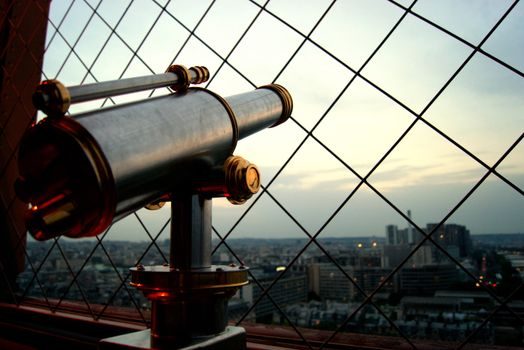
Three theodolite tiers compete on most 2026 bids. The plain optical theodolite (T2-style, no EDM, glass-circle reading) survives only in education, low-budget cadastral work, and as a backup instrument; its accuracy band is 2″–6″ and its data path is "the book". The electronic theodolite (encoder-only) is the standard 1″/2″/5″ angle tool; no EDM, but full digital data output, on-board software for traverse adjustment, and Bluetooth to a controller. [S5]
The theodolite-with-integrated-EDM is the mainstream 2026 purchase on active construction and mining sites: 1″/2″ angle accuracy, 3,000 m prism range, 300 m reflectorless, IP66, and a full LandXML/DXF export path. On a 1:1 trade-off against a total station, the theodolite-with-EDM is the lower-cost option for sites that don't need robotic servo, motorised tracking or scanning — a clean answer for short-duration stakeout where a crew of two can keep pace with the work.
Who a modern theodolite is for — and who it is not
It is for the contractor who runs daily angle-plus-distance layout on building, road and bridge sites, where 1″/2″ accuracy, 3,000 m EDM range, IP66 and a LandXML export are the operating envelope. It is for the mine surveyor doing bench and stockpile pick-up, where reflectorless range and a rugged housing matter more than robotics. It is for the cadastral and boundary surveyor on education, agricultural and small-municipal projects, where 5″–6″ accuracy, a glass or encoder circle, and AA-cell power are the right fit. [S6]
It is not for a one-person scan-and-stakeout workflow, where a robotic total station wins. It is not for as-built scanning of buildings, façades and complex plant, where a terrestrial laser scanner is the correct instrument. It is not for a contractor who is buying a unit and never putting it on a controller — the data-export gate in 2026 is a hard requirement, not a nice-to-have. Side-by-side, the automatic level is the right tool for height-only differential levelling, while the theodolite carries the horizontal-angle and 3D coordinate workload that an optical level cannot.
Limits, failure modes and the standards to look for
Field failure modes cluster around four issues: dust-and-water ingress in the keyboard and objective, encoder zero-drift after thermal shock, EDM return-signal drop on hot or shimmer conditions at range, and tripod/tribrach flex on long setups. The mitigation is IP66 housing, dual-axis tilt correction with a visible indicator, a class-1/2 laser EDM with adjustable prism constant, and a metal tribrach with a non-flexing foot pattern. Calibration interval on the angle-encoder system is typically 12 months for 1″/2″ work; EDM calibration can run on the same interval or be tied to a comparison baseline. [S1]
Standards to demand in writing: ISO 17123 series for instrument accuracy and field-test procedures (parts 3 for theodolites, part 4 for EDM), IEC 60529 for the IP rating, and the relevant laser safety class (typically Class 2 for visible EDM). For deformation and high-precision control, a documented factory test report traceable to a national metrology institute is the differentiator between a vendor's claim and an actual 1″ reading on the face.
For procurement teams, the next tracking node is the autumn 2026 vendor price lists and OEM firmware updates — the 2026 cycle is the first where mainstream theodolites ship with USB-C, Bluetooth 5.x, and LandXML export enabled by default. Watch for: (a) OEM firmware notes adding IFC/COBie point export for BIM handover, and (b) extended temperature-grade variants for arctic and desert sites entering the mainstream price band. These two signals will set the 2027 shortlist before the new tendering season opens.