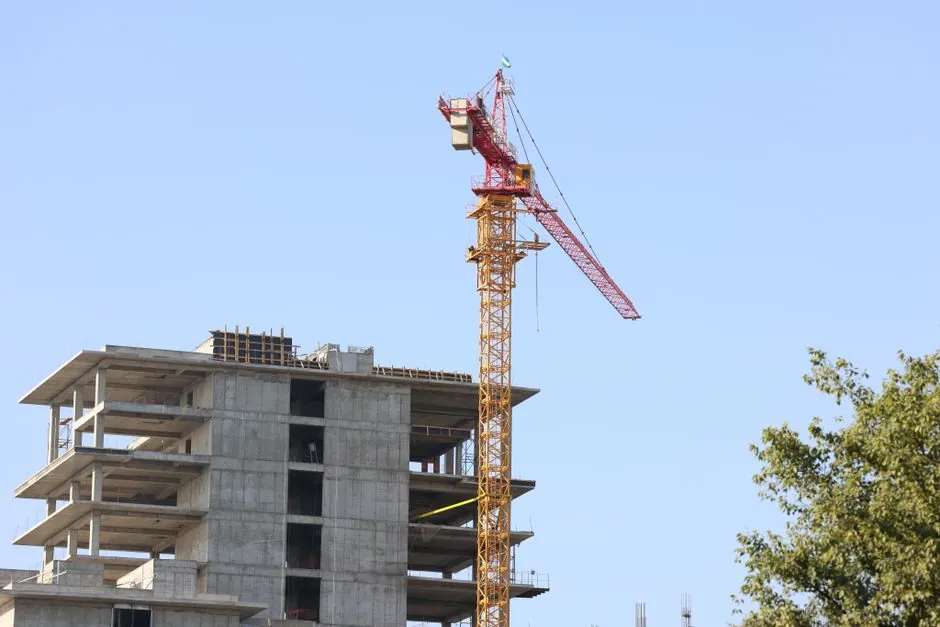
A 2 arc-second digital theodolite is the right starting accuracy class for concrete form alignment, anchor-bolt layout and column erection, matching what the Spectra Precision DET-2K, Nivel System DT-2 and South NT-023 deliver on their published spec sheets [S1][S3][S4]. Below that class, 5 to 10 arc-second units such as the Nikon NE-100 still handle everyday slab work and rebar cage checks at a lower price point [S2].
Concrete work rarely needs a robotic total station. What it needs is repeatable angle reading under site vibration, a vertical-angle display for slope checks, and an instrument that one person can set up between pours. A theodolite is still the cheapest, lowest-training tool that meets all three requirements, which is why contractors keep buying them instead of renting a GNSS rover for every job.
Accuracy classes that map to concrete tasks
2 arc-second horizontal angle accuracy is specified for both the Spectra Precision DET-2K and the South NT-023, with the NT-023 quoting 1 arc-second minimum display and 2 arc-second accuracy on horizontal and vertical circles [S1][S4]. That class covers form alignment on structural slabs, anchor-bolt arrays on foundations, and steel column plumb checks where the typical tolerance band sits in the 3 to 6 mm range over a 10 to 20 m sight.
The Nikon NE-100 series sits in the 10 arc-second class and is described as ideal for concrete form alignment, anchor-bolt positioning, and steel column erection, a reminder that site tolerances, not laboratory accuracy, decide which instrument is overkill [S2]. For curb, sidewalk and slab-on-grade work, 10 arc-seconds translates to roughly 5 mm at 100 m, which is well inside typical ACI 117 flatness and plumb tolerances for those elements.
Selection criteria beyond the angle number
Three criteria separate a concrete-job theodolite from a surveying-shop theodolite: vibration tolerance, display readability in low-angle sun or at dusk, and the ability to read a vertical angle as a grade percentage. The Nivel System DT-2 is explicitly described as able to work around heavy machinery that causes ground vibration, which is a real failure mode when a pump truck or vibrator is running 5 m from the instrument [S3].
Vertical-angle readout as percent grade is standard on most digital theodolites in this class, and it is the feature that lets a single operator check slab falls, ramp slopes, and drainage grades without a separate laser. The South NT-023 also supports horizontal angle zero-reset for establishing a working direction and direct entry of a known bearing, which removes a calculation step when the project drawings give an azimuth rather than an internal angle [S4].
For concrete pours that run past daylight, an illuminated reticle and backlit LCD are not optional, they are how the crew keeps working through the last truck. The NT-023 ships with an illuminated display and a laser plummet for fast centering over a rebar pin or form-set hub [S4].
Built-in distance measurement: the hybrid theodolite tier
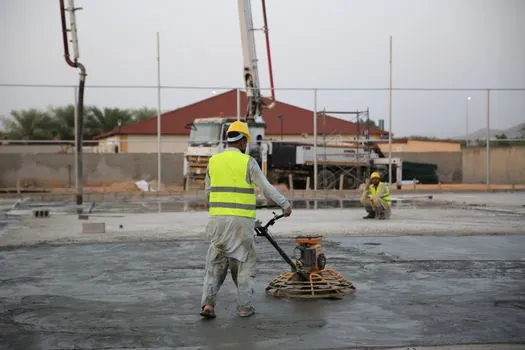
Hybrid electronic theodolites that integrate an EDM (electronic distance meter) close the gap between a plain theodolite and a total station. The South NT-023 measures up to 300 m to a single prism with a stated accuracy of plus or minus (3 mm + 2 ppm times D), continuous tracking at about 0.35 s per reading, and a fine single shot at about 1.5 s [S4]. That is enough range and precision for setting out column lines, verifying form offsets, and checking embankment grades without a second instrument.
Where 300 m is not needed, a 2 arc-second theodolite used with a steel tape and a prism pole still does the same work for a lower capital cost. The decision rule is simple: if the layout includes more than 30 offset measurements per day, the integrated EDM pays for itself; if it is fewer than 10, stick to a basic electronic theodolite and a tape.
Comparison of the four reference models
The four units covered in the source material line up as follows. Spectra Precision DET-2K: 2 arc-second accuracy, digital theodolite with kit tripod, marketed for construction layout, alignment, and grade work [S1]. Nikon NE-100: 10 arc-second accuracy, entry-level digital theodolite for concrete form alignment, anchor-bolt positioning, and steel column erection [S2]. Nivel System DT-2: digital theodolite specified to operate around heavy machinery causing ground vibration, a key concrete-site advantage [S3]. South NT-023: 2 arc-second accuracy, 1 arc-second display, 300 m EDM range to a single prism, plus laser plummet and illuminated display [S4].
For a contractor whose day is formwork and anchor bolts, the NE-100 is enough; for structural-column erection and any job where the layout must survive a building department check, the DET-2K or NT-023 is the safer pick; for sites with active pump trucks and concrete vibrators, the DT-2's vibration-stable design is the practical answer.
Where the theodolite stops being the right tool
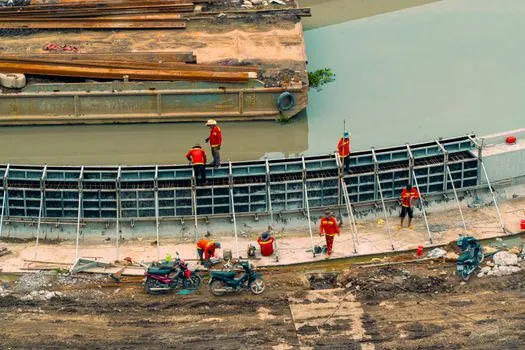
A theodolite cannot do what a total station or RTK GNSS does: it has no absolute coordinate system, so every layout must be tied to a known baseline that the crew has already established. On a bare site with no control, a GNSS rover or robotic total station sets that baseline faster. Likewise, for concrete work on a single small slab, a rotary laser and a grade rod do the elevation control at a fraction of the theodolite's setup time, and the rotating H-plane beam is hard to beat for screed-pipe setting. [S4]
For work at height, such as deck pours on high-rise slabs, a theodolite on a tower below cannot see through rebar mats; a laser-based system or total station with remote-controlled sighting is the usual upgrade path. The theodolite is also a single-operator instrument only as long as the rodman can hear the instrument operator; on noisy pours, two-way radios or a servo-driven total station remove that constraint.
Sourcing and what to verify on delivery
When the instrument arrives, the two checks that catch most warranty issues are the horizontal collimation test (sight a fixed target, plunge the telescope, compare the two readings) and the vertical-index test against a plumb line. Both should be inside the manufacturer's stated accuracy, and any field adjustment procedure from the user manual should be run before the first pour. [S4]
For crews that also pour in low light, verifying that the reticle illumination, the LCD backlight, and (for hybrid models) the laser plummet all function on a single fully charged battery is worth a 10 minute bench check. The South NT-023's published battery life and the Spectra DET-2K's kit configuration with heavy-duty aluminum tripod are the kind of details that reduce field downtime on the first day [S1][S4].
For background on how automatic and digital levels compare on tunnel and structural concrete work, the automatic level selection spec map covers the elevation-only side of the same workflow. For the concrete-mixing and delivery side, the concrete mixer truck selection guide covers the matching equipment decision. The full instrument taxonomy, including the distinction between a theodolite, a transit, and a total station, is in the theodolite encyclopedia entry, which pairs naturally with the cement and concrete materials reference for crews specifying both placement equipment and placement materials.
The underlying component specifications are covered under aerial work platform.