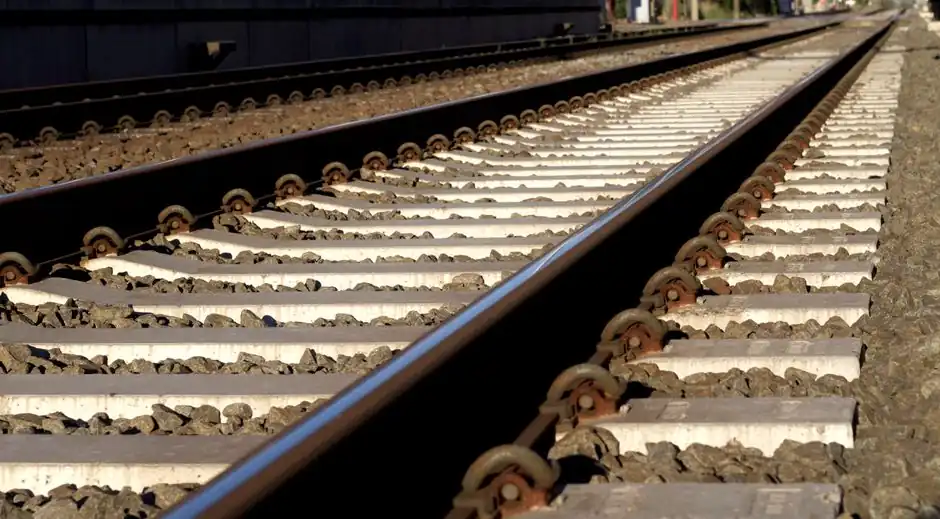
Bridge construction layout in 2026 is governed by a working tolerance of ±1.5 mm at 30 m for rebar and form-rail set-out, with dual-grade rotary lasers the default tool for pier cap, abutment bearing seat, and deck drainage work, per the 2026 source spec map [S4].
For vertical-control benchmarks, optical automatic levels remain the workhorse because they hit 1.5–2.5 mm/km double-run accuracy with magnetic-damped compensators, at a fraction of the cost of a monitoring total station [S1][S2]. Heavy structural moves (launching gantries, bridge-building machines) sit on a different stack: PLC-calculated center-of-gravity plus 3D hydraulic leveling legs, where the cantilever deflection limit, not the surveyor's rod reading, is the binding constraint [S5][S8].
Three Tool Profiles on a Live Bridge Site
Bridge layout splits into three functional classes, and the 2026 spec map lines them up by tolerance and environment [S4]: dual-grade rotary lasers for outdoor compound-slope work on both X and Y axes, single-grade rotary lasers for one-axis drainage and pipe runs, and 3×360° or 4×360° self-leveling cross-line units for indoor formwork, rebar cage alignment, and bearing-seat set-out. Working radius with a tracking receiver reaches roughly 350 m on green-beam rotary units, enough to cover a full bridge span without relocating the instrument [S4]. For pure optical vertical control on benchmarks and deformation monitoring, an automatic level from a Leica-, Topcon-, or alphageo-class manufacturer is still the baseline instrument, with compensator stability and ISO 17123 conformance as the audit gate [S1].
Tool choice is decided by four criteria: working range, slope capability, environment sealing (IP rating), and beam visibility. A dual-grade rotary hits all four but is overkill for a single rebar mat; a single-grade rotary is cheap and adequate for trench falls; a 3×360° cross-line is unbeatable inside formwork but cannot match rotary range outdoors without a pulse-mode receiver [S4].
Optical Auto Level vs Dumpy Level on a Bridge
For establishing pier-cap elevation benchmarks and deformation monitoring prisms, the automatic level replaces the dumpy level because the pendulum compensator collapses setup time: a rough circular-bubble level is enough, and gravity pulls the suspended prism into a horizontal line of sight [S2]. On a live bridge deck where a pile driver, concrete pump, or launching gantry is running within 10 m of the instrument, the dumpy level's rigid cast-telescope architecture is more vibration-tolerant because it has no internal moving parts to drift out of calibration, a real advantage in heavy-transit zones [S2].
For 90% of contemporary civil and bridge work, the auto level gives the better ROI, but spec the instrument to ISO 17123 optical tolerances and confirm compensator range (±3° to ±5° on pendulum units) before committing to a vendor, since a 1.5 mm/km spec on paper means nothing if the compensator slams its end-stop on uneven deck soffit formwork [S1][S2][S4].
Bridge Launching Gantry Leveling: PLC Plus 3D Hydraulic Legs
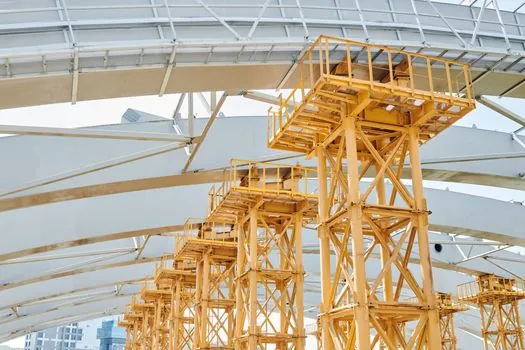
Bridge launching gantries and bridge-building machines (BBM) carry their own leveling problem, separate from surveying: the gantry must stay level while a 100+ tonne girder is fed through it, otherwise the cantilever deflection margin collapses. The 2026 design pattern is a PLC that continuously calculates the shifting center of gravity, paired with hydraulic stepping middle legs and a 3D hydraulic leveling system that reads longitudinal and cross slope in real time [S8].
For the bridge-building machine class specifically, WTAU's automatic leveling system replaces manual support-screw adjustment with an electrical control loop that auto-adjusts leg length to the current pier slope, then drives the track beam through fulcrum-position and level-adjustment cycles without operator iteration, with load sensors validating that remaining fulcrums have seated before the next lift [S5]. The fuzzy-PID academic literature on military-bridge leg leveling converges on the same architecture, with the leveling accuracy error and cross/longitudinal angle as the controller inputs driving the hydraulic actuator outputs [S9].
Decision Criteria, Tolerance Bands, and Vendor Map
Spec the tool to the worst-case tolerance on the bridge, not the headline accuracy: deck-screed rail at ±1.5 mm at 30 m for rotary work, ±1/8 inch (≈3.2 mm) at 10 m for indoor 3×360° cross-line layout, with IP54 as the typical minimum for construction dust and water exposure and a tighter seal for rain-prone pours [S4]. Self-leveling range separates pendulum (±3° to ±5°) from electronic-servo (±5° to ±8°) instruments, and the wider electronic-servo window is what allows set-up on rough deck soffit formwork or battered rebar chairs without re-shimming [S4].
Vendor positioning is layered: Leica Geosystems (Heerbrugg), Topcon (Tokyo), and Trimble (Westminster, CO) own the high-precision end with ISO 17123-class optics and machine-control integration; alphageo, South, and Pentax Precision cover the mid-range optical segment; Spectra and Bosch Professional cover the cross-line laser and interior fit-out tier [S1]. For the structural-machinery side, WTAU, Chinese girder-equipment OEMs, and the academic fuzzy-PID literature all point to the same PLC + hydraulic leg stack, with the binding spec being maximum cantilever deflection at full outreach, not the leveling sensor's resolution [S5][S8][S9].
Failure Modes, Environment Limits, and Cross-Reference Spec Maps

The recurring failure mode on a bridge site is compensator or servo end-stop on uneven formwork, which manifests as a 2–4 mm elevation error that the operator reads as instrument drift. Spec the self-leveling range to at least ±5° if the laser will sit on rebar chairs or battered soffit panels, and add a pulse-mode receiver if the working radius must clear 200 m of wet deck [S4]. For tunnel segments, the optical automatic level selection logic is similar, with the same ISO 17123 and ±1.5 mm/km envelope; see the automatic level spec map for tunnel construction for the underground-specific case. For maintenance of the approach slabs and expansion-joint headers after handover, the tolerances relax and the toolset shifts toward short-range rotary and cross-line units, covered in the automatic level spec map for road maintenance.
Adjacent spec maps cover the supporting equipment on a bridge job: construction machinery and equipment selection rules for the BBM class, and overhead bridge crane duty-cycle selection when the deck-precast yard is feeding the span. Trackable signals for the next cycle are published updates to IP and beam-color guidance on the major rotary-laser product lines (Leica, Topcon, Spectra, RedBack) and any tightening of the deck-screed working tolerance below the current ±1.5 mm at 30 m benchmark, while on the structural side the watch item is wider deployment of PLC-calculated CoG leveling on launching gantries, replacing the last manual leg-shim cycles on multi-span continuous decks [S4][S8].