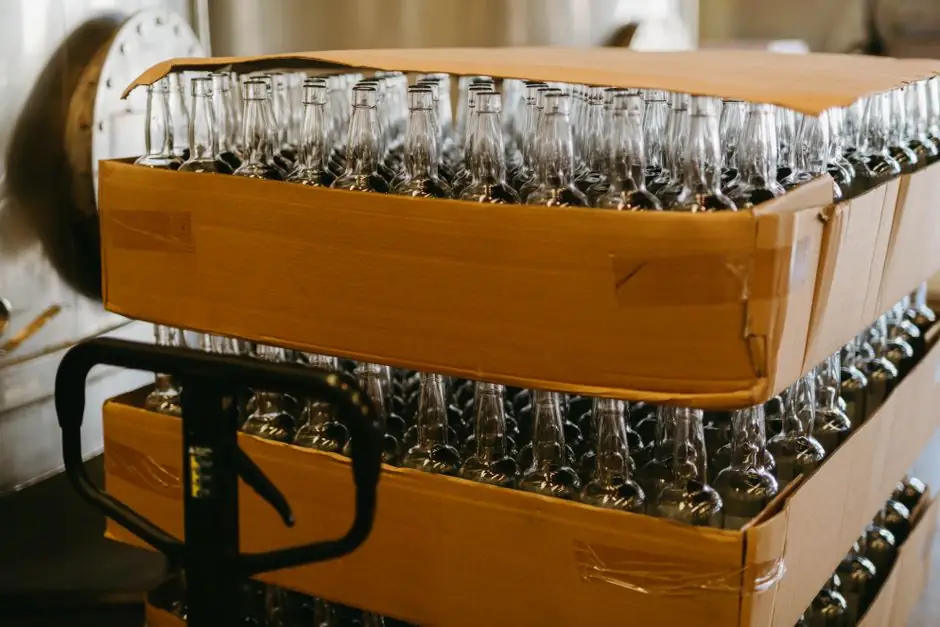
On a typical horizontal form-fill-seal (HFFS) or vertical form-fill-seal (VFFS) packaging line, the bearing that fails first is almost always a thrust bearing, not a radial one, because indexing cams, sealing rollers, and film-draw systems push axial load onto a bearing that was specced as a radial unit. The selection problem is therefore not "what size" but "what bearing type matches the four spec gates of a packaging line": axial load, speed, lubrication, and cleaning exposure.
Three families cover roughly 90% of packaging-line thrust-bearing applications: combined axial/radial rolling bearings (the YRT family), single-direction angular contact ball bearings, and cylindrical roller thrust bearings. Each maps cleanly to a different station on the line, and each has a different failure mode when misapplied. For a refresher on the basic physics, see the thrust bearing reference page, and for the ball bearing sub-family that handles the lower axial loads.
Where the thrust load actually comes from on a packaging line
On indexing conveyors and rotary table accumulators, axial load is not a parasitic load; it is the primary load, set by the turret weight plus the product weight plus the cam-follower reaction force, and the standard countermeasure is a combined bearing that takes axial and radial load in one assembly [S2]. On a VFFS film-draw station, the load is much lower but is reversing every cycle, so a single-direction angular contact unit mounted in a back-to-back DB arrangement is the usual pick. On a heat-seal jaw, the load is steady, the speed is low (often under 50 rpm), and the temperature is high (up to roughly 220 degrees C for polypropylene film), which rules out standard 2RS rubber-sealed units in favor of metal-shielded or open variants greased with high-temperature EP2 lithium-complex or, on continuous-duty lines, with PFPE perfluorinated grease.
Lubrication regime is the single biggest separator between a bearing that lasts 5 years and one that fails in 5 months. On dry-end corrugated and paper lines, where dust and fiber contamination are unavoidable, sealed-for-life 2RS units dominate because the alternative (re-lubrication) introduces a contamination path that degrades the packaging material surface. On wet-end rinsers, fillers, and any stainless-steel hygienic zone, only wash-down-rated sealed bearings (typically with stainless races, food-grade H1 grease, and IP69K-class sealing) are acceptable, and most lines specify these even where the axial load is light.
The four spec gates: load, speed, lubrication, environment
Gate 1, axial load. For indexing turrets, the equivalent dynamic axial load Ca is typically in the 20 to 80 kN range for a mid-size (400 to 600 mm table) YRT-style unit, with static axial load ratings C0a in the 60 to 200 kN range [S2]. For conveyor-shaft and film-draw stations, Ca values drop to the 5 to 20 kN range and the angular contact 30-series or 32-series is sufficient. Gate 2, speed. YRT combined bearings are typically rated for 200 to 1,000 rpm continuous, which fits most packaging turrets; but a high-speed rotary labeler running above 2,000 rpm needs a different sub-family entirely, usually a high-precision angular contact or, where axial stiffness is the binding constraint, a cylindrical roller thrust bearing.
Gate 3, lubrication. Grease-packed sealed (2RS) is the default for any line that runs a wash-down or is in a hygienic zone, because the alternative grease path becomes a food-safety deviation. Re-greasable open or shielded (2Z) bearings are still specified on dry, dust-controlled sections where the bearing sits in a remote gearbox or a sealed pillow block. Gate 4, environment. On lines that handle aggressive product (acidic sauces, solvents, CIP chemicals), 440C stainless or, for higher loads, corrosion-resistant tool-steel races with PTFE or fluoroelastomer seals are the entry ticket; standard chrome-steel bearings will fail by pitting within months in a 5% NaCl CIP cycle.
Comparing the three main bearing types on packaging-line criteria

The following comparison is the core of any spec conversation, and it should drive the part number: combined axial/radial (YRT family) is the only choice for moderate-to-high axial load on a slow-to-medium-speed indexing table, with the trade-off being larger envelope and higher cost; single-direction angular contact (7000C, 7200C, 7300C series) is the workhorse for low-to-moderate axial load at higher speed, but it cannot take pure radial load, which forces a paired radial bearing; cylindrical roller thrust (80000 series, e.g. 81100, 81200) handles the highest axial loads in a compact envelope but is sensitive to misalignment and demands tight housing tolerances, which is why it is rare on packaging lines outside of large gearbox inputs. [S2]
For a wider view of how the ceramic option compares to all-steel, see the ceramic bearing reference; for end-of-line pallet handling, the same load-class thinking carries over to the conveyor drivetrain that interfaces with the packaging machine.
Packaging-line specific failure modes and how to spec against them
Failure mode 1, false brinelling. Indexing turrets vibrate at standstill on weekends and holidays, and the micro-motion between balls and race under vibration (no rotation) brinells the race in days. Counter-spec: a YRT-style unit with a heavy-sectioned outer ring, a high static load rating, or a backing spacer that keeps the rollers loaded even at zero rotation. Failure mode 2, grease washout. On a daily CIP wash-down, standard lithium-soap grease is gone in weeks; counter-spec is a sealed bearing packed with water-resistant calcium-sulfonate complex grease, or a food-grade H1 aluminum-complex grease, on hygienic lines. [S1]
Failure mode 3, seal failure from heat-seal radiation. On VFFS seal jaws, 2RS rubber seals degrade at the rated 120 degrees C cap, and the actual surface temperature can hit 180 to 200 degrees C; counter-spec is a metal-shielded (2Z) bearing with high-temperature EP2 or PFPE grease, or, on a retrofit, a bronze-cage variant with no seal. Failure mode 4, shaft current fluting. None of these failure modes show up on the OEM's basic dimension sheet, which is why the spec must be carried into the purchasing document, not just the catalog.
Selection workflow for a new packaging line
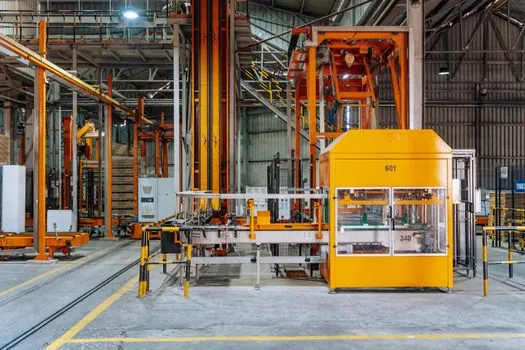
Step 1, identify the station. Turret or indexing table: combined YRT. Conveyor idler or drive shaft with moderate axial: 30-series angular contact. Film-draw or sealing nip: 20-series or 70-series angular contact, paired, with the seal spec driven by temperature. Gearbox input/output: cylindrical roller thrust, only if the axial load justifies the cost of the tight housing. Step 2, compute the equivalent dynamic axial load Ca from the actual cycle, not the catalog maximum, and apply a safety factor of 1.2 to 1.5 for indexing duty and 1.0 to 1.2 for steady sealing-roller duty. [S2]
Step 3, match lubrication to the cleaning regime. Wash-down or hygienic: 2RS, food-grade H1 grease, stainless option. Dry dust-controlled: 2RS or 2Z, EP2. High-temperature seal-jaw: 2Z, high-temp EP2 or PFPE. Step 4, match material to corrosion exposure. Neutral product: standard 52100 chrome steel. Acidic/aqueous/CIP: 440C stainless or coated. Step 5, lock the supplier to a single brand family per line to keep spare-parts inventory to one or two part numbers per station. For the wider selection framework across industrial sectors, the Thrust Bearing Selection for Cement Plants: 2026 Spec Map piece covers the heavier end of the load spectrum, and a related view of Engineering Plastic Selection for Rail: 2026 Spec Gates and Grade Map is useful where polymer wear strips or guide rails sit against the same shaft the bearing supports.
Sourcing and standards to anchor the spec
Two ISO families anchor almost every spec. ISO 15 covers the boundary dimensions and tolerances of radial and angular contact ball bearings and is the reference for the 7000C and 7200C series typically used on packaging lines. ISO 104 covers cylindrical roller thrust bearings, which is the family for the 80000 series. For combined axial/radial units (YRT family), the YRT designation itself is a de-facto industry standard with two rows of axial rollers and one row of radial rollers, and published ratings are directly comparable across the three to four suppliers that make the type [S2].
For hygienic lines, FDA 21 CFR 178.3570 covers incidental food-contact lubricants and is the regulatory hook for any H1 grease spec. For wash-down, the IP code on the bearing assembly (not the bearing itself, which is usually IP6K7) is the binding spec, and IP69K is the practical target for daily high-pressure cleaning. The packaging machine builder's documentation should always carry the cleaning regime as an explicit clause, not a footnote, because the wrong seal or grease choice invalidates the warranty on the packaging machine drive train, and replacement cost on a modern VFFS head is in the 8,000 to 25,000 USD range for the bearing plus the disassembly labor.
Both are predictable from current supplier roadmaps, neither requires a spec change today, and both are worth verifying against the next quote cycle on any new packaging line.