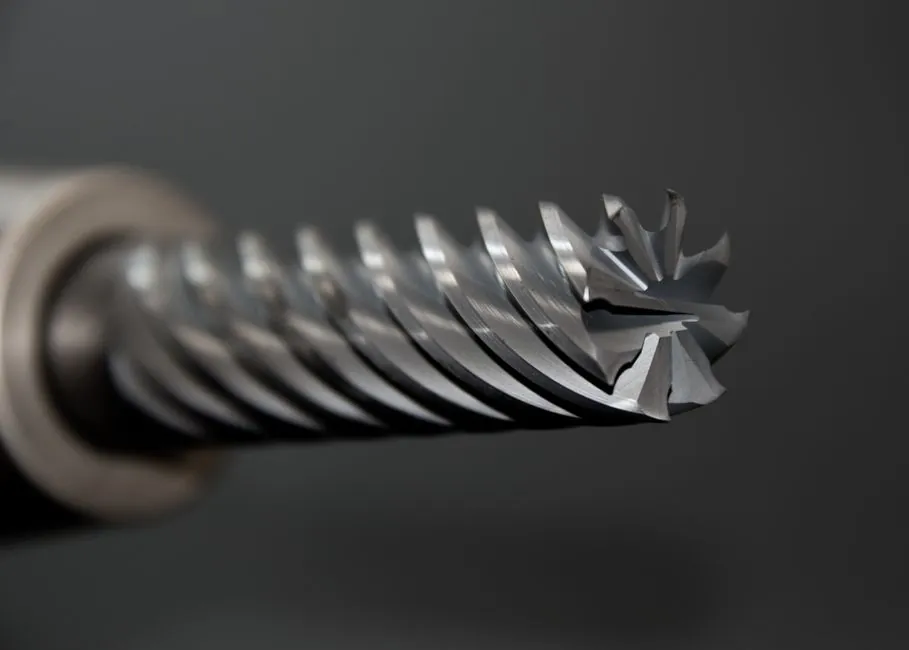
Steel-mill thrust bearing selection is governed by three spec gates: load type (pure axial vs combined axial+radian), operating speed (C0 static rating zone vs C dynamic rating zone), and rolling-element family (ball, cylindrical roller, spherical roller, or slewing). Roughing-mill roll-balance cylinders typically run above 50 r/min with combined loads, so spherical roller thrust bearings are the default.
Continuous-caster segment rollers, slab-shear approach tables, and hot-strip coiler mandrels sit in different envelopes: low speed, high axial shock, and water/steam contamination are common. Tritan's heat-treated select alloy steel product line is built around these heavy-duty load profiles, with dimensional consistency aimed at mill-duty housings [S1].
What a steel-mill thrust bearing actually has to survive
Mill-duty thrust bearings must carry axial loads ranging from roughly 50 kN on coiler tension devices to over 2,000 kN on roll-balance cylinders, while surviving roll-cooling water at 1.5–6 bar, scale ingress, and ambient swings from 5 °C to 60 °C under the mill stand. Lubrication mode is the single biggest divider: oil-air injection at 0.05–0.1 ml/shot is the standard for high-speed rolling-mill spindles, whereas grease (polyurea or lithium-complex with EP-2 consistency) dominates on slow-moving segment rollers. [S4]
Mounting rigidity is critical: a thrust bearing is only as good as its housing stiffness. Plummer blocks such as the EBL split series (stainless option available) and pillow blocks with 4-bolt flange housings are commonly pressed into mill-service retrofits [S4]. In rolling-mill applications, the housing bolt class is typically 10.9 or 12.9 to maintain clamp load under vibration.
Four bearing families on the shortlist
Single-direction thrust ball bearings handle pure axial load at moderate speed; double-direction variants accommodate reversing axial load at the cost of higher friction heat. Cylindrical roller thrust bearings (series 811/812) carry higher axial load per envelope but require perfect alignment: misalignment of just 0.001 rad drops load capacity materially. Spherical roller thrust bearings tolerate misalignment up to 1.5° and dominate combined axial+radian loads on roll-balance and screw-down systems. For large-diameter slow rotation, slewing rings (three-row roller, four-point contact ball) are used in continuous-caster ladle turrets and stacking-table slew drives. [S4]
Material and cage selection follow the same logic across families. Through-hardened alloy steel (commonly AISI 52100 equivalent) is standard; case-carburized grades (e.g. 20CrNiMo) are used for severe shock. Steel-cage standard, brass-cage (machined or solid) for high-temperature or high-vibration service. Tritan product data confirms heat-treated select alloy steel as the baseline, with controlled hardness profiles to balance toughness and wear resistance [S1].
Speed and load: the C0 vs C rating decision
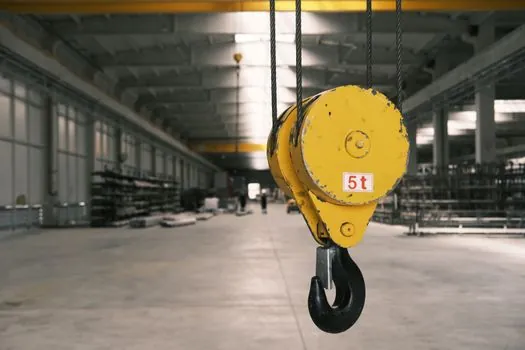
Speed limit for ball thrust bearings is set by the ball/race contact stress and centrifugal load, typically capped at roughly 1,500 r/min in oil bath, 3,000 r/min with oil-air. Roller thrust bearings run slower due to higher mass: 800–1,200 r/min is a practical ceiling under oil-air. Static load rating C0 governs when n < 10 r/min or when load is applied at standstill: this is the regime for segment rollers, ladle turret slew drives, and coiler mandrels during strip entry. [S1]
For dynamic-loaded mill spindles, calculate basic dynamic load C using ISO 281:2007 corrected rating life L10h = (C/P)^p × 10^6 / (60·n), where p = 3 for ball, 10/3 for roller. Target a minimum L10h of 40,000 hours for back-up roll balance and 25,000 hours for caster segment rollers. The miniature thrust groove ball family (e.g. F3-8M, F10-18M at 15.87 mm bore equivalent) belongs to a different equipment class, not the mill envelope cited above, but illustrates the price floor (US $0.25/piece) and dimensional range that small auxiliary thrust bearings follow [S2].
Lubrication, sealing, and water ingress
Mill environments flood bearings with cooling water, lime, and iron scale. Labyrinth seals with grease purge are the baseline; V-ring or felt seals are inadequate. For segment rollers in a continuous caster, a typical sealing stack runs: internal deflector, grease-packed labyrinth, and external water-shedding lip, with a 5–10 g/h grease replenishment rate through the housing. Extreme Bearing's stainless 316 plummer blocks and axial thrust units target this exact corrosion envelope and are designed for heavy axial load under washdown [S4].
Grease life in a mill bearing is typically 3,000–6,000 hours at 80 °C bearing temperature; above 100 °C, switch to synthetic polyurea or PFPE grease and expect relube intervals to halve. Oil-air on roll-balance bearings extends life well past 30,000 hours, but only if the supply system is audited monthly: a blocked injector or excess 0.2 ml/shot volume can starve or flood the bearing equally fast.
Common failure modes and how to specify against them

Three failure modes dominate mill thrust bearings: white-etching cracking (WEC) from sliding under vibratory load with EP grease, false brinelling at sub-1 r/min oscillation during strip entry, and particulate race scoring from scale ingestion. Each is addressed at the spec gate: WEC points to grease chemistry (avoid over-additised EP-2 in vibratory service) and material choice (case-carburized with retained austenite control); false brinelling points to lift-off lubrication during idle, or to a heavy-loaded thrust ball bearing instead of a self-aligning roller design; scale scoring points to sealing, not bearing selection. [S3]
For new builds, specify ABMA STD-20 or ISO 15 boundary dimensions, ISO 281:2007 life calculation, and a documented sealing stack. For retests and reverse-engineered housings, the INA D3 series reference part (15.87 mm bore, 0.6250 in, single-direction ball thrust, steel material) is a useful imperial-to-metric cross-check baseline [S3]. This cross-reference pattern matters when matching legacy 1970s-1990s mill equipment, where imperial bores are still common.
Selection flow: from duty cycle to part number
Start with the axial load and direction: pure unidirectional axial at low speed (n < 50 r/min) points to a single-direction ball thrust or cylindrical roller; reversing axial or combined load points to a double-direction or self-aligning spherical roller. Next, bound the speed: above 600 r/min, lean toward ball bearings with oil-air; below that, roller families win on load capacity per envelope. Then layer in environment: water, scale, or acidic coolant pushes sealing stack to labyrinth-plus-deflector and may push material to stainless or coated steel. For very large-diameter slow rotation, the answer is a slewing bearing with 4-point contact ball or three-row roller geometry.
Adjacent bearing technology also matters: in stand motors and screw-down gearboxes, linear bearings carry the roll-position slide, while the mill roll-balance cylinder is the canonical thrust bearing application. For aggressive-temperature or scale-laden zones, ceramic bearings (silicon nitride rolling elements with steel races) are specified on a case-by-case basis where electrical-erosion resistance or weight reduction justifies the cost. The thrust bearing selection for mining load, speed, and lubrication gates reference provides a useful parallel duty-cycle template, since mining SAG mills and crushers share shock-load and contamination profiles with mill auxiliaries.
Final spec checks before issuing a purchase order: confirm housing bolt class (10.9 minimum), grease port thread (G1/4 or NPT 1/4 standard), shaft fit (h6 typical for rotating seat), and cap/cover static load rating if the bearing also acts as a back-up during roll-change operations. Two signals to track: rising WEC incidents on case-carburized roll-balance bearings, and field migrations from greased labyrinths to oil-mist in caster segment roller banks. Both will reshape mill thrust-bearing spec sheets over the next 24 months.